🌐 This article is also available in Spanish.
Original source: UNmiss
This article is an editorial summary and interpretation of that content. The ideas belong to the original authors; the selection and writing are by Streamed.News.
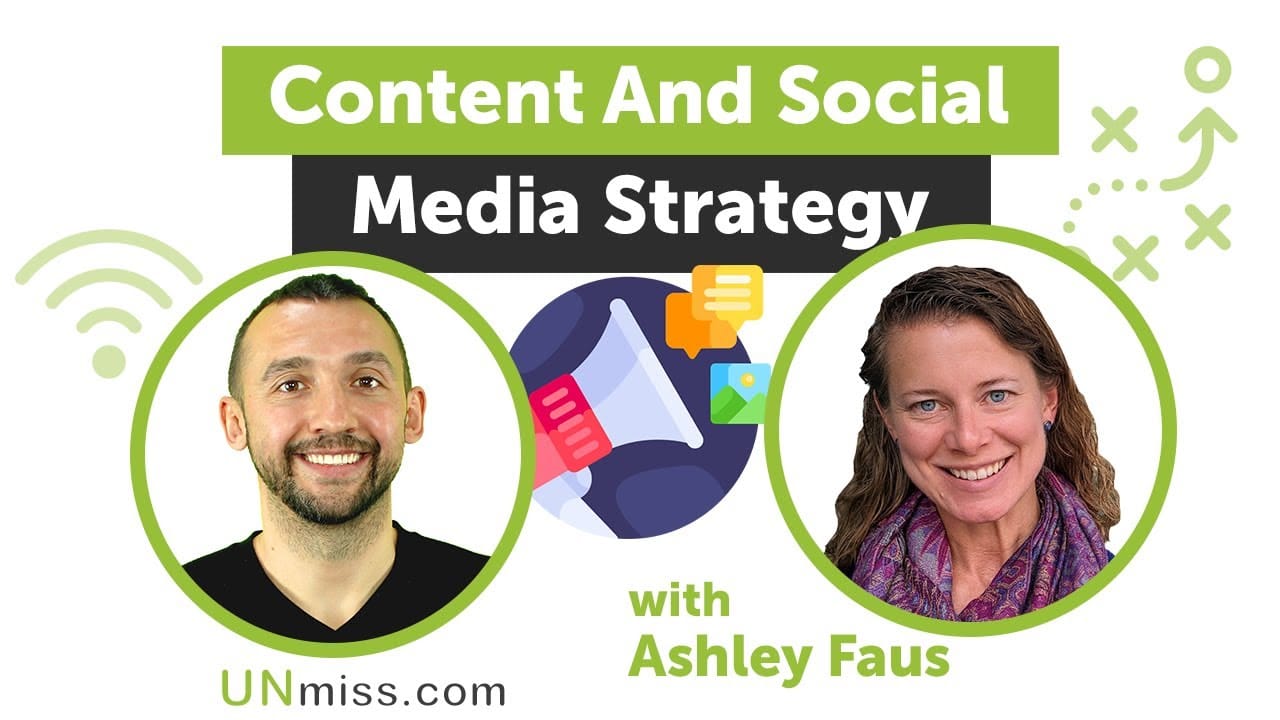
This video from UNmiss covered a lot of ground. 5 segments stood out as worth your time. Everything below links directly to the timestamp in the original video.
If your content strategy starts with a publishing calendar rather than a genuine question about what your audience already knows, you're building it backwards.
Content Strategy Should Start With Audience Knowledge, Not the Marketing Funnel
Ashley Faus, a content strategist at Atlassian, argues that most marketers build content plans backwards — mapping editorial calendars to awareness, consideration, and purchase stages without first asking what the audience actually knows. The real starting point, she says, is understanding what customers understand: how familiar they are with the problem, the solution space, and the competitive landscape. Only after mapping that knowledge gap can a brand decide how much education its content needs to do.
In saturated markets, audiences may already believe they've solved a problem and won't respond to basic explainers — they need content that challenges their assumptions. In emerging markets, the opposite holds. The depth of content, not the volume, is what the strategy should determine first.
"Their pain points are they need my product — that's not a pain point."
Storytelling Beats Feature Lists — But Only When the Audience Is Ready for It
A job recruitment post that Faus wrote framing her own career struggles — graduating into a recession, being told she was capable but unhireable — drew 40,000 views and hundreds of comments, far outpacing any straightforward job listing. The post worked, she argues, because it gave readers a character they could place themselves inside, not a set of specifications to evaluate. The same logic applies to product marketing: when Atlassian wanted developers to adopt a feature linking Bitbucket to Jira, the message led with the pain — the frustration of leaving a codebase to update tickets — before naming the solution.
The crucial caveat is context. Storytelling fails when the audience just wants a fact. The food-blog phenomenon — where a recipe is buried under a childhood memory — is her shorthand for the mismatch. Knowing which mode your audience is in determines whether a story connects or irritates.
"I don't care that you made cookies with your grandmother growing up. I really just need to find the chocolate chip cookie recipe."
Social Selling Works When Brands Talk About Problems, Not Products
Faus challenges the assumption that social media users are never in a buying frame of mind, pointing to a clear signal most brands miss: when someone publicly declares a need — posting on social media asking for tool recommendations — they are actively inviting a pitch. The harder situation is everyone else, and her answer there is to talk consistently about how the problem and solution spaces are changing, without leading with a product name. That approach, she says, generated inbound consulting requests for her years after she left a previous employer, because people associated her thinking with the category rather than a transaction.
An Atlassian user-manual template she routinely shares in response to team-management questions illustrates the method: it is free, product-agnostic in presentation, and plants the company's name in a helpful rather than commercial context. Trust accumulated that way means the brand is top of mind when the buying decision actually arrives.
"People have reached out to me about Duarte and I haven't worked there in five or six years — because of the way I talk and the content I amplify."
Scripted Relationship-Building Before a Sales Pitch Is Detectable — and Counterproductive
Faus describes a pattern she sees constantly on LinkedIn: brands or sales reps engaging with shallow, affirmative comments — "Agree 100%", "Truth" — on a calculated schedule before eventually pitching. She says the artificiality is obvious and corrosive. The approaches that have actually worked on her involve a sales rep identifying that she already uses a product's free tier and asking whether a business account would serve her, or noticing that her team uses a lower-tier plan and asking about other teams who might benefit from a multi-user feature. In both cases the seller had done real research and entered a conversation she was already half-having.
The principle transfers broadly: upselling a warm lead who has already demonstrated affinity is categorically easier than a cold outreach, and faking warmth to manufacture that affinity is a strategy audiences now recognise on sight.
"You can feel that they're waiting to pounce — it's like they're following some playbook that says step one, build a relationship, this will take a few weeks."
Two Daily Questions Can Replace the Content Calendar Blank-Page Problem
Rather than staring at an empty editorial calendar, Faus proposes a simpler daily practice: ask what question you posed today and what question someone asked you. Both can be personal or professional, but the next step is to connect them to a broader brand or expertise narrative. A question overheard at a gym — "are you using those weights?" — becomes a post about how closely a creator needs to associate themselves with content for an audience to recognise ownership. The mundane observation becomes platform-ready when filtered through a professional lens.
The second layer is depth: the same topic can generate conceptual content (what does this idea mean and why does it matter), strategic content (what processes and tools make it real), and tactical content (step-by-step instructions). Applied to a single subject, that three-depth framework produces months of material without requiring a new idea each time.
"Here's the big thing I'm selling, here's a couple of hobbies or personal stories, and here's the different depths — that will fuel a content plan for months."
Also mentioned in this video
- The unique voice and experience behind a brand, and details her role at… (0:49)
- Ashley Faus advises choosing the right social media channel by understanding… (5:46)
- The importance of consistency on social media, emphasizing a broader view of… (12:51)
- Steps for someone starting from scratch in social media marketing (33:32)
- Ashley Faus forecasts the future of social media marketing as a growing trend… (37:38)
Summarised from UNmiss · 40:45. All credit belongs to the original creators. Streamed.News summarises publicly available video content.
Streamed.News
This publication is generated automatically from YouTube.
Convert your full video library into a digital newspaper.
Get this for your newsroom →