🌐 This article is also available in Spanish.
Original source: Above The Business
This article is an editorial summary and interpretation of that content. The ideas belong to the original authors; the selection and writing are by Streamed.News.
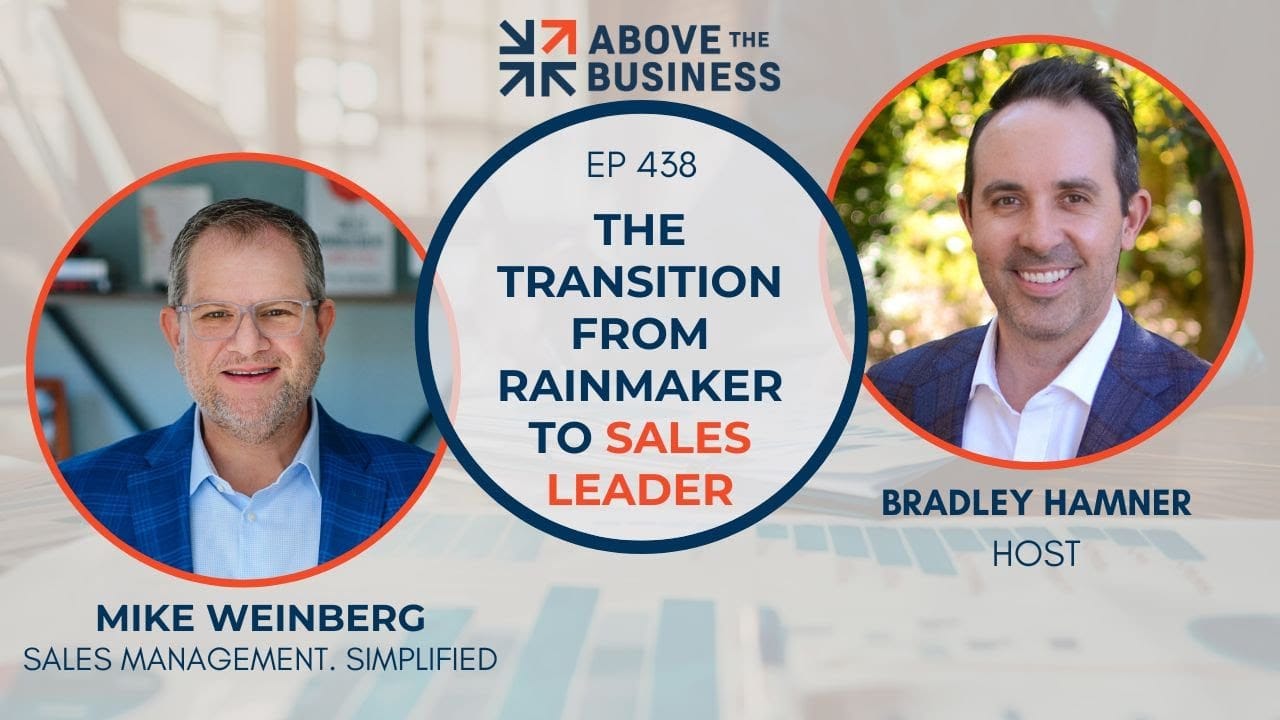
This video from Above The Business covered a lot of ground. 6 segments stood out as worth your time. Everything below links directly to the timestamp in the original video.
Most people have had both kinds of boss. This conversation puts words to why one felt like support and the other, in hindsight, felt like theft.
Two Sales Managers, Two Philosophies: The Coach Who Let Her Rep Fail
Bradley Hamm's first sales manager, Jennifer, routinely took over client calls during ride-alongs, effectively robbing him of the chance to learn. His second, Sharma, sat in silence while he struggled through pharmaceutical sales calls with physicians at age 25, then delivered her feedback in the car afterward. The discomfort was deliberate. Mike Weinberg, who was present for the story, framed it plainly: Jennifer was protecting her own numbers; Sharma was developing a professional.
"She was going to let me actually fail and work through that — and then she would do the coaching and the accountability."
Tech Sales Teams Hired During the Boom Are Struggling to Survive the Slowdown
Sales consultant Mike Weinberg estimates that in 30 to 40 percent of the companies he now advises, the core problem is wrong or underdeveloped talent — not strategy or process. His sharpest example, drawn from a surge of technology clients he took on in early 2025, involves salespeople who made President's Club in 2021 and 2022 riding a wave of inbound demand, only to find themselves unable to hit quota once the Federal Reserve raised interest rates and the market cooled. Those reps were never hunters; they were closers handed pre-qualified leads.
"They were fulfilling opportunities. They weren't generating opportunities. Big difference."
Sales Managers Who Play Hero Instead of Making Them Are Burning Out Their Teams
Mike Weinberg argues that the sales manager's job reduces to two levers: accountability — making sure people do their jobs by scrutinising pipeline coverage and results — and coaching, which means asking questions and observing rather than prescribing answers. Managers who skip both and simply run the calls themselves send a damaging signal to customers that the rep is not the real contact, breed codependency on the team, and accelerate their own burnout trying to perform nine jobs at once.
"When you're the leader, you need to win through your people."
What Separates a True Sales Hunter: Low Conflict-Aversion and High Competitiveness
Mike Weinberg identifies two non-negotiable traits in salespeople hired to generate new business: a willingness to push through rejection rather than retreat, and a deeply competitive drive to keep score. When a prospect says they are not interested, a genuine hunter does not apologise and promise to check back in nine months — they lean in, offer a specific value proposition, and ask for time anyway. Weinberg warns that many salespeople who appear productive are actually avoiding this discomfort by burying themselves in account management and customer service work, using busyness as cover for an empty pipeline.
"My favorite sales verb is 'create.' The most valuable salespeople create new opportunities — they're not just waiting, they're not just chasing."
The Author of Two Top Sales Management Books Admits He Nearly Failed as a Sales Manager
Mike Weinberg spent years as the top individual salesperson at three companies before taking a sales executive role — and by his own account, he nearly failed at it. His mistake was assuming that teaching his reps to sell the way he sold would be enough. It was not. The skills that made him a dominant individual contributor — high ego, selfishness about his calendar, personal ownership of every deal — actively worked against him as a leader whose job was to multiply results through others.
"What got you here will not get you there. The job of sales leader is nothing like the job of salesperson."
Technology Companies Are Promoting Sales Stars Into Manager Roles — Then Watching Them 'Super-Rep'
Weinberg reports a pattern he encountered repeatedly while consulting for technology companies over the past year: sales managers who respond to underperforming teams not by coaching or holding people accountable, but by doing the work themselves — running calls, shaping proposals, negotiating deals. The tech industry has a name for it: super-repping. The result is a manager who burns out while simultaneously preventing the team from developing, and customers who learn to call the manager directly, bypassing the rep entirely.
"They put on the cape and they're the superhero that just jumps in and does all the job — and that's not scalable, that's not sustainable."
Summarised from Above The Business · 47:36. All credit belongs to the original creators. Streamed.News summarises publicly available video content.
Streamed.News
This publication is generated automatically from YouTube.
Convert your full video library into a digital newspaper.
Get this for your newsroom →