Original source: The Tennis Mentor
This video from The Tennis Mentor covered a lot of ground. Streamed.News selected 4 key moments and summarises them here. Everything below links directly to the timestamp in the original video.
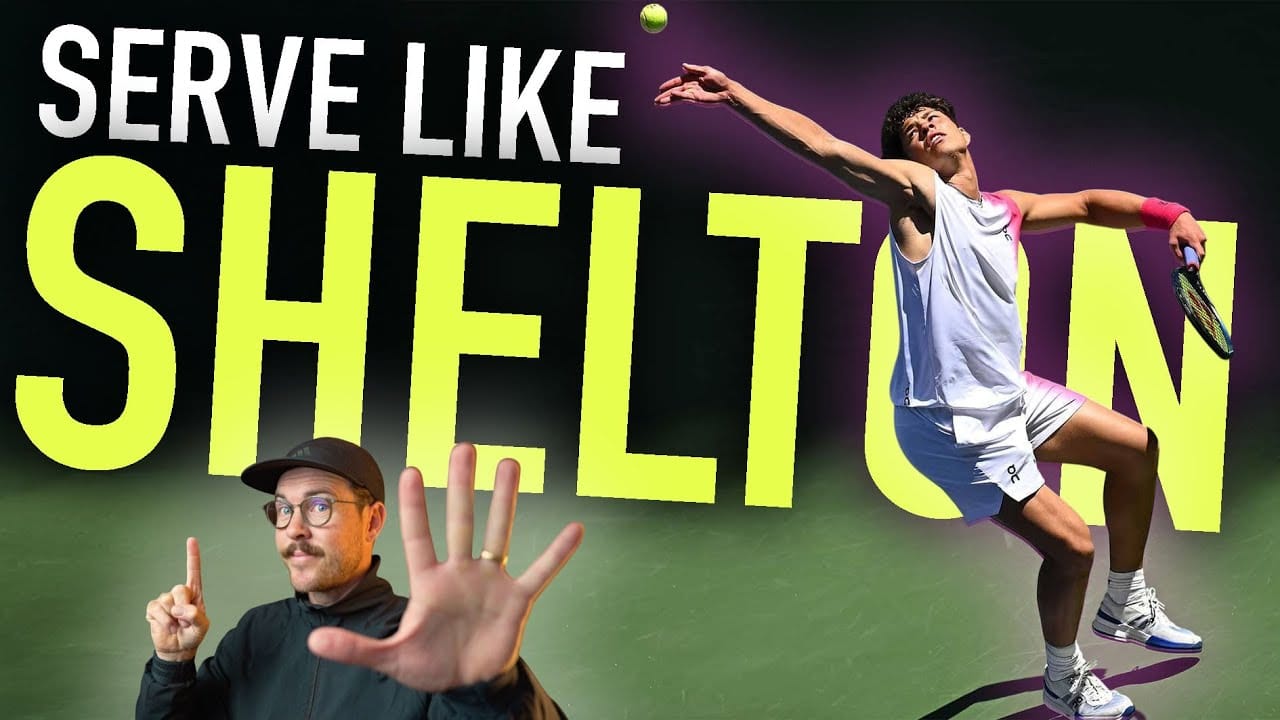
Ben Shelton's monster serve has a secret ingredient, but copying it could do more harm than good. Understanding the biomechanics reveals why some pro techniques are best left to the pros.
Ben Shelton's Serve Power Comes From a Glute Position Most Players Should Avoid
The core of Ben Shelton's powerful serve lies in a unique and exaggerated technique where he pushes his glutes deep into the court. This motion is made possible by his unconventional foot placement, with both feet pointing slightly backward. The main reason this works is that it facilitates a massive upper body coil, similar to John McEnroe's, which generates immense rotational force for his first serve, slice, and kick serves.
To be clear, this is a technique most players should not try to replicate. Without Shelton's elite athleticism and timing, forcing this glute position with a standard foot stance puts dangerous strain on the hips. It requires a specific biomechanical alignment that, if copied incorrectly, leads to an inefficient and potentially injurious leg drive.
"The benefit of having that big upper body coil is you can get massive rotational force into the serve... The downside, however, is it's very physical and it requires incredible timing, which is why Ben executes this so well."
Two Key Toss Adjustments from Ben Shelton Can Improve Serve Consistency and Power
Two specific techniques in Ben Shelton's toss are suitable for players of all levels seeking more consistency and power. First, he releases the ball with his palm turned sideways rather than facing up, which minimizes the ball rolling off his fingertips and improves placement accuracy. Second, he exaggerates the straightness of his tossing arm in the pre-throw position.
What's unique about this straight arm is how it establishes significant shoulder tilt. Shelton maintains this upright tossing arm until the last possible moment, using it like a seesaw—as it drops, the hitting arm drives upward, creating an efficient transfer of energy into the serve.
"You really want to think of your arms as a seesaw. As this arm drops, the other arm is driving upwards."
Advanced Players Can Gain Power by Finishing Their Serve Before Landing, a Ben Shelton Hallmark
A key element of Ben Shelton's serve, aimed at advanced players, is completing the entire hitting motion before his feet land back on the court. This focus forces two critical outcomes: it encourages an aggressive upward drive to the ball and perfects the timing of the jump. The main reason this is effective is that it ensures contact is made while the body is still ascending.
This contrasts with a common amateur fault of hitting the ball while already descending, which often results in netted serves. While Shelton’s elite athleticism provides more airtime, other players can achieve this by adjusting their timing and delaying their leg drive from the loaded position.
"Where most players go wrong is they're already on their way down as they make contact. Often resulting in serves going into the net or you having to manipulate your contact point to make up for it."
All Players Can Learn from Ben Shelton's Strategy of Hunting the Forehand After a Serve
A critical tactical element of Ben Shelton's game, applicable to all players, is his immediate hunt for a forehand on the third shot of the rally. His service strategy is twofold: either win the point outright with an unreturnable serve or, more strategically, force a weak return that allows him to attack with his forehand. This aggressive mindset begins the moment he lands.
To be clear, this requires disciplined footwork to push back behind the baseline immediately after serving, avoiding the common mistake of getting stuck inside the court. By anticipating a weak return, especially from a well-placed body serve, a player can dictate the point from the third ball.
"Anytime you hit your first serve, you should be looking to hit your strength on the next ball if it comes back."
Also mentioned in this video
Summarised from The Tennis Mentor · 8:34. All credit belongs to the original creators. Streamed.News summarises publicly available video content.