Original source: Meike Babel Tennis
This video from Meike Babel Tennis covered a lot of ground. Streamed.News selected 4 key moments and summarises them here. Everything below links directly to the timestamp in the original video.
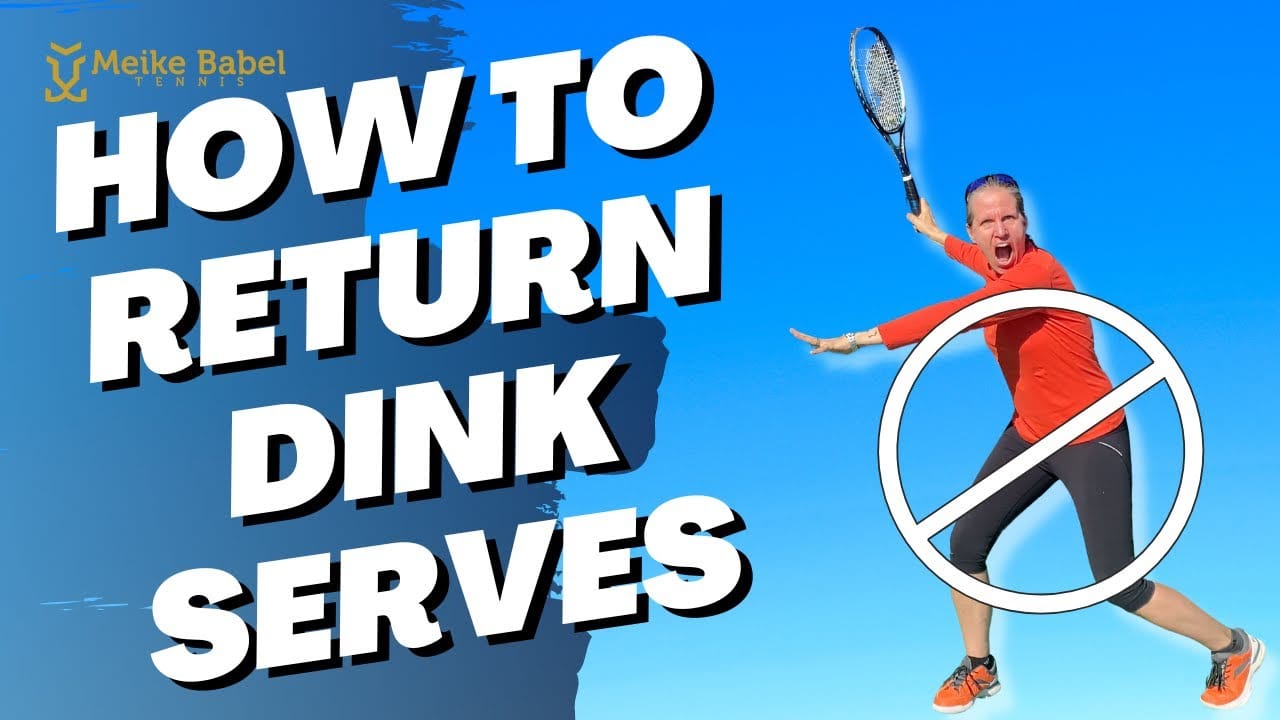
That weak, floating serve looks like an easy winner, but how often do you miss the shot? Rethinking your goal from 'winner' to 'forced error' is the key to winning more of those points.
Adopt a 'Forced Error' Mindset to Capitalize on Weak Serves
The most critical adjustment for players facing a weak serve is a change in mindset, moving away from the greedy impulse to hit an immediate winner. Instead, the focus should be on forcing an error. This involves a tactical assessment of which shot will make the opponent run the most and which part of the court is most vulnerable, thereby constructing the point from an advantageous position.
This strategic shift from raw aggression to tactical construction is fundamental to consistent play. Even world-class professionals win the majority of their matches by forcing errors, not by hitting clean winners, making this a more reliable path to victory at any level.
"Matches are not won by hitting winners. Actually, world-class players to club players, everybody wins their matches by forcing errors. That is your first change in your mindset."
Attacking Short Balls Requires a Different Swing, Not More Power
A common error when attacking a short serve is to use the same groundstroke swing as one would from behind the baseline. Because the detail that's actually missing is an adjustment for time and space; from inside the court, a player has less room for the ball to travel. The correct technique involves manipulating the ball differently, either by applying heavy topspin for a quick dip, using a slice to control the approach, or simply hitting softer for placement.
Failing to adapt the swing for an inside-the-court position is a primary cause of unforced errors where the ball sails long. Mastering these shot variations is essential for converting offensive opportunities into points.
"When you are inside the court you also have less room to hit into, so you have to manipulate the ball differently."
Target Opponent Weaknesses to Force Errors, Not Risky Winners
When attacking a weak serve, the primary objective should be strategic placement rather than hitting an outright winner. Players ought to target the opponent's weaker side or the area of the court that forces the most movement. The goal is to construct the point by eliciting a mistake, recognising that the player who is forced to move more generally commits more errors.
This tactical discipline prevents unforced errors caused by greed and overhitting. It establishes a more reliable and percentage-based strategy for winning points compared to the high-risk attempt at a clean winner.
"Whoever moves more commits more errors, and you just want to force an error. You don't have to hit a clean winner."
Proper Recovery After Attacking a Weak Serve Is Key to Winning the Point
After attacking a weak serve, a player's work is not finished; immediate and correct recovery is crucial to avoid leaving the court vulnerable. The common mistake is to admire the shot and get stuck in "no man's land." A player must instead commit to one of two tactical options: either follow the aggressive shot to the net in three quick steps, or retreat to the baseline, specifically to the bisector of the possible return angles.
Executing this recovery step is what converts an aggressive shot into a won point. Failing to do so immediately cedes the advantage gained from the weak serve and leaves the court wide open for a counter-attack.
"If I decide to stay back at the baseline, I have to go to the bisector of the angle, which is to the right of the hash mark to cut the court in half."
Also mentioned in this video
Summarised from Meike Babel Tennis · 7:20. All credit belongs to the original creators. Streamed.News summarises publicly available video content.