Original source: RacquetFlex
This video from RacquetFlex covered a lot of ground. Streamed.News selected 4 key moments and summarises them here. Everything below links directly to the timestamp in the original video.
Many common drills aren't just keeping you from making progress; they can actually move you backward. Here’s a simple exercise to fix the root cause of an inconsistent serve by rewiring your feel for the ball.
‘Blindfolded Toss and Tap’ Drill Sharpens Serve Precision by Heightening Sensory Feedback
To develop genuine serve precision, players can use the “Blindfolded Toss and Tap” drill. This exercise involves closing your eyes, visualizing the ideal contact point, and simply tossing and tapping the ball. The immediate goal is not to hit a full serve, but to achieve a clean contact, using the sound and feel of the impact as direct feedback to calibrate the motion.
This drill addresses the root cause of many errant serves by removing visual dependency and forcing the body to rely on proprioception—its internal sense of position. This heightened awareness builds a more accurate internal map of the swing’s rhythm and timing, leading to a more repeatable and confident motion once vision is restored.
"Once you take your blindfold off, you will literally feel like Superman. You will have a whole new level of consciousness over what your contact point should feel like."
Three-Step Visualization Process Helps Build the Perfect Serve Contact Point
A three-step process can build a stable and powerful serve contact point, correcting flaws that cause inconsistency. First, an athlete should assume the ideal contact position and hold it, addressing any tightness in the shoulder, wrist, or lower back. Second, they must close their eyes to lock in the physical feeling, visualizing every detail of the posture for five to 10 seconds.
Finally, the player tosses the ball while holding that mental image, prioritizing a relaxed and comfortable contact. This method builds muscle memory not just through mindless repetition, but through focused sensory input, creating a reliable internal blueprint for a consistent and powerful serve.
Three Key Techniques Improve Serve Consistency by Focusing on Stability and Relaxation
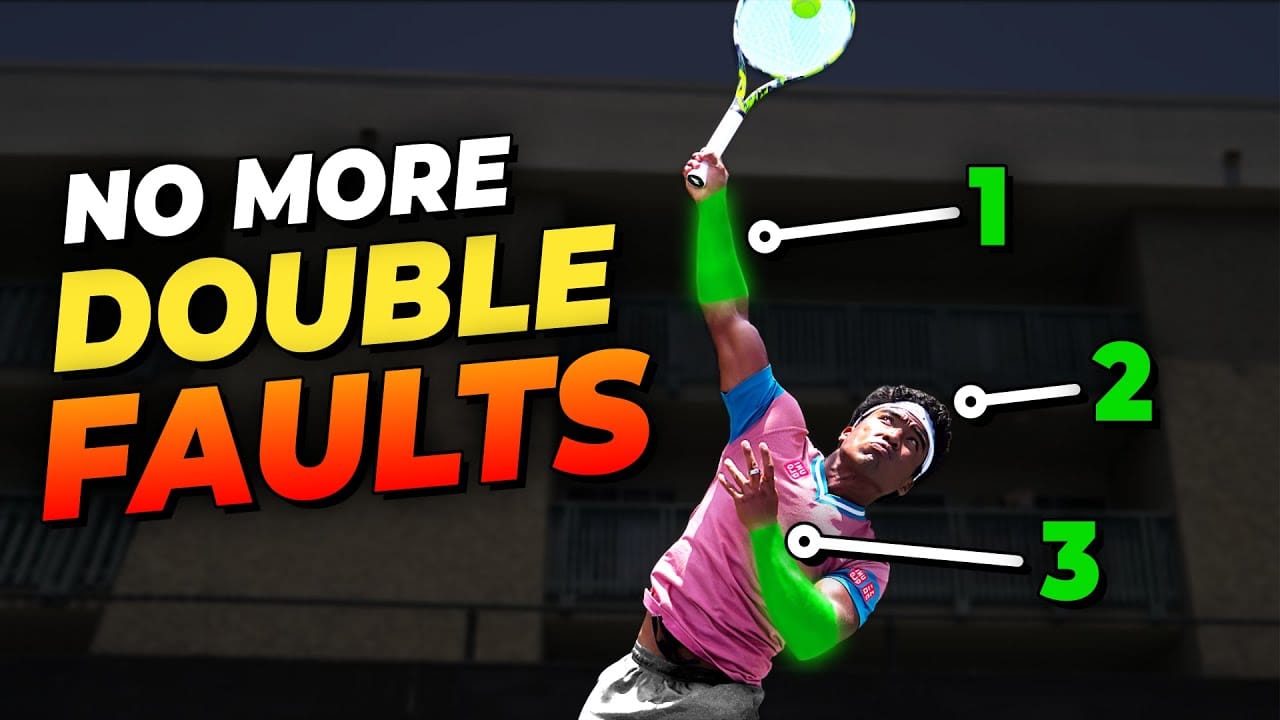
To lock in serve consistency, athletes should focus on three key feelings rather than rigid mechanical mantras. The first is maintaining a stable head and non-hitting arm through the point of contact. Second, a player should feel their body moving upward or peaking at its apex at the moment of impact, a sensation that prevents falling away from the shot and over-rotating.
The final component is keeping the hitting arm as relaxed as possible while visualizing contact high and far into the court. This combination of stability and relaxation promotes a natural, powerful release and a more repeatable motion, especially under pressure.
"I'm focusing on keeping my arm as relaxed as possible and making contact high and far into the court, and that will give you a natural release through contact."
To Improve Serve Accuracy, Focus on Precision First
The key to a reliable serve lies not in chasing accuracy, but in developing precision. While accuracy is the outcome of hitting a target, precision is the ability to consistently repeat the same motion over and over. By focusing on the process of making the toss, stance, rhythm, and contact point as uniform as possible, accuracy becomes a natural byproduct.
This shift in focus from a stressful result to a controllable process is critical for building a dependable weapon. When a player masters the inputs of the serve, their confidence and accuracy will almost automatically improve without the pressure of aiming for a specific spot.
"If you focus on this precision, you focus on the process of making your toss, your stance, your rhythm, and your contact point as repeatable and consistent as possible, then you'll notice that your accuracy and your confidence almost automatically start going up."
Also mentioned in this video
- Moment for better performance. (0:56)
- The second mindset tip for tennis players, especially those who overthink, is… (2:32)
- A good strategy is essential for increasing serving consistency in tennis, as… (3:53)
- Acknowledging that serving percentage doesn't need to be perfect, with even top… (5:06)
- Understanding which serves have the highest percentage, such as slice serves… (5:59)
- Utilizing topspin for natural consistency is crucial, as top pros incorporate… (7:47)
Summarised from RacquetFlex · 13:46. All credit belongs to the original creators. Streamed.News summarises publicly available video content.