Original source: RacquetFlex
This video from RacquetFlex covered a lot of ground. Streamed.News selected 7 key moments and summarises them here. Everything below links directly to the timestamp in the original video.
Here’s how to separate the two key arm movements that create powerful topspin on your kick serve, moving beyond the flat serve motion.
Isolating Shoulder Rotation From Forearm Pronation Is Key to Kick Serve Release
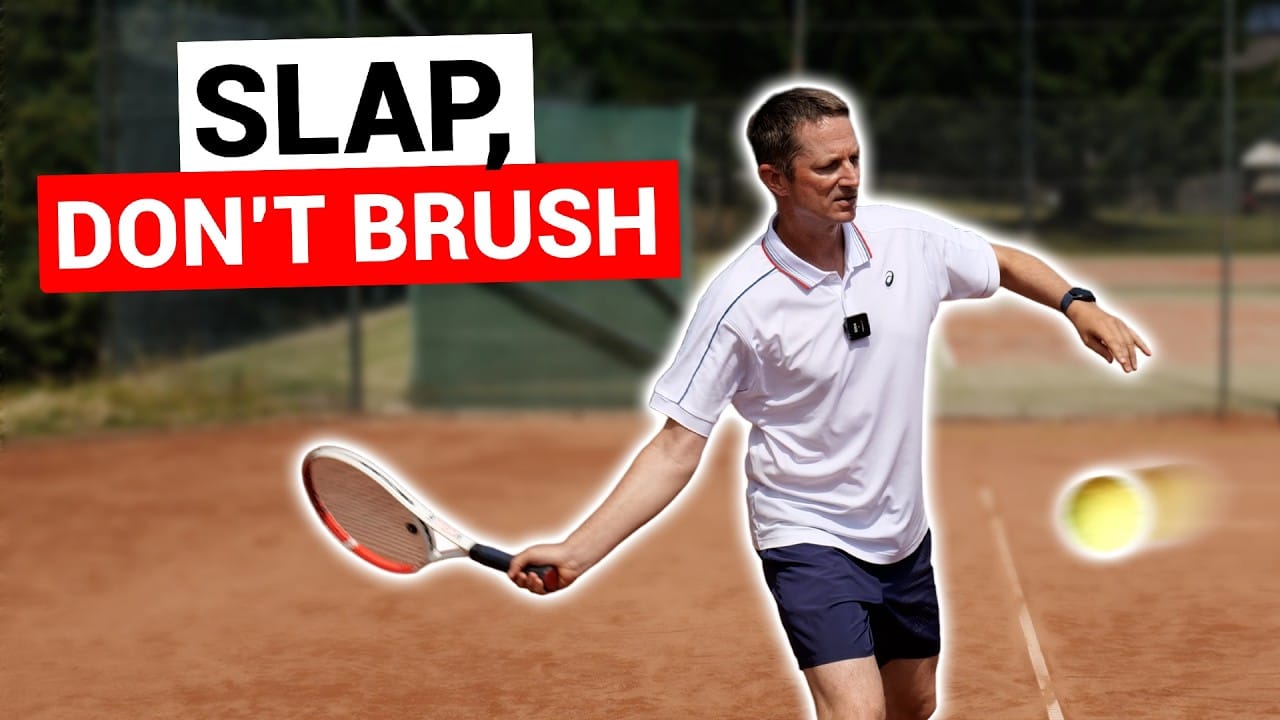
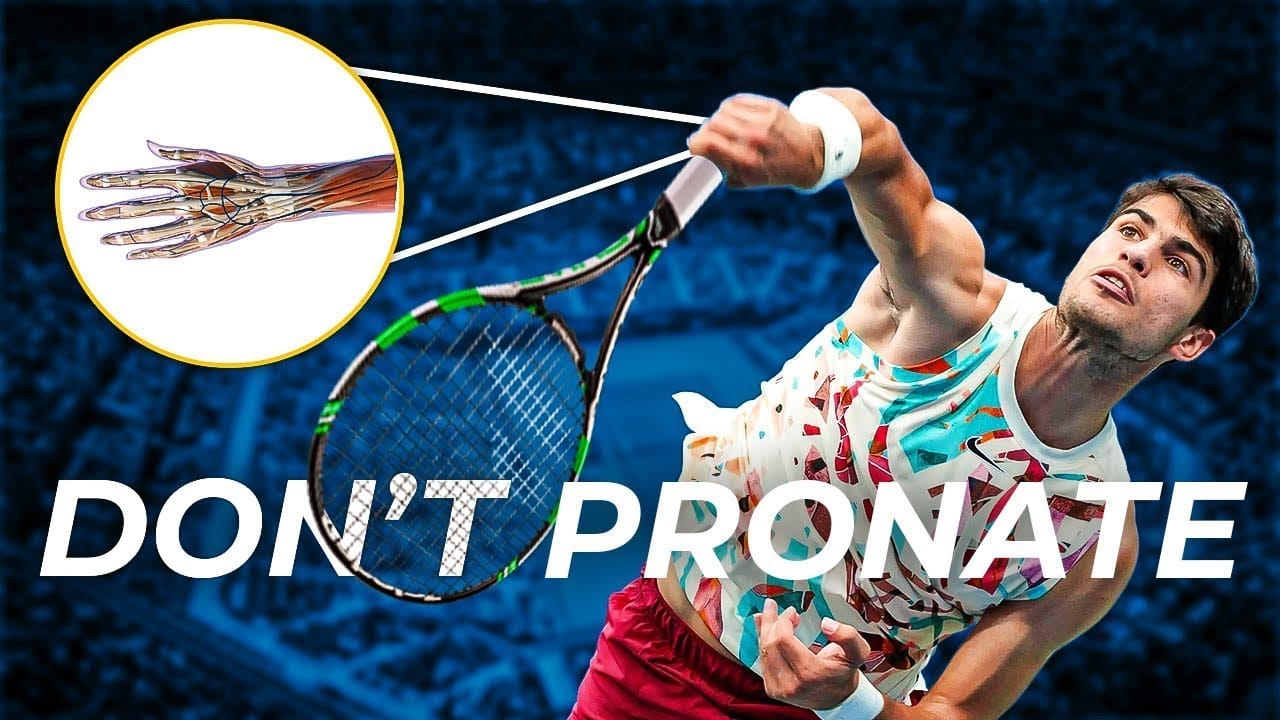
A powerful kick serve requires the deliberate separation of internal shoulder rotation and forearm pronation, two movements that players often incorrectly blend. Internal shoulder rotation is the primary driver for the racket's upward path, creating the essential brushing motion for topspin. Drills that isolate these actions are critical to unlearning compensatory habits that are not just keeping you from making progress, but actually moving you backward.
Only after mastering the upward drive from the shoulder should a player add forearm pronation. This secondary movement drives the racket forward through the ball, adding speed and depth. This sequential approach fixes the root cause of many kick serve failures by building the motion in the correct order, ensuring both spin and power are maximised.
"The initial internal shoulder rotation helps drive the racket head up while the pronation actually helps to drive the racket forward so that you still have a bit of drive on your kick serve."
Fence Drill Teaches Correct Racket Drop for First and Second Serves
A simple drill using a court fence provides tangible feedback for mastering the racket's "flipping action" during the serve. By standing about a foot from the fence and entering a pre-throw position, a player can use shoulder and hip rotation to guide the racket tip down to touch the mesh. This helps ingrain the feeling of a proper, deep racket drop for a first serve.
This exercise also highlights the subtle but critical difference in the second serve motion. For the kick serve, the body stays more closed and the racket drop is less horizontal, flipping more directly behind the player. Practicing both variations against the fence helps fix the root cause of an inefficient serve by building kinesthetic awareness.
"On the second serve, because you're keeping the body more closed, the racket tip won't quite flip as far to the right. Instead, focus on pulling your shoulder up more and feel the racket flip behind you."
Misunderstood Contact Point Turns Kick Serves Into Unwanted Slices
One of the most critical and misunderstood aspects of the kick serve is the contact point. Unlike the high, extended position of a flat serve, the kick serve requires contact to be made slightly to the left, more directly over the head, and a few inches lower. This adjustment is non-negotiable for generating true topspin.
This altered contact point allows the racket face to be more tilted and keeps the wrist in a neutral position, which is the only way to facilitate the upward brushing release. Making contact too high or far in front is the root cause of many failed kick serves, as it forces a vertical racket path that results in an accidental slice.
"The only way to get proper top spin on the kick serve is that last second release, which is impossible to do if your racket is straight up and down or your contact is too high."
A Lower Contact Point and Passive Forearm Unlocks Natural Kick Serve Motion
To achieve a natural upward wrist release on the kick serve, players should focus on a slightly lower contact point while keeping the forearm passive. This combination naturally allows the wrist to move correctly through ulnar deviation—the upward flick—without being forced. This makes the kick serve feel more like a slice, using the edge of the racket.
By first focusing on this cutting motion driven by shoulder rotation, a player can establish the correct feel for spin. Only then should forearm pronation be consciously added to generate extra speed and depth, providing a systemic solution for building a versatile and powerful kick serve.
"This makes your kick serve feel a little bit more like your slice serve... where you're going to focus on throwing the edge of the racket toward the ball just in a different direction."
Mental Cue to 'Catch the Ball Lower' Unlocks Kick Serve Release
A simple mental cue can help players instantly find the correct contact point for a kick serve. Rather than reaching for maximum height as on a flat serve, players should feel as if they are "catching the ball a little bit lower and closer" to their body. This small shift in intention makes a significant mechanical difference.
This adjustment creates the necessary space to release the racket up and out through the ball, which is the essence of the brushing action. It is a practical way to fix the common error of making contact too high, which jams the swing and prevents the motion required for generating heavy topspin.
"You want to feel like you're catching the ball a little bit lower and closer to your body so that you have a lot more room to release up and out on the ball."
Proper Follow-Through Mechanics Prevent Wrist and Shoulder Strain on Serve
An effective follow-through is not an afterthought but a critical mechanism for safely decelerating the racket and preventing injury. After contact, continuous internal shoulder rotation combined with natural wrist flexion allows the arm and racket to slow down gradually rather than stopping abruptly, which places immense stress on the joints.
This combination of movements helps the racket trace a smooth, circular path, allowing speed to bleed off efficiently. Focusing on a complete, relaxed follow-through is a long-term systemic solution to reduce strain on the shoulder and the particularly vulnerable wrist, ensuring that strength is never a weakness.
"A good follow-through allows the racket to decelerate gradually while keeping your joints in a comfortable position."
Simple 'Hand-to-Ear' Cue Corrects Serve Setup for Smooth Racket Drop
Two simple mental cues can fix foundational wrist and shoulder positioning errors in the serve's trophy pose. Players should think about bringing their hitting "hand near your ear" and simultaneously "turning your hand toward your ear." This adjustment corrects the alignment of the entire arm before the swing begins.
These cues naturally encourage a more supinated forearm, which is the root cause solution for a stiff or jerky racket drop. This corrected position enables a fluid motion into wrist extension and radial deviation, properly setting up the subsequent upward swing for a powerful and unimpeded release on the ball.
"Think of it as a flexion toward the thumb side, which should allow you to reverse that motion later in the upward swing and release."
Also mentioned in this video
- The concept of a powerful kick serve in tennis, highlighting the importance of… (0:00)
- The first step for perfect wrist action on a kick serve involves setting the… (0:36)
- The wrist needs to remain passive through the release, as actively snapping the… (5:21)
- The importance of deceleration on the kick serve to prevent injury, as the… (9:50)
Summarised from RacquetFlex · 12:24. All credit belongs to the original creators. Streamed.News summarises publicly available video content.