Original source: Rich Roll
This video from Rich Roll covered a lot of ground. Streamed.News selected 8 key moments and summarises them here. Everything below links directly to the timestamp in the original video.
What if the key to staying strong as you age has less to do with what kind of protein you eat and more to do with something else entirely? A new study offers a surprising answer.
Resistance Training, Not Protein Source, Key for Muscle Gains in Elderly, Study Finds
Recent research from the Netherlands, led by prominent protein researcher Luc van Loon, challenges the conventional wisdom that animal protein is essential for maintaining muscle mass in older adults. In a study involving 70-year-olds, while a single meal of animal protein elicited a faster initial muscle protein synthesis response, a longer 12-week trial revealed no significant differences in muscle size or strength gains between vegan and omnivorous diets when both were combined with resistance training.
The implications of this are significant, as the vegan group achieved these comparable results while consuming less total protein. It is important to underscore that the stimulus from resistance training appears to be a far more potent driver of muscle adaptation in this population than the specific source or even the precise quantity of protein consumed.
"Even though the vegan group were consuming less protein, muscle size and strength was no different. The conclusion that you draw from that is that it's much more about the resistance training than it is about a specific amount of protein intake, let alone the source of that protein."
Individual Willpower Is Not Enough; Public Health Requires Structural and Policy Changes
Improving public health outcomes on a grand scale requires a fundamental shift away from focusing on individual willpower and toward addressing the structural and environmental factors that shape people's choices. One's zip code remains a powerful predictor of health, underscoring how access to affordable, healthy food and safe places for activity dictates outcomes more than personal resolve. Placing the onus of health entirely on the individual ignores the reality that many operate in environments engineered for unhealthy choices.
The implications of this are significant, suggesting that true progress requires a dual approach. It is important to underscore that top-down policy changes, which alter the food and physical environment, must be pursued alongside bottom-up educational efforts to create a society where the healthy choice becomes the easy choice.
"When you put it all on the individual and basically say, 'Well, it's up to you and your willpower,'... human beings are just not very good at that. It's all about your environment."
Emphasis on Animal Protein Is Misplaced, Ignores Broader Health Benefits of Plant Sources
The prevailing overemphasis on animal-based proteins is fundamentally misplaced, given that scientific evidence demonstrates no significant difference in anabolic effects when compared to plant-derived protein sources. While both can adequately support muscle repair and growth, it is the overall package in which the protein is delivered that matters most. Plant proteins are accompanied by a host of health-promoting compounds, including fiber, micronutrients, and polyphenols, that are absent in their animal-based counterparts.
The implications of this are significant, demanding a more holistic definition of "quality protein"—one that extends beyond muscle synthesis to include long-term cardiometabolic health. Ultimately, the question becomes how to optimize not just for muscle, but for the reduction of chronic disease risk, a metric by which plant protein sources consistently prove superior.
"I think our definition of quality has to be muscle related outcomes, but also chronic disease health span outcomes."
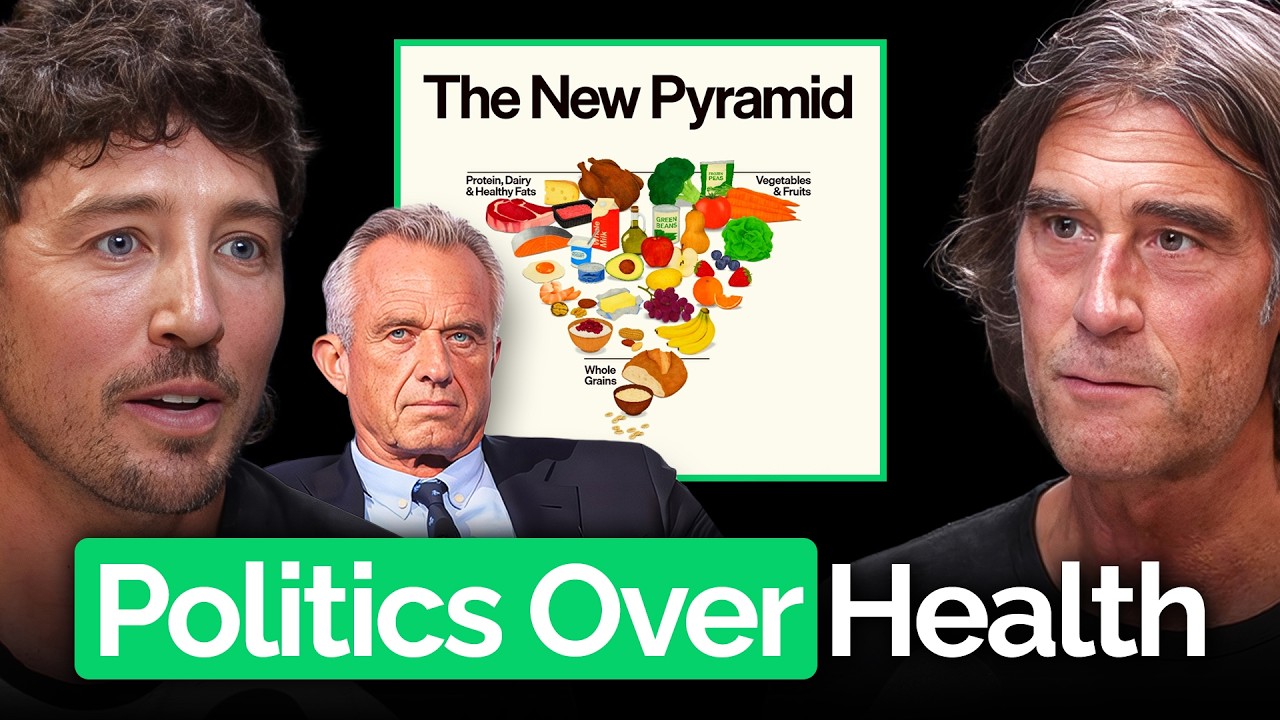
New Dietary Guidelines Reject Dozens of Scientific Recommendations, Raising Questions of Political Influence
An examination of the process behind the new dietary guidelines reveals a troubling departure from scientific consensus, suggesting political and corporate interests influenced the final output. A scientific advisory committee, which included experts like Christopher Gardner of Stanford University, produced a report with plant-forward recommendations; however, the administration ultimately set this advice aside, rejecting approximately 30 of the committee's 50-plus recommendations before issuing its own guidelines.
It is important to underscore that this divergence from the established scientific advisory process raises profound questions about the integrity of public health policy. The final guidelines appear to have been authored not by the assembled scientists but by politicians, indicating that factors beyond evidence-based nutrition science played a decisive role.
"Around 30 of the 50-something recommendations were completely rejected... I'm led to believe through these conversations I've had that really it's politicians that end up writing the guidelines."
Studies Contradict Common Belief in Animal Protein's Superiority for Muscle Building
The common assumption that animal protein is functionally superior for building muscle due to its amino acid profile and bioavailability is not supported by clinical evidence. While this hypothesis is logical in theory, it is important to underscore that when tested in controlled trials with human subjects, the theoretical advantages do not translate into better real-world outcomes. Studies consistently show no significant difference in muscle size or strength gains between plant-based and omnivorous diets when paired with resistance training.
The implications of this are significant, as they force a re-evaluation of what constitutes a "quality" protein. The research demonstrates that for the metrics people care about—strength and hypertrophy—the source of the protein is less critical than ensuring adequate total intake alongside a proper training stimulus.
"This is when that idea of animal protein being better quality, you have to really question it... We don't see any significant differences in terms of those outcomes of muscle size and muscle strength."
New Dietary Guidelines Present Contradictory Advice on Saturated Fat and Animal Foods
The latest dietary guidelines create a state of profound confusion by issuing contradictory messages on fat consumption. On one hand, the document maintains the long-standing, evidence-based recommendation to limit saturated fat to less than 10% of total calories. On the other hand, it simultaneously encourages the prioritization of animal proteins, full-fat dairy, and even suggests butter and beef tallow as cooking options—all significant sources of saturated fat.
This inherent conflict makes the guidelines functionally difficult to follow and is likely to be misinterpreted by the public. By visually and textually elevating foods high in saturated fat, the policy may inadvertently lead to an increase in its consumption, directly undermining the stated public health goal.
"The problem is that the recommendations, particularly around prioritizing protein-rich foods... and recommending the consumption of full-fat dairy... makes it very hard when you follow the guidelines to actually consume less than 10% of calories from saturated fat."
Dietary Guidelines' Focus on Protein Misidentifies Sedentary Lifestyle as True Cause of Muscle Loss
The new dietary guidelines' pronounced emphasis on increasing protein intake is largely misplaced, as it misdiagnoses the primary cause of age-related muscle loss, or sarcopenia. The average American already consumes approximately 1.2 grams of protein per kilogram of body weight, a level considered optimal for supporting muscle health. The true culprit behind the widespread loss of muscle size and function in the aging population is not a protein deficiency but a pervasive sedentary lifestyle.
It is important to underscore that the guidelines dedicate immense focus to a nutritional variable that is already sufficiently met for most people, while failing to adequately emphasize the non-negotiable role of resistance training. This oversight represents a significant missed opportunity to deliver a more impactful public health message about movement.
"The protein intake's already there, but we're spending 95% of the oxygen on this thing, protein, when that variable's pretty much already taken care of. What's missing is that most people are not doing resistance training."
Guidelines Fail to Confront Core Drivers of Chronic Disease Epidemic
While the new dietary guidelines make positive strides in discouraging processed foods and added sugars, they ultimately fail to address the core drivers of the modern chronic disease epidemic. Rampant rates of cardiovascular disease, type 2 diabetes, and other lifestyle ailments are overwhelmingly fueled by an overconsumption of saturated fat from animal products and a profound lack of dietary fiber. The guidelines, however, stop short of making a clear and forceful recommendation to eat more plant foods.
The implications of this are significant, as it represents a missed opportunity to provide the public with the most direct and effective advice for disease prevention. By not explicitly encouraging a shift away from meat and toward more fruits, vegetables, nuts, and legumes, the guidelines fail to confront the problem at its source.
"I would have preferred if the messaging was consistent with that. We need to be eating more plant foods. People are not eating enough fruits and vegetables and nuts and seeds and legumes. They're eating way too much meat."
Summarised from Rich Roll · 1:00:23. All credit belongs to the original creators. Rich Roll Newspaper summarises publicly available video content.