Original source: RacquetFlex
This video from RacquetFlex covered a lot of ground. Streamed.News selected 4 key moments and summarises them here. Everything below links directly to the timestamp in the original video.
That pushing motion you think is creating power is the very thing holding your serve back. Here's how to switch from a restrictive chest motion to an explosive shoulder rotation.
Shift From 'Chest Fly' to Shoulder Rotation to Unlock Serve Power
Many players use a "chest fly" motion, a form of horizontal shoulder adduction, which limits power and constitutes a "push serve." To fix the root cause of this mechanical flaw, the focus must shift entirely to shoulder rotation. The key is to keep the hand next to the ear at contact, avoiding the common mistake of bringing the arm forward across the body.
This mechanical adjustment is one of the most critical for elevating serve speed. It represents the fundamental difference between an average 78 mph serve and a professional-level 100 mph serve, unlocking a new ceiling for power by engaging the correct muscles for explosive force.
"This is the difference between your average push serve and your pro serve... It's just the shoulder rotating. As you catch the ball, you're trying to keep your hand next to your ear as opposed to bringing your arm forward."
Master the 'Body as a Whip' Principle for an Effortless, Powerful Serve
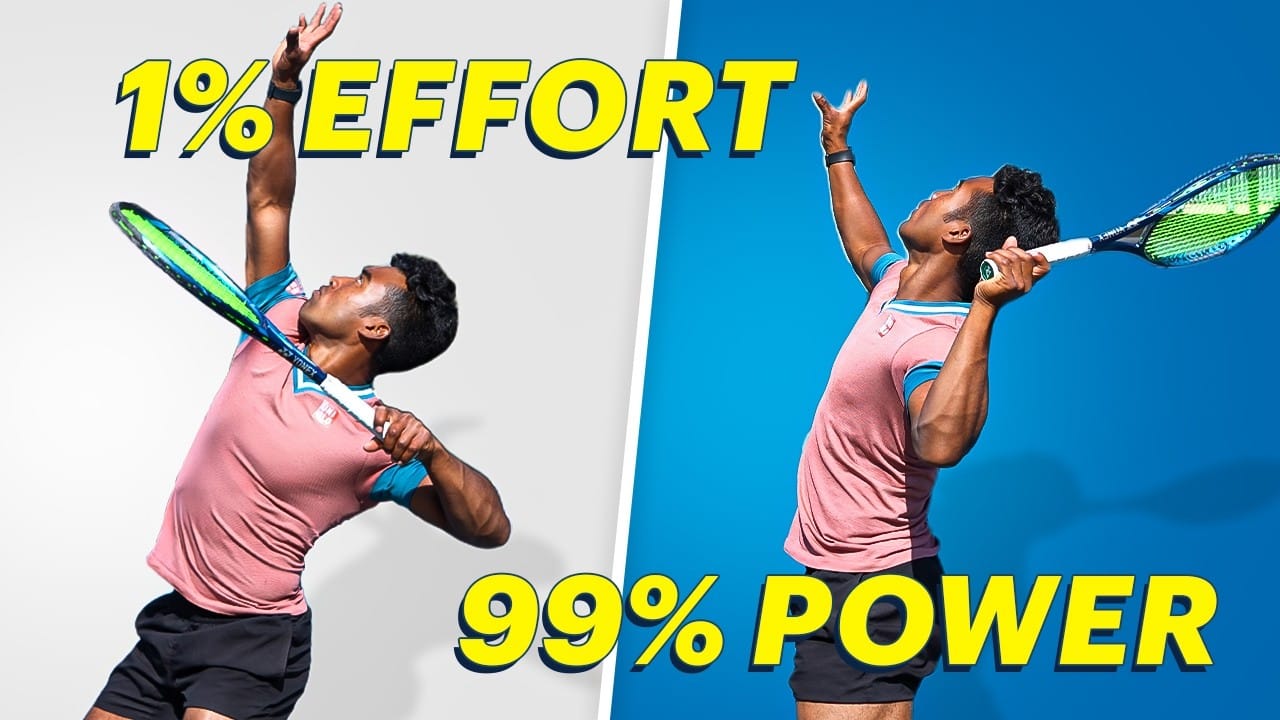
The first golden rule for unlocking serve potential is to stop muscling the ball and transform the body into a whip. This requires a three-part kinetic chain: acceleration initiated by a short, fast impulse from the back hip; a completely relaxed hitting arm acting as the whip's tip; and finally, a sharp deceleration of the body to transfer energy explosively into the racket.
Muscling the serve with a tense arm turns it into a stiff stick, blocking this energy flow. True power comes not from isolated arm strength but from this coordinated ground-up sequence, which leverages the body's largest muscles for maximum efficiency and zero wasted effort.
"In order to accelerate a whip, you start it, but if you keep going... you won't actually get the full energy transfer toward the tip. So the way you accelerate a whip is by how fast you start, but also stop."
Eliminate Serve-Killing Tension in the Trap, Chest, and Grip
Even with perfect mechanics, tension in two specific areas will always prevent a serve from reaching its true potential. The common methods for generating force—tensing the trapezius muscle and chest—are not just keeping you from making progress, they're actively moving you backward. Tension in the trap shortens the neck and restricts shoulder mobility, while a tight chest leads to an inefficient pushing motion.
Along with a tense grip, these issues create a bottleneck that sabotages the entire kinetic chain. Fixing the root cause requires conscious relaxation in these key zones, as they are prerequisites for allowing the arm to act as the powerful, relaxed tip of the whip.
"If your neck looks short... you're likely tensing the trap. And that tension leads to the lack of mobility in the shoulder."
Use Hip Rotation and Spine Tilt to Generate Relaxed, Explosive Power
The million-dollar question for many players is how to generate explosive power while staying relaxed. A simple drill can fix the root cause of arm-dominant serves by teaching the body to initiate force from the core. By rotating the hips with loose arms, a player can feel the natural "fling" effect that this motion creates.
To translate this rotational force upward, the key is to change the spine's axis of rotation by tilting it back while driving the hip and shoulder up toward the ball. This sequence allows the hitting arm to go through its throwing motion naturally, without conscious effort or tension.
"Notice that when your arms are completely loose and you rotate your hips, your arms naturally fling away from your body... Don't even think about throwing anything."
Also mentioned in this video
- Swinging harder on serves makes them slower and less consistent due to arm… (0:01)
- A crammed contact point, often caused by a terrible toss, is kryptonite for… (4:12)
- Coordinating the kinetic chain properly for a serve involves relaxing the chest… (7:23)
Summarised from RacquetFlex · 14:40. All credit belongs to the original creators. Streamed.News summarises publicly available video content.