Original source: Ride-Along Sessions with Cookie!
This video from Ride-Along Sessions with Cookie! covered a lot of ground. Streamed.News selected 4 key moments and summarises them here. Everything below links directly to the timestamp in the original video.
Understanding the physics of a sail reveals a core principle of windsurfing: finesse and smooth airflow triumph over brute force. It's less about trapping wind and more about slicing through it.
Windsurfing Sails Generate Power Like an Aircraft Wing, Not by Catching Wind
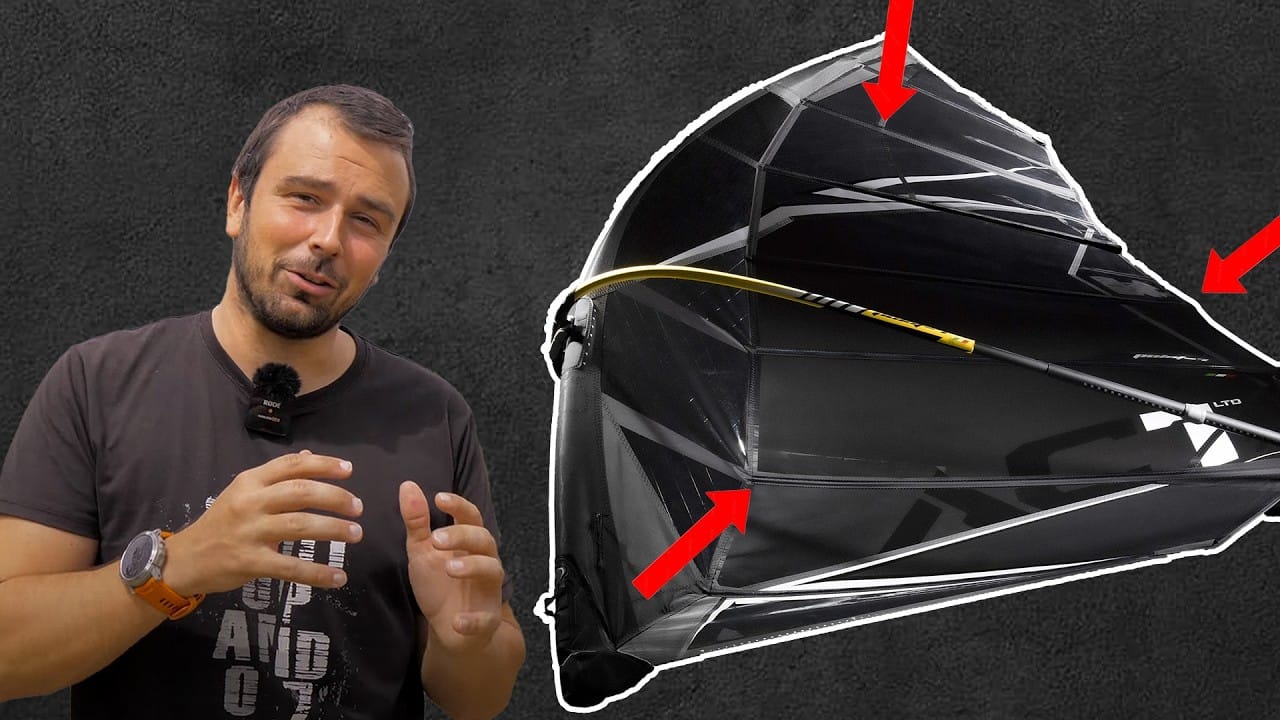
A windsurfing sail creates forward momentum through lift, similar to an aircraft's wing, not by simply catching the wind in a bag. Smooth airflow across both sides of the sail—a higher pressure inside and lower pressure outside—is what generates controllable power. A mast with the correct rigidity is essential, allowing the sail to flex and "breathe" with changing wind conditions.
The reality is that simply pulling the sail in hard creates a wall of uncontrollable turbulence, which is inefficient. This is not simply about applying brute force; it is about achieving a state of clean, attached "laminar flow" for maximum performance and speed.
"If just pulling your back hand might feel quite powerful, but all you're doing is creating a wall of uncontrollable wind."
To Gain Controllable Power in Windsurfing, Riders Should Open the Sail, Not Pull It Tighter
Contrary to intuition, pulling a windsurfing sail in as hard as possible can be counterproductive, creating an inefficient "bag of wind." In many conditions, especially during a gust, slightly opening the sail generates more usable and controllable power. This allows for smoother airflow and more effective acceleration.
As speed builds, the apparent wind shifts forward, which then requires the rider to pull the sail in. What this amounts to is a dynamic process of adjustment, where properly positioned harness lines, not arm strength, should bear the load.
"Sometimes... I'm opening the sail slightly. That's creating more power and more controllable power that I can then actually do something with."
Apparent Wind Shift Forces Constant Sail Adjustments in Gusty Conditions
Riding in gusty conditions requires constant, subtle adjustments to the sail to maintain optimal power. As a windsurfer accelerates, the wind they feel—the "apparent wind"—shifts toward the nose of the board. This change requires the rider to continually trim the sail to find the sweet spot for power.
What this amounts to is a continuous search for laminar airflow, where the wind passes smoothly over both sides of the sail. This is not simply about holding a static position, but about actively tuning the rig in response to changing speed and direction.
"As I speed up, the wind that I feel starts to move towards the nose a little bit... the apparent wind, the wind that I actually feel, the wind I'm tuning or trimming my sail to."
To Sail Upwind, Windsurfers Must Open the Sail to Avoid Turbulence
To sail effectively upwind, a windsurfer must slightly open the back of the sail rather than keeping it pulled in tightly. Attempting to point upwind while fully "sheeted in" creates uncontrollable turbulence as the wind hits one side of the sail and stalls. This effectively creates a wall that prevents progress into the wind.
The reality is that easing the sail allows air to flow smoothly across both surfaces, generating the lift needed to steer closer to the wind. This technique can improve a rider's upwind angle by as much as 45 degrees.
"If I just stay sheeted in trying to go upwind, it creates power of uncontrollable turbulence. The wind is just whacking into one side of the sail."
Also mentioned in this video
- The concept of letting a windsurfing sail "breathe" means allowing wind to run… (0:01)
- Achieving smooth, clean airflow in windsurfing is best accomplished by… (6:24)
Summarised from Ride-Along Sessions with Cookie! · 7:30. All credit belongs to the original creators. Streamed.News summarises publicly available video content.