🌐 Also available in: 🇫🇷 Français
Original source: Iron Will Tennis
This video from Iron Will Tennis covered a lot of ground. Streamed.News selected 7 key moments and summarises them here. Everything below links directly to the timestamp in the original video.
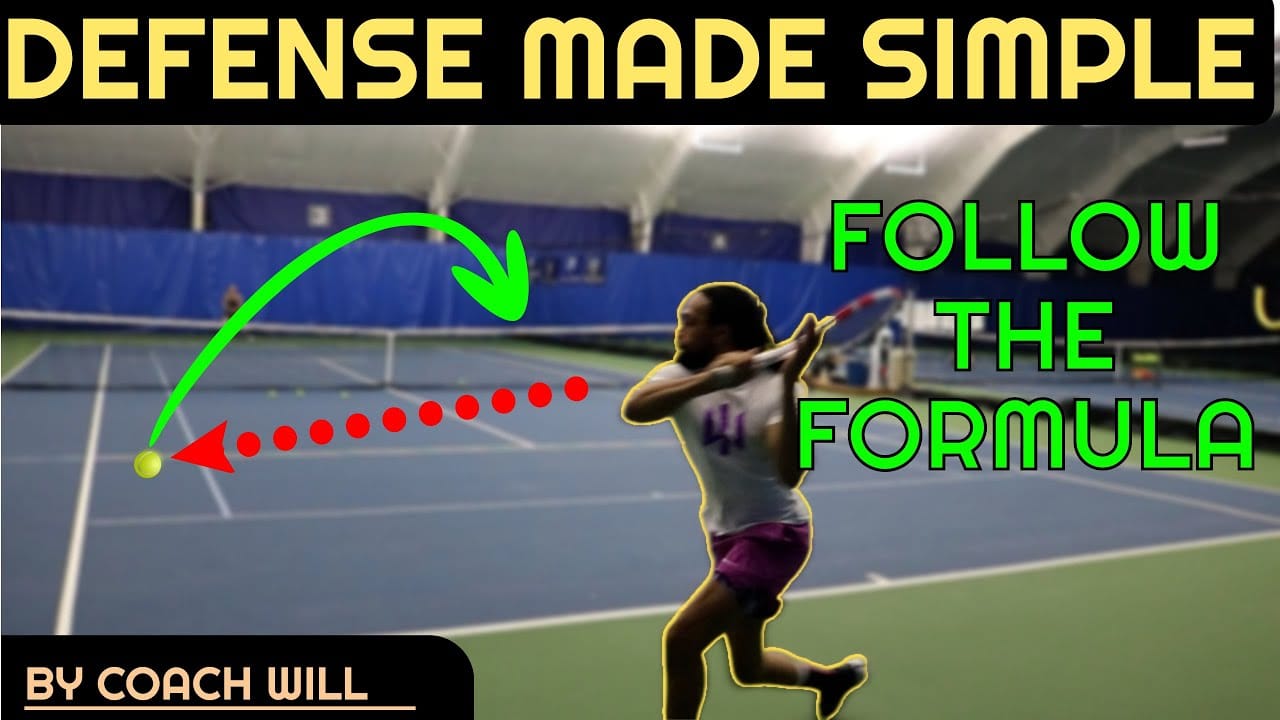
Defense isn't just about getting the ball back. Learn how a single shot can achieve three distinct defensive goals at once, completely neutralizing an opponent's attack.
A Single Defensive Shot Can Simultaneously Limit Options, Add Time, and Remove Targets
Effective defense transcends one-dimensional tactics like simply hitting high or using a slice. Advanced players can overlap defensive principles, achieving multiple objectives with a single shot. For example, a well-placed slice in response to an attack can simultaneously limit the opponent's options by making it difficult to generate pace, add time for recovery as the ball floats, and take away their preferred target.
This multi-faceted approach is a powerful tool for neutralizing an opponent's offense. By layering defensive effects into one shot, a player can turn a disadvantaged position into a neutral one, disrupting the attacker's rhythm and nullifying their strengths.
"I took away the option by slicing it. I gave myself time by slicing it and I made her target less available. I literally did all three in one shot."
Increase Opponent's Risk by Forcing Shots From Disadvantageous Court Positions
To effectively take away an opponent's targets, a player must understand their preferential hitting zones and then place the ball where their favorite shot becomes a high-risk endeavor. The goal is to manipulate the geometry of the point to decrease their probability of success. Forcing an opponent to attempt a down-the-line shot from a deeper or wider court position, for instance, significantly increases the difficulty.
This strategy is not about entirely preventing the opponent from hitting their shot, but rather about shifting the risk-reward calculation in one's favor. By consistently making their preferred plays more difficult, a player can induce unforced errors.
"You just want to put the ball in a spot where that target then becomes a high risk shot."
Use Height and Heavy Slice to Manipulate Time and Counter Aggressive Opponents
While hitting with height is a common method for adding time back into a point, it is not the only option. A heavy slice that glides and stays low can be equally effective, as it often forces an opponent to move back and wait for the ball to rise into their strike zone. This provides a crucial moment for the defender to recover court position.
The main determining factor in choosing between height and slice is the opponent's style. Against an aggressive player who looks to attack high balls early, the heavy slice becomes a superior tactical choice to neutralize their forward court position.
"When they're aggressive, they look for that high ball to step in and take it early. So, the slice might be a great option to slow your opponent down and keep them back."
Control Offensive Threats by Manipulating Depth and Central Court Angles
A player can proactively take away an opponent's primary targets by using depth and central positioning. Hitting a deeper defensive ball is an effective counter against a player who favors the inside-out forehand, as it denies them the time and court position needed to execute it effectively. This turns their strength into a more difficult shot.
Similarly, directing defensive shots more towards the center of the court neutralizes players who rely on creating sharp angles. This tactical approach requires observing an opponent's patterns to identify their most reliable offensive plays and then applying the appropriate geometric counter-strategy.
"If she was somebody who likes to use heavier angles, I might want to land the ball a little deeper to take away those sharp angles or hit the ball more central to take away those sharp angles."
Use Slice and Heavy Topspin to Disrupt an Opponent's Offensive Rhythm
Limiting an opponent's offensive options is achieved by altering the characteristics of the incoming ball to make attacking difficult. Using a slice is an effective way to absorb pace, which makes it challenging for the opponent to generate their own power and flatten out the ball. This disrupts players who rely on pace to build points.
Alternatively, a heavy topspin response that kicks up high can force the opponent to contact the ball outside their preferred strike zone. This tactic interferes with their timing and mechanics, diminishing the quality of their offensive shot and giving the defender an advantage.
"If I go with that slice, it's more difficult to generate pace off of that slice. So that gives me some time back and also stops her from like flattening that ball out."
Defend to the Center of the Court to Mitigate Angles and Control Rallies
An underutilized yet highly effective defensive strategy is to direct the ball deep to the center of the court. The reason this works is rooted in court geometry; from a central position, it is very difficult for an opponent to generate an angle that pulls the defender wide. This tactic effectively neutralizes angle-based offenses.
This approach contrasts with the more conventional crosscourt defense, which inherently opens up specific angles for the opponent to attack. Understanding this geometric principle allows a player to make more intelligent defensive choices based on their opponent's shot tendencies and strengths.
"If you hit a ball deep center, it's very difficult to get pulled off the court too wide because the court's very short on one side or the other."
Exploit Opponent Preferences by Manipulating Ball Height and Spin
The main determining factor when taking away an opponent's options is the height and spin of the ball, which must be tailored to their specific tendencies. A player must first diagnose whether an opponent is more comfortable attacking high balls or low balls. This understanding forms the basis of the defensive strategy.
Once this preference is identified, the correct tool can be applied. To force an opponent who dislikes low balls into an uncomfortable position, a flatter shot or a low, skidding slice is the proper choice. Conversely, a heavy topspin ball can be used to kick the ball high into the strike zone of a player who struggles with that height.
"When you're controlling those options, you just want to know what the person on the other side likes or doesn't like and then apply whatever your preference is to handle those things."
Also mentioned in this video
- The importance of good defense in tennis for winning matches and championships,… (0:00)
- A simple framework for solid defense in tennis involves responding to offensive… (0:28)
- The three categories for defense are time, targets, and options, where the goal… (1:01)
- Adding time to one's game when in a defensive position can be achieved by… (1:47)
- The presenter concludes the video by summarizing the defensive framework of… (8:20)
Summarised from Iron Will Tennis · 9:36. All credit belongs to the original creators. Streamed.News summarises publicly available video content.