🌐 Also available in: 🇫🇷 Français
Original source: Iron Will Tennis
This video from Iron Will Tennis covered a lot of ground. Streamed.News selected 3 key moments and summarises them here. Everything below links directly to the timestamp in the original video.
Instead of trying to overpower your opponent, learn a strategy that uses their own aggression against them by forcing unforced errors.
Strategic Patience Can Induce Unforced Errors by Forcing Opponents to Overplay
A winning strategy can be built on tactical patience rather than overwhelming power. By maintaining solid defense, athletic court coverage, and consistently high-quality shots, a player can apply pressure that compels an opponent to feel their own shots are insufficient. This dynamic encourages the opponent to take on more risk and attempt to end points prematurely, which often results in a higher rate of unforced errors.
This approach demonstrates that match outcomes are heavily influenced by psychological pressure. Instead of trying to out-hit an aggressive player, one can leverage their opponent's tendencies by remaining disciplined. Winning points by simply keeping the ball in a good spot and waiting for an error is a valid and efficient tactic that capitalizes on an opponent's impatience.
"The way I play tends to put pressure on people to feel like they have to do more. I win a lot of points where my opponents feel like the shots they're hitting aren't necessarily good enough."
Match Analysis Features Opponent with Proven Victories Over Higher-Rated Players
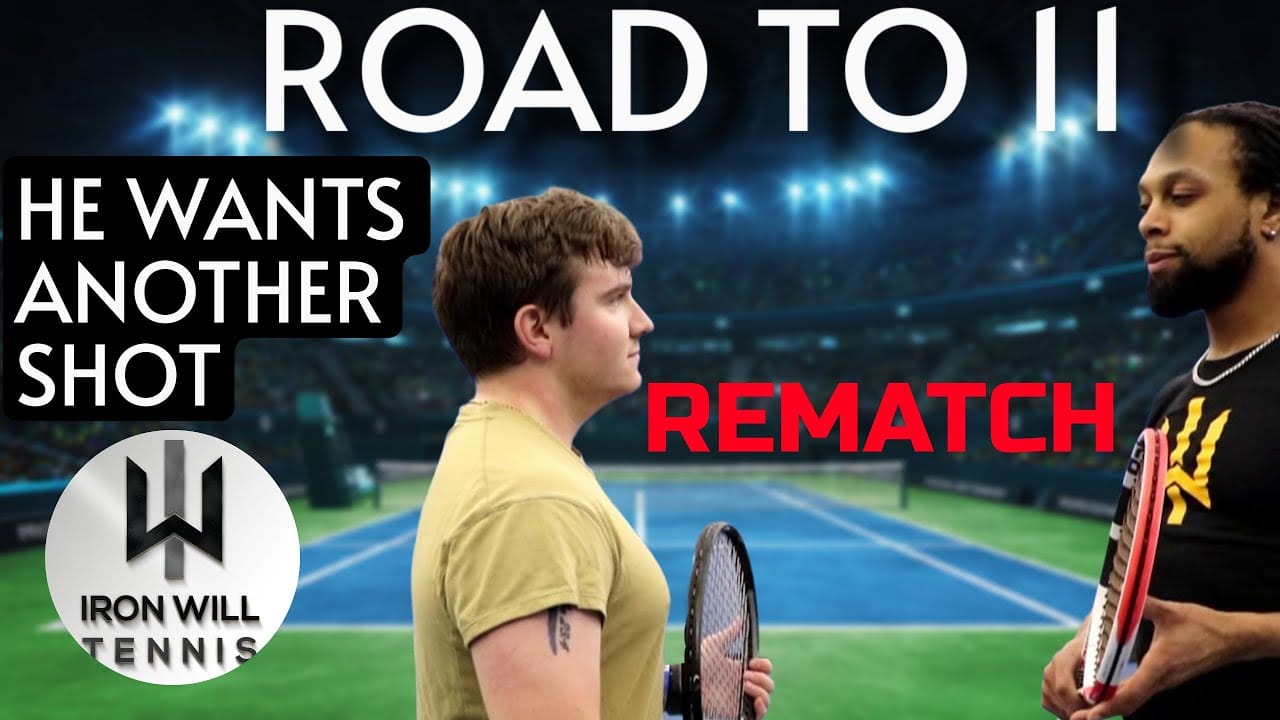
The featured match is against Justin Schitz, an opponent who has demonstrated significant improvement since a previous encounter years prior. At that time, he was rated as a 9.0 UTR, but he has since gone on to play college tennis and secure victories against players rated as 9, 10, and even 11 UTR.
This established record of success against high-level competition is a critical factor in pre-match strategic planning. Facing an opponent with proven capabilities requires a disciplined game plan, as one cannot rely on the opponent making simple errors under pressure.
"He was a 9.0 something UTR at that point. He's since gone on to play college, get some good wins against some nines, tens, and even 11 UTRs."
‘Road to 11’ Series Resumes Following Recovery Period with Limited Training
The 'Road to 11' series, which documents the process of elevating a UTR rating to an 11.0 minimum, continues after a forced break due to illness. The recuperation period significantly limited physical activity, with intense on-court practice sessions being cut short to only 20 or 30 minutes before the onset of fatigue.
This context of returning to play after a layoff provides a crucial backdrop for the subsequent match analysis. It presents an opportunity to examine how a player's technical foundation and strategic discipline hold up when their physical conditioning is not at its peak.
"I did try to do some hitting on the court, but I usually could only last like 20 to 30 minutes of full intense practice before my body was just giving out."
Summarised from Iron Will Tennis · 12:31. All credit belongs to the original creators. Streamed.News summarises publicly available video content.