Original source: CAPT P KUMAR
This video from CAPT P KUMAR covered a lot of ground. Streamed.News selected 8 key moments and summarises them here. Everything below links directly to the timestamp in the original video.
The right mentor can make or break a career, not just by teaching skills but by managing the psychological pressures of high-stakes performance. Understanding the value of “healthy stress” is key to growth in any demanding field.
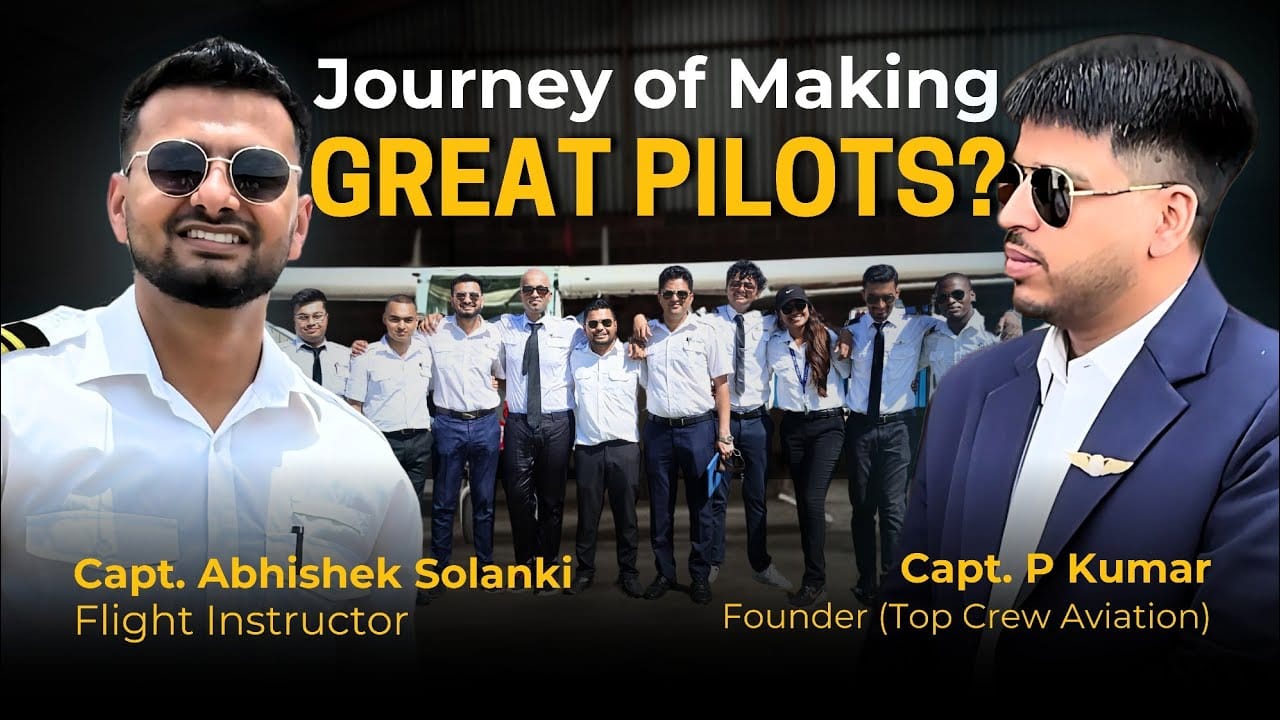
Flight Instructors Second Only to Parents in Shaping Pilots, Experts Say
The role of a flight trainer is profoundly influential, second only to that of a parent in a student pilot’s development. An effective instructor must tailor their teaching methods to each individual, as a one-size-fits-all approach is ineffective. It is crucial to understand that poor instruction can be so detrimental it can lead to depression, derailing a promising career.
Furthermore, it is important to note that a certain level of “healthy stress” is beneficial for keeping a pilot alert and focused. This managed pressure ensures they remain on their toes and are motivated to achieve their ultimate goals, preventing the complacency that can arise from being too laid back.
"A little bit of stress is required... We call it the healthy stress. The healthy stress is very important... It keeps you on your toes."
Passion, Not 'Hour Building,' Defines a Great Flight Instructor
A critical distinction exists between flight instructors driven by passion and those who are merely “building hours” to advance their own careers. While any instructor can teach the mechanics of flying, one who lacks passion often lacks the patience required for effective teaching. This approach, focused only on personal gain, can be detrimental to a student's progress and morale.
It is important to note that a passionate trainer imparts not just technical knowledge but also invaluable experience and a genuine love for flying. This shapes a student's entire outlook, turning rote learning into a true pursuit of mastery and ensuring a deeper connection to the craft.
"If you get any trainer who is not by choice but by passion, trust me, your life would be very easy."
Pilots Contrast the 'Real Flying' of Small Planes with Automated Airliner Procedures
Flying a small aircraft like a Cessna provides a degree of freedom and direct connection to the machine that is absent in the highly procedural world of commercial aviation. This “real flying” allows for maneuvers like steep turns and the flexibility to navigate creatively, an experience many airline pilots reportedly miss. The smaller plane offers a pure interaction between pilot, machine, and sky.
It is crucial to understand that as aircraft size and automation increase, the pilot's role shifts more toward system management. This contrast highlights a fundamental trade-off in aviation careers: the raw experience of hands-on flight versus the responsibility of managing complex systems with hundreds of passengers aboard.
"I've done airline flying, so this is the real flying. You cannot play in an airline; you have to follow the procedures."
Aspiring Pilots Advised to Seek Expert Guidance and Define Career Goals Early
Aspiring pilots are strongly advised to conduct thorough research and seek expert guidance before committing to expensive training programs, particularly when considering international options. Identifying a clear career passion early on, such as a preference for instruction over airline flying, is vital for success and focus. Many people struggle precisely because they have not decided what they truly want.
It is important to note that avoiding hesitation and misinformation prevents unnecessary stress and ensures the journey is enjoyable. Consulting with seasoned professionals, rather than uninformed acquaintances, provides the correct guidance needed to navigate the complexities of a career in aviation.
"Always consult with an expert. Please don't discuss with anyone who is not even a pilot. That advice does not make any sense."
Cessna Hailed as 'First Love' for Pilots, Teaching Foundational Skills Through Tough Love
The journey of a student pilot is marked by contrasting emotions: the immense thrill of their first solo flight and the deep frustration of mastering landing patterns. An instructor's key role is to manage this emotional dynamic, guiding the student through these challenges. The robust Cessna aircraft is often the crucible for these formative experiences and hard-won skills.
It is important to understand that this aircraft is considered a pilot's “first love” because its rugged design teaches the fundamentals of aviation in their purest form. The Cessna's strong landing gear withstands the rigors of training, making it the perfect platform for mastering core skills.
"This is our first love. This is the first bird they call it, you know, your first love, the first sight. Everything is this."
Global Lack of Clear Aviation Training Information Puts Students and Parents at Risk
A significant lack of clear and accessible information about aviation training is a worldwide problem. This information gap creates uncertainty for aspiring pilots and their parents, who often invest substantial sums of money into the career path. The stakes are high, as a small misstep based on poor information can lead to significant financial and emotional setbacks.
It is crucial to understand that providing clear guidance is essential for supporting both the student and their family. Proper information empowers parents to support their children effectively and helps students avoid choices that could derail their progress toward a rewarding and entertaining career in aviation.
"There's a lack of information... not only in India, lack of information everywhere. I think that is everywhere all over the world."
A Passion for Teaching, Not Perks, Drives Pilot's Ambition to Become a Training Captain
For some pilots, the ultimate career aspiration is not simply flying for an airline but becoming a training captain. This goal is driven by a deep-seated passion for education and mentorship, inspired by the belief that learning has no limits. The primary desire is to help others achieve their dreams and master the art of flying, a goal centered on giving back.
It is important to note that this ambition stems from a passion for the craft itself, rather than external motivators like salary or the prestige of a uniform. Choosing to be an instructor by passion, not by necessity, fundamentally improves the quality of the training provided.
"I really wanted to be a training captain. I was always told by my parents that, you know, education has no limits."
Instructor Prefers 'Ab Initio' Training to Shape Pilots From the Ground Up
A distinct preference exists for ab initio training—guiding a student from their very first flight—over instructing experienced pilots in an airline setting. The motivation is to witness and mold a student's complete journey, understanding their initial struggles and helping them develop from raw talent into a skilled professional. This process is akin to polishing a raw diamond, requiring patience and dedication.
The question then arises: why choose this more challenging path? The answer lies in the profound satisfaction of shaping a pilot's foundation and writing their success story, a fundamentally different role than refining the skills of established professionals.
"You wanted raw, and then you wanted to make a diamond out of it. Yeah, that's what I looked forward to."
Also mentioned in this video
- In Tanzania where he got to sit in cockpits, and he later completed his flight… (2:20)
- With Abhishek how an air show sparked his interest in aviation, leading him to… (3:10)
- Aspiring pilots, emphasizing the importance of passion and commitment despite… (3:51)
- After becoming a commercial pilot in 2021, he considered 'bush flying' in… (5:06)
- He took approximately two years to complete his flight training from zero to… (15:18)
- Abhishek decided to become an instructor right after completing his commercial… (16:03)
- Of training pilots on large commercial aircraft, where instructors must ensure… (18:23)
Summarised from CAPT P KUMAR · 26:08. All credit belongs to the original creators. Streamed.News summarises publicly available video content.