🌐 Also available in: 🇫🇷 Français
Original source: The WindsurfingTV Podcast
This video from The WindsurfingTV Podcast covered a lot of ground. Streamed.News selected 8 key moments and summarises them here. Everything below links directly to the timestamp in the original video.
In the high-tech world of hydrofoiling, a few centimetres can be the difference between a routine ride and a spectacular aerial trick. Here's what goes into the perfect setup.
Balz Müller Details Optimal Foil Gear for Freestyle and Jumping
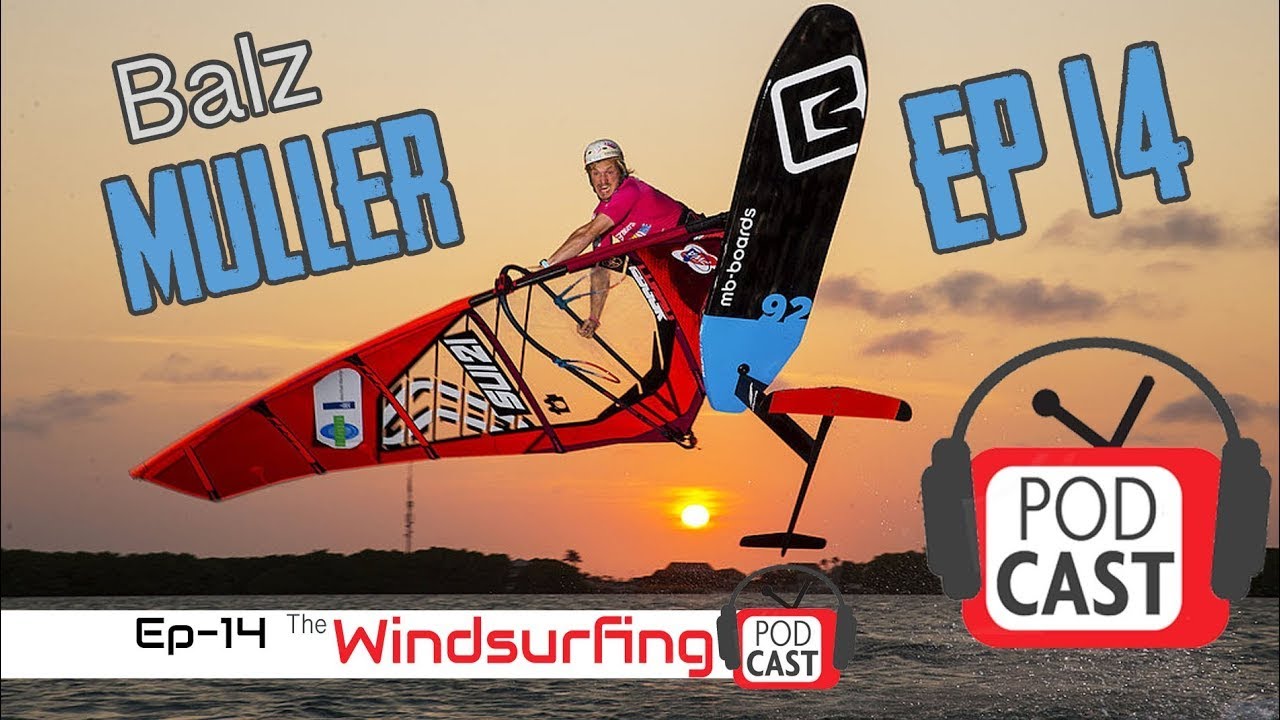
Professional windsurfer Balz Müller provides a technical breakdown of hydrofoil equipment for different disciplines, advising that smaller, faster wings are superior for freestyle and jumping. Using his pro-model Moses foil as an example, he specifies that a smaller 740 cm² wing works best in stronger winds, while a medium 1500 cm² wing is a versatile option for both windsurfing and winging. For generating the necessary 'pop' for aerial maneuvers, he states speed is key for height, while precise movement ensures control.
The implications of this detailed guidance are that equipment choice is becoming a highly specialized and critical factor in athletic progression. It's about the notion that subtle variations in wing size, fuselage length (90 cm is recommended), and mast height (85 cm) directly impact a rider's ability to perform. This underscores a dynamic where engineering and rider feedback are co-evolving, pushing the boundaries of what is possible in the sport and requiring athletes to possess deep technical knowledge of their gear.
"The speed gives the height and the movement gives the controlled pop."
▶ Watch this segment — 1:21:03
Freestyle Windsurfers Struggle for Sponsorship Without Top Results, Says Balz Müller
Balz Müller describes the financial precarity facing professional freestyle windsurfers who cannot consistently achieve top competition rankings. He argues that an athlete's media presence and promotional activity can provide more value to a sponsor than a high ranking, citing cases where world champions have a minimal social media footprint. Müller admits his own early career was hobbled by a failure to proactively communicate with potential sponsors, a crucial skill for modern athletes.
This situation reveals a structural shift in the economy of professional niche sports. We're seeing a dynamic where the athlete's role is bifurcating into that of a competitor and a media creator. The implications are that sponsorship value is increasingly tied to an athlete's personal brand and their ability to generate content, rather than solely on their performance in official events. This forces athletes to become entrepreneurs, managing their own marketing and communications to secure a livelihood.
"I won't get sponsors as long as I'm not asking for them. If you never ask for anything, you will never get rewarded."
New Freestyle Windsurfing Tour Proposed to Boost Visibility With City-Based Events
A new concept for the freestyle windsurfing tour aims to increase the sport's visibility by hosting tow-in exhibitions in the centers of major European cities like Paris and Amsterdam. The proposal, endorsed by professional windsurfer Balz Müller, would also feature a flexible format where competitions could utilize either traditional fins or modern hydrofoils, depending on the wind conditions, thereby maximizing the chances of running an event.
The strategic thinking behind this proposal is to break the sport out of its isolated, hard-to-reach locations and present it directly to a mainstream urban audience. It's about the notion that for niche sports to grow, they must adapt their format to be more spectator-friendly and media-savvy. The implications of this are a potential shift toward hybrid events that combine athletic competition with public spectacle, a model designed to attract new fans and corporate sponsors.
"We got to show to the spectators what we are able to do. And that got to change. We got to go to the spectators because they're not coming to visit Fuerteventura."
▶ Watch this segment — 1:08:04
Foiling Drives Unprecedented Growth in Windsurfing, Contradicting Industry Narratives, Says Balz Müller
Professional windsurfer Balz Müller reports that the adoption of hydrofoil technology is fueling a massive resurgence in windsurfing, directly contradicting an industry narrative that blames the COVID-19 pandemic for sluggish development. Müller observes that lakes are now crowded with hundreds of surfers, a stark contrast to five years ago when the sport was widely considered to be in decline. He argues this growth is driven by foiling's ability to make the sport accessible in a wider range of conditions.
The implications of this trend point to a technological disruption reviving a legacy sport. We're seeing a dynamic where an innovation has fundamentally expanded the sport's viability, especially in locations with light or inconsistent wind. The industry's focus on pandemic-related supply issues may be obscuring this powerful grassroots growth, suggesting a disconnect between the manufacturing sector's perspective and the reality of participant engagement.
"Lots of people five years ago they were telling, 'Oh, windsurfing is dead.' And now with all this foiling, I never saw as many guys windsurfing. I'm sure that windsurfing is growing like never before."
Winging Offers Greater Accessibility for Beginners Than Traditional Windsurfing, Müller Explains
The new sport of wing foiling is significantly more accessible to beginners than traditional windsurfing, according to professional waterman Balz Müller. He notes that a complete novice can be up and riding on a hydrofoil within ten minutes, a stark contrast to the steep learning curve and delayed gratification of windsurfing. This ease of entry, combined with the sport's versatility in varied locations like small, gusty lakes, is driving its rapid adoption.
It's about the notion that a low barrier to entry is a powerful catalyst for a sport's growth. Winging's quick learning curve provides the instant feedback and sense of accomplishment that can be crucial for retaining new participants. The implications of this are a potential reshaping of the water sports market, as new consumers may gravitate toward disciplines that offer faster progression and greater adaptability over more technically demanding legacy sports.
"You can put an absolute bloke on a board and he's flying after 10 minutes, you know, and this is ridiculous. Windsurfing, you got to be on it, you know, you got to do something for it and the reward is quite small."
▶ Watch this segment — 1:13:30
Windsurfing Tour Must Adapt to Market Trends by Integrating Foiling, Argues Balz Müller
Professional windsurfer Balz Müller argues that the Professional Windsurfers Association (PWA) must integrate foil freestyle into its official competitions to remain relevant. He points to a clear market trend where brands are increasingly selling foil equipment, and believes the sport's governing body should reflect this commercial reality in its event structures. Foiling is especially critical in light-wind locations, where it allows for high-performance competition when traditional equipment would be unusable.
This situation highlights a classic institutional tension between established rules and technological innovation. We're seeing a dynamic where the PWA's potential reluctance to adapt its format risks alienating both its athlete base and the industry partners who are driving the sport's evolution. The implications are that governing bodies must demonstrate flexibility or risk becoming disconnected from the grassroots and commercial energy that sustains the sport.
"Depending on the conditions you go with fin or foil. There's an 80% bigger chance of a result."
▶ Watch this segment — 1:06:16
Balz Müller Details 'Free Surfer' Contract Model Based on R&D and Royalties
Windsurfer Balz Müller has shifted his career focus from a traditional competition-based contract to a 'free surfer' model centered on research, development, and royalties. His agreements with brands like Severne and Moses are now structured around the sales of his pro-model products, such as the 'Foil Freak' sail and a signature hydrofoil. This arrangement transforms his primary role from winning events to driving innovation and marketing equipment.
This career path illustrates the evolution of the professional athlete into a hybrid role of influencer and product developer. It's about the notion that in niche sports, an athlete can create a more sustainable career by decoupling their income from the volatile nature of competitive results. The implications of this are profound, offering a viable alternative business model for athletes who possess strong personal brands and deep technical knowledge of their sport.
"My latest deal actually changed from being an active rider on the tour and having necessary good results to a deal where it's more important to produce good gear now."
Starting an Action Sports Brand Is Complicated by Production and Financial Realities
The romantic vision of launching an independent brand in the action sports industry often clashes with the harsh realities of production and finance, explains Balz Müller. Citing the experience of his peers, he notes that entrepreneurs face immense challenges, from managing manufacturing to navigating difficult payment terms with retailers. These business pressures can quickly overwhelm the passion for design and performance that initially inspired the venture.
This dynamic highlights the significant barriers to entry that exist for small businesses in equipment-intensive markets. We're seeing a situation where success is often less about the quality of the product and more about the ability to manage complex supply chains and secure favorable financial arrangements. The power held by established distributors and retailers means that even the most innovative startups can struggle to gain a foothold, underscoring the formidable gap between a great idea and a viable business.
Summarised from The WindsurfingTV Podcast · 1:42:02. All credit belongs to the original creators. Windsurfing TV Podcast summarises publicly available video content.