🌐 Also available in: 🇫🇷 Français
Original source: The WindsurfingTV Podcast
This video from The WindsurfingTV Podcast covered a lot of ground. Streamed.News selected 8 key moments and summarises them here. Everything below links directly to the timestamp in the original video.
Ever wonder how high-tech gear is created? A top sail designer explains that breakthrough products are more about clever modifications than flashes of pure invention.
Sail Designer John Skye Reveals Product Development Is Iteration, Not Invention
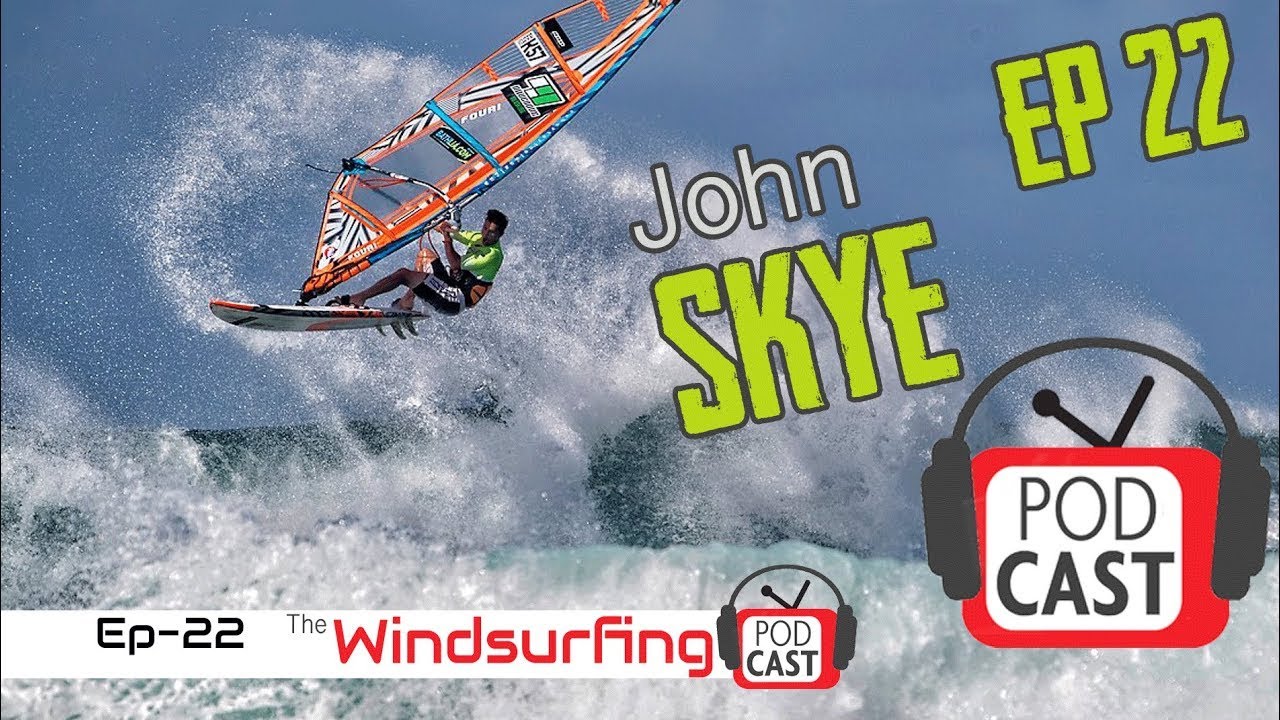
The process of designing high-performance windsurfing sails is one of gradual iteration rather than radical invention from a blank slate, according to designer John Skye. He detailed his own path to becoming a designer, which began not with drawings but with numbers in an Excel spreadsheet. He then used AutoCAD software to translate that data into visual patterns. The core of the work, he explained, is modification—for example, creating a new three-batten sail by adapting an existing four-batten design, rather than starting completely from scratch.
This perspective challenges the common myth of the lone genius and reframes innovation as a more grounded, cumulative process. It's about the notion that progress in highly technical fields depends on methodically building upon a foundation of proven concepts. The implications of this are that breakthroughs are often the result of a series of small, intelligent modifications, a principle that applies across many engineering and design disciplines, from software development to aerospace.
"Everything's just more or less like a modification of something and sometimes those modifications are really really radical, which you could say like a redesign I guess, but in the end you're taking lots of components from something else."
Sail Design More Complex Than Board Shaping Due to Interconnected 'Living' Dynamics, Says John Skye
The luff curve—the curve along the sail's leading edge—is one of the most critical elements in windsurf sail design because every component in a sail is interconnected, according to designer John Skye. He explained that a single adjustment, such as to the luff curve, can have a cascading effect on batten tension, overall stiffness, and the sail's 3D shape. This interconnectedness makes managing the trade-offs and compromises inherent in the design process exceptionally complex.
Skye contrasted this with board design, which he describes as a more static discipline dealing with a solid, unchanging object. A sail, however, behaves like a “living animal,” changing its shape and performance based on mast type, tension, and wind conditions. We're seeing a dynamic where the design of flexible, responsive systems requires a fundamentally different approach than that for rigid structures. The implications of this are that designers must think in terms of systems, a challenge common in fields from architecture to software engineering.
"The sail kind of like somehow it's like it's like more of a sort of a living animal if you like... and there's so many factors involved in it. For me, it's way more complex."
A Sail Designer's Role Extends Far Beyond Design to Encompass Full Production Management
The job of a high-performance sail designer extends well beyond the creative act of design to include oversight of the entire production process. John Skye described his role as covering everything from the initial concept to sourcing materials, managing quality control with the factory, and overseeing the integration of graphics. He highlighted the particular challenge of incorporating aesthetics into a functional panel layout without adding non-essential seams that could compromise the sail's performance.
It's about the notion that in modern specialized manufacturing, the designer must also function as a product manager and a supply chain coordinator. This holistic responsibility ensures that the final product aligns with the original vision in both performance and appearance. We're seeing a dynamic where the lines between pure design, engineering, and production management are increasingly blurred, demanding a broader skillset to bring a complex product to market successfully.
"You don't want to start just like chucking seams in randomly just to make the sail look pretty. You want to try and keep it all functional but looking good."
▶ Watch this segment — 1:15:17
Foiling Technology Upended Competitive Windsurfing, Causing Market Instability and Financial Losses for Brands
The introduction of foiling technology, while a major innovation, severely disrupted the competitive windsurfing market by creating instability and financial strain for brands. According to sail designer John Skye, the constant rule changes in professional racing—shifting between slalom and upwind-downwind formats and altering maximum sail sizes—left consumers hesitant to invest in new equipment that might be obsolete the following season. This uncertainty had a chilling effect on the sales of high-end slalom gear, a key market segment.
We're seeing a dynamic where rapid technological evolution outpaces the ability of governing bodies to establish a stable competitive framework. For Skye's brand, this resulted in significant financial losses, as thousands of dollars were spent developing prototypes for racing disciplines that were quickly abandoned. The implications of this serve as a cautionary tale for any industry undergoing a paradigm shift, illustrating how regulatory uncertainty during periods of innovation can stifle investment and create commercial risk.
"The rule suddenly changed... so all the work that went into that light wind 9.0 was just like totally wasted and we just threw away, you know, a couple of thousands just like boom."
▶ Watch this segment — 1:23:00
Pro Windsurfer John Skye Links Some of His Best Competitive Results to Accidental Hangovers
Professional windsurfer John Skye humorously recounted that some of his career-best competitive results occurred immediately following nights of heavy, unplanned partying. He described two specific instances—a wildcard event in Ireland and his first PWA freestyle competition—where he competed with a significant hangover and performed exceptionally well, even reaching a semifinal against world champion Josh Stone. In both cases, the celebrations had gone on until two or three in the morning before a day of competition.
It's about the notion that for certain high-pressure performers, performance anxiety can be a greater obstacle than physical fatigue. Skye theorized that being hungover inadvertently removed the mental pressure he typically struggled with, allowing him to compete more freely and intuitively. He clarified that the effect only worked when it was accidental, not a deliberate strategy. The implications of this touch on the complex psychology of elite performance, where a relaxed mind can sometimes unlock potential that intense focus cannot.
"I struggled a bit with the pressure of it all, and it seemed that when I was hung over, that pressure goes away."
Tour Prank Goes Awry as Dead Iguana in Gear Bag Leads to Incineration by Airport Security
John Skye recalled a memorable prank from his time on the professional windsurfing tour that ended with unexpectedly costly consequences. During an event in Bonaire, a large, dead iguana became part of a running gag, being hidden in various athletes' equipment bags. The prank escalated when the iguana was stuffed into the boom bag of fellow competitor Swifty* just before he flew to the United States.
Upon arrival in the U.S., airport security staff spotted the large carcass on an X-ray scan and promptly seized the bag. Citing biohazard concerns, authorities incinerated the entire bag and its contents. This resulted in the destruction of what Skye estimated to be six expensive carbon booms, along with numerous mast extensions, bases, and fins. The story highlights the lighthearted prank culture on the pro tour but also serves as a cautionary tale about how such antics can collide with real-world regulations, leading to significant financial loss.
"A boom bag goes through with this like giant iguana lying there and they ended up incinerating the boom bag... six carbon X9 booms with all his bases, all his extensions and fins and everything and an iguana and the whole lot got incinerated."
John Skye Details His Transition from Pro Athlete to Sail Designer Through Apprenticeship
Professional windsurfer John Skye explained that his transition into sail design was a gradual process rooted in an informal apprenticeship with veteran designer Thomas Pearson of Simmer. After being hired by RRD to test and help develop its emerging sail line, brand owner Roberto Ricci pushed Skye to take on design responsibilities himself. Leveraging his academic background in yacht design, Skye began to learn the specifics of the craft directly from Pearson, who was designing the brand's sails at the time.
This career path illustrates a model of how a top-level user can evolve into a creator. Skye described a phased learning process: he first asked Pearson how to make specific changes, then began implementing the changes himself for Pearson's review, and eventually took over the entire process. It's about the notion that deep, practical product knowledge gained through elite use, when combined with mentorship from an open and experienced expert, can provide a powerful foundation for a successful career in technical design.
"That then developed into me doing it all and just passing it through him and saying, 'Oh, does this look all right?' And he'd be like, 'Yeah,' until in the end I was just sort of doing it all."
Annual Product Releases Reflect Genuine Advances, Not Just Marketing, Argues Sail Designer
Sail designer John Skye directly challenged the common consumer complaint that annual equipment updates are merely cosmetic changes intended to drive sales. He argued that in the high-performance windsurfing industry, new models are only released when genuine, measurable improvements have been made. If development prototypes for a given year fail to outperform the existing product, the brand will opt to continue the current model rather than release something new for the sake of it, as launching a new line is a costly and complex endeavor.
We're seeing a dynamic where consumer cynicism, often fueled by practices in larger industries, clashes with the R&D realities of a niche, performance-driven market. It's about the notion that the primary driver for these brands is not planned obsolescence but a relentless pursuit of competitive advantage through technological improvement. While marketing may sometimes exaggerate the benefits of incremental updates, Skye insists the motivation behind a new model year is almost always a tangible step forward in performance.
"If there's a new model, it's not because we want to make money. Actually, putting out a new model probably costs more money than it makes."
▶ Watch this segment — 1:01:46
Summarised from The WindsurfingTV Podcast · 1:53:17. All credit belongs to the original creators. Windsurfing TV Podcast summarises publicly available video content.