🌐 Also available in: 🇫🇷 Français
Original source: The WindsurfingTV Podcast
This video from The WindsurfingTV Podcast covered a lot of ground. Streamed.News selected 8 key moments and summarises them here. Everything below links directly to the timestamp in the original video.
The surfboard under your feet might owe more to windsurfing than you think. Discover the hidden history of how one sport's advanced manufacturing techniques are shaping the future of another.
How Windsurfing's Advanced Tech Quietly Revolutionized Surfboard Design
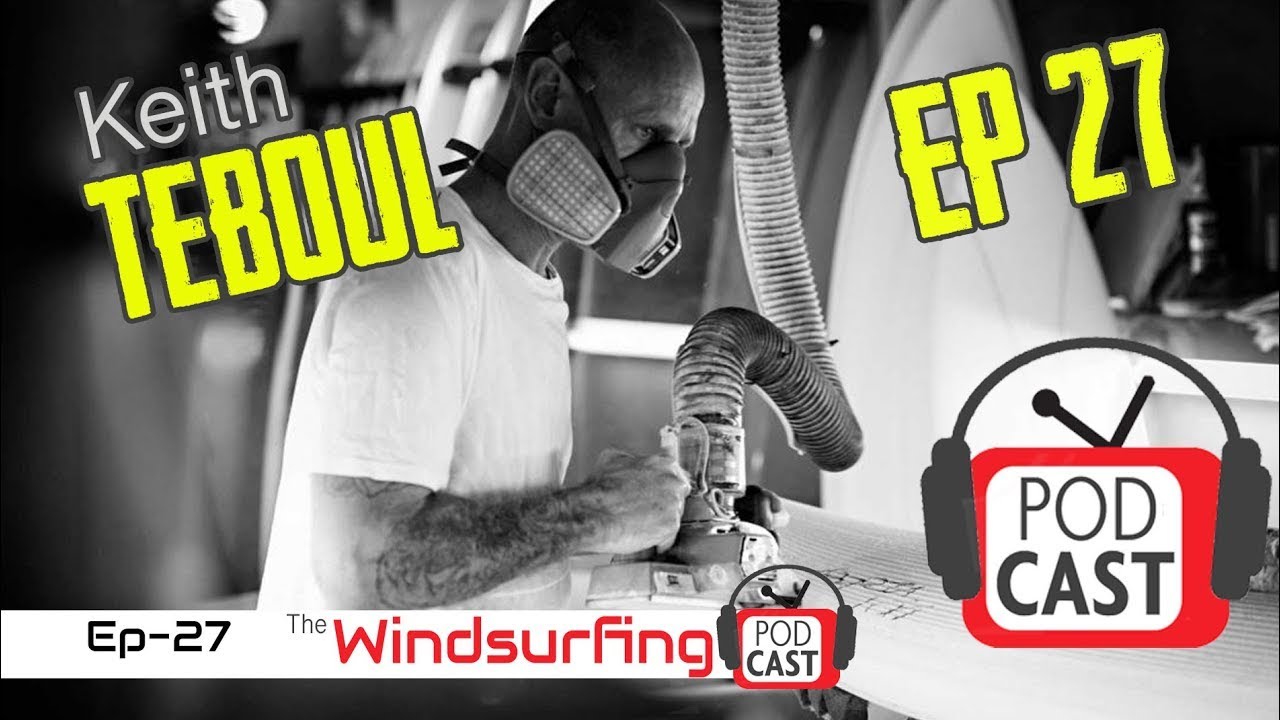
Board shaper Keith Teboul explained the significant technological transfer from windsurfing to surfing, noting that construction methods long standard in his sport are now being adopted by the broader surfing world. For decades, windsurfing has utilized advanced materials like EPS foam and manufacturing processes like vacuum-bagging to create boards that can withstand high speeds and extreme forces. According to Teboul, the closure of Clark Foam, a major supplier of traditional surfboard blanks, created an opening for these alternative technologies to enter the mainstream surf market.
The implications of this are a cross-pollination of design philosophies that is pushing the evolution of high-performance surfboards. We're seeing a dynamic where athletes like Kai Lenny, who rides full-carbon, vacuum-laminated boards, have been instrumental in demonstrating the advantages of this technology. It’s about the notion that construction methods once considered niche to windsurfing are creating lighter, quicker, and more responsive surfboards, fundamentally changing what is possible on a wave.
"We did bring something to surfing from windsurfing... the vacuum technology and all that. As a surf brand, most guys can't vacuum bag and they're not going to because it's not part of their process... So I have an edge in the technological side of things."
▶ Watch this segment — 1:06:57
Foiling Pushes Board Design to Its 'Weirdest' and Most Experimental Limits, Shaper Says
Designer Keith Teboul identifies foiling as the primary driver of radical experimentation in modern board shaping. Unlike traditional surfing or windsurfing where a board’s hydrodynamics are paramount, a foil board serves a different purpose. Its design must prioritise a quick release from the water for takeoff and aerodynamic stability once airborne, sometimes even generating downforce at high speeds. This has led to what Teboul calls the "weirdest" and most unconventional shapes of his career, as the performance parameters are completely different.
The implications of this extend beyond foiling itself, as innovations developed for its unique demands are being adapted for other disciplines. We're seeing a dynamic where concepts tested on foil boards are now influencing Teboul's designs for big-wave surfboards and even windsurf boards. It's about the notion that this new frontier is not just a separate category, but a crucial research and development platform that accelerates evolution across all water sports.
"The weirdest stuff I've shaped is right now with foiling... the board needs to have much different parameters than a normal board. Some of the concepts now that I'm doing in foiling I'm considering bringing into windsurfing and surfing."
▶ Watch this segment — 1:13:45
Shaper Keith Teboul Details His Digital-First, Feedback-Driven Board Design Process
Board shaper Keith Teboul outlined his design process, which blends rider feedback with sophisticated digital tools. A new design often begins with an intuitive feeling from his own riding or a specific performance request from an athlete like Kai Lenny, who might send video clips for analysis. Teboul then uses a computer shaping program to make iterative adjustments to a base design, modifying elements like the wide point or rocker line. The program's ability to shape asymmetrically allows for highly customised and nuanced designs.
This methodology represents a significant shift in how high-performance equipment is developed. It's about the notion that creativity and technical precision are not opposing forces. By using the computer as a tool, Teboul can translate the subjective "feel" of a board into precise, repeatable digital files. This process allows for rapid prototyping and a highly collaborative loop with athletes, ensuring that the final product is a direct response to real-world performance needs.
"I'll pull that up on the program and start playing with it. I've had times when I'm there and it's just not flowing, and I just stop because it's a waste of time. Then you know, say like Kai Lenny... he sent me like 10 clips... now we're gonna make a new surfboard with some changes."
Multi-Fin Setups Enabled Shorter, More Versatile Windsurf Boards, Designer Explains
According to shaper Keith Teboul, the advent of multi-fin designs has fundamentally altered windsurfing wave boards, making them more versatile than ever. He explained that the core principle of a wave board is to fit the curve of a wave and use its energy, whereas onshore boards need straighter rockers to generate their own speed. The introduction of multi-fin setups provided new pivot points, allowing designers to create shorter, more parallel outlines with straighter rockers that could still execute tight turns.
The implications of this are that the rigid categorisation of boards for specific conditions has softened considerably. We're seeing a dynamic where boards now have much greater crossover potential because they are more efficient for their size. This design evolution means a rider can use a single board across a wider range of conditions, from onshore blasting to down-the-line wave riding, without the significant performance compromises that were once necessary with single-fin designs.
"Did it get closer over the years with multi-fin? Yes, definitely... you're able to use flatter rockers because of having multiple pivot points on the board... So boards do cross over much more."
Windsurfing Board Design Enters an 'Incremental' Phase as Foiling Becomes the New Frontier for Radical Ideas
Windsurfing board design has entered a period of refinement rather than revolution, according to shaper Keith Teboul. After the major shifts brought on by the reintroduction of multi-fin systems, which allowed for shorter and more versatile boards, the current focus is on incremental changes. Teboul describes the present moment as one of "fine-tuning" existing concepts to make boards more efficient, stable, and balanced, rather than pursuing radical new shapes for production.
We're seeing a dynamic where the most creative and experimental design energy is now being channeled into foiling. It's about the notion that while core windsurfing design matures, foiling offers a less constrained environment for testing fundamentally new ideas. Teboul acknowledges he is working on some "radically different" concepts for the future, but for now, the focus in mainstream windsurfing is on perfecting a successful formula, a common stage in the lifecycle of a mature technology.
"In general now, I'd say the designs are more just incremental changes to try and make them better and more efficient... There'll be stuff coming. I'm working on a couple little things, some ideas that are starting to blossom that could be a little bit radically different."
▶ Watch this segment — 1:02:30
Shaper Keith Teboul Credits the 'Kai Lenny Effect' for Brand Credibility and Market Openness
Designer Keith Teboul attributes significant brand growth and market acceptance to what he calls the "Kai Lenny effect." He explains that the waterman's immense popularity across a wide demographic—encompassing surfers, foilers, and business professionals—provides his KT Surfing brand with broad exposure. Because Lenny participates in so many disciplines, from big-wave surfing to foiling, his endorsement lends crucial credibility to Teboul's multi-faceted design work.
The implications of this partnership highlight the power of a cross-disciplinary influencer in a specialized market. We're seeing a dynamic where Lenny's involvement fosters an openness to new technologies and shapes within the traditionally conservative surfing community. It's about the notion that when a highly respected athlete validates equipment across various sports, it breaks down preconceived barriers and encourages consumers to consider designs they might otherwise overlook.
"Working with Kai... he hits a huge demographic of people. His demographic of who he is accessing is much broader than a straight surfer. So for us it's been great because we do all this kind of stuff."
▶ Watch this segment — 1:12:00
Digital Tools Allow Shaper to Focus on Creativity by Offloading Technical Precision to Machines
For board shaper Keith Teboul, the perceived conflict between the art and science of design is resolved through technology. He identifies computer shaping programs and CNC machines as the "most amazing tools possible," which handle the technical, numerical precision of the process. Admitting he is not a strong hand-shaper, Teboul uses these digital tools to achieve the consistency and accuracy required, especially for complex designs with channels or unique bottom contours.
The implications of this approach demonstrate a modern manufacturing philosophy where technology enhances rather than replaces human creativity. It's about the notion that by automating the physical technicality, the designer is free to focus on innovation and the conceptual aspects of a shape. We're seeing a dynamic where the ability to replicate and evolve designs with digital precision is crucial for understanding what works, allowing for a more systematic and rapid development cycle.
"I have a computer shaping program and I have a machine that can shape boards. For me, that's the numbers, that's the technical... I like the machine to do the perfection. I'm not a very good hand shaper, I'll be straight up."
Shaper Details Challenges of Precision in Sandwich Board Construction
Keith Teboul highlighted the inherent challenges of achieving perfect replication in high-performance windsurf board construction. He explained that in the sandwich construction method, the vacuum-bagging process can introduce small variables that alter a board’s final rocker and shape, making it difficult to produce an exact copy of the digital design. These variables, while managed and compensated for, create a slight disconnect between the computer file and the finished product, which can affect prototyping.
To overcome this for development purposes, Teboul prefers a different method for his prototypes. We're seeing a dynamic where he uses a single-skin EPS foam construction—similar to a standard surfboard—for testing new shapes. This approach eliminates the variables of sandwiching, ensuring the physical prototype is a more precise reflection of the digital design. It's about the notion that this method provides a cleaner feedback loop, allowing for a more accurate connection between a design change and its real-world performance.
"Building windsurf boards, from what design is on the computer to what you get in the end is always going to be a little different... Most of the prototyping that we do for production, I do it this way because it's more precise."
Summarised from The WindsurfingTV Podcast · 1:31:05. All credit belongs to the original creators. Windsurfing TV Podcast summarises publicly available video content.