🌐 Also available in: 🇫🇷 Français
Original source: The WindsurfingTV Podcast
This video from The WindsurfingTV Podcast covered a lot of ground. Streamed.News selected 8 key moments and summarises them here. Everything below links directly to the timestamp in the original video.
In a crowded market, how does a brand stand out? For high-end sports equipment, the answer is no longer just about speed, but about the service, community, and trust built around the product.
Windsurfing Brands Now Sell an Experience, Not Just Performance, Says Andrea Cucchi
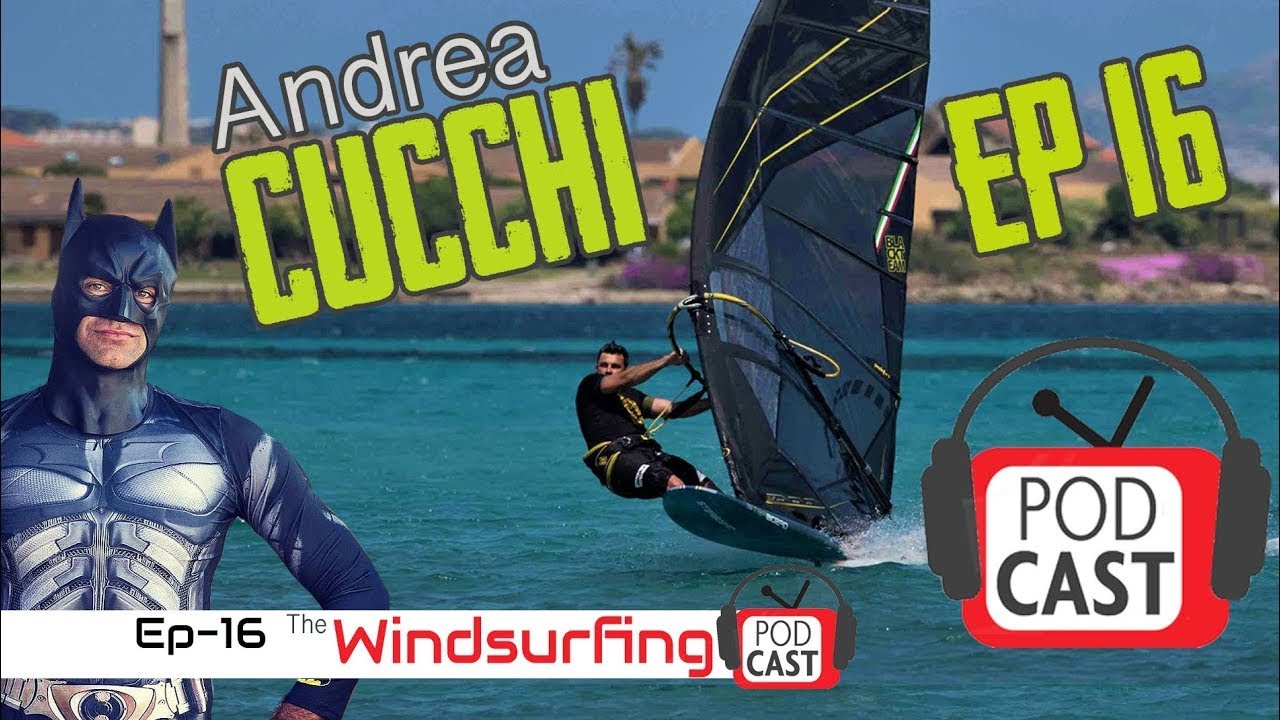
In today’s market, selling high-performance windsurfing equipment requires more than just superior speed, according to brand founder Andrea Cucchi. He explains that customers spending their salaries on expensive gear now expect a complete package that includes product quality, durability, responsive customer service, and the lifestyle the brand represents. The focus has shifted from pure performance metrics to the overall feeling and support a brand provides, ensuring the customer’s investment translates into more enjoyment on the water.
The implications of this shift are that a brand’s entire structure must be aligned to build and maintain trust. While having a winning professional rider can validate a product’s effectiveness, that alone is not enough. Success depends on a holistic system encompassing reliable distribution, accessible technical advice, and a sense of community. It's about the notion that the company is not just selling a sail but is also invested in making sure the client has fun and feels supported long after the purchase.
"What the sail gives you is not only how it's going to work, but also how long it's going to last and if the service will be there if I have a problem. It's more the feeling you're giving with the product."
Future of Windsurfing Unclear Amid Rise of Foiling and Wing-Surfing
The future direction of windsurfing is currently in a state of “confusion” and rapid evolution, says industry veteran Andrea Cucchi. The recent explosion of new disciplines like wing-surfing and foiling has introduced significant competition on the water. While these innovations are positive for bringing more people into watersports and enabling sailing in lighter winds, they have also fragmented the landscape, making it difficult to predict where the sport will be in the next decade.
The implications of this uncertainty are widespread, affecting athletes, brands, and competition organizers. We're seeing a dynamic where strategic decisions, such as which athletes to sponsor, have become more complex. The professional tour itself is in flux, with the rise of new Olympic classes like the IQFoil and disruptions to the PWA World Tour. This competitive evolution often mirrors trends in the recreational market, suggesting a period of significant change for the entire sport.
"There's a lot of confusion, which is nice because there's a lot of new stuff happening, but I think to have a 10-year vision is difficult."
▶ Watch this segment — 1:22:04
Strategic Team Building Propelled Windsurfing Brand to Global Stage
Andrea Cucchi detailed the deliberate strategy behind his brand's 'black team', a project designed to achieve the world title he never won as a competitor. The plan began by signing legend Josh Angulo to build credibility, then focused on developing rising star Alberto Menegatti. By implementing structured training camps in Tenerife, the team systematically elevated Menegatti from a top-15 contender into a world-beater, a process that also raised the performance level of the entire group of athletes.
The business impact of this sporting success was transformative. Menegatti became the first young rider to break the stranglehold of established legends, creating a powerful market narrative. It's about the notion that this achievement, combined with a product and service infrastructure ready to meet demand, was the catalyst for massive growth. The brand’s global footprint expanded from eight distributors to forty, demonstrating how targeted competitive success can rapidly scale a niche company.
"Thanks to Alberto, we actually went from eight distributors worldwide to 40 distributors worldwide. That was what made the brand big."
Windsurfing Entrepreneur Details Unseen Complexities of Manufacturing
Launching a windsurfing brand requires navigating a host of challenges far removed from the sport itself, says founder Andrea Cucchi. He highlighted the initial difficulty of separating friendships from business roles when assembling a team. Equally critical was the process of establishing a trustworthy network of suppliers and manufacturers in countries like China and Sri Lanka. He notes that many newcomers underestimate the venture, viewing it as an extension of a fun hobby rather than a demanding business like any other.
The implications of this reality are a greater understanding of the intricate, labor-intensive processes behind high-performance equipment. Cucchi reveals that a single sail can pass through the hands of 400 workers before it is finished, and mast production is a delicate chemical process highly sensitive to daily changes in heat and humidity. This complexity is often invisible to the consumer, who may not appreciate the immense work required to create the seemingly simple gear they use.
"A lot of people think that a windsurfing business is fun like windsurfing, but it's actually business like any other business."
The Challenge of Mixing Friendship and Finances in Pro Sports Sponsorship
Brand owner Andrea Cucchi described the inherent conflict between his friendships with sponsored athletes and his financial responsibilities. As his team riders' skills and market value grew, the brand’s budget constraints forced difficult business decisions that sometimes strained personal relationships. This dynamic creates a challenging environment where athletes may struggle to distinguish whether they are negotiating with Cucchi the friend or Cucchi the businessman, often leading to frustration and personal friction.
It's about the notion that in a close-knit community like professional windsurfing, this blurring of roles is a double-edged sword. Cucchi’s deep integration in the sport provides him with unparalleled insights for product development and talent spotting. However, it simultaneously complicates the ability to maintain clear professional boundaries, especially when the financial realities of the business clash with the aspirations of athletes who are also close friends.
"It's hard for the rider to know where he's standing with me because we are friends... but on the other side, I'm also the owner of the brand."
▶ Watch this segment — 1:04:40
Windsurfing Brand Eschews Board Partnerships to Maintain Focus and Flexibility
Andrea Cucchi explained his company's strategy of focusing exclusively on rigs—sails, masts, and booms—while deliberately avoiding formal alliances with board manufacturers. He contends that a high-quality sail should perform well on any well-designed board, making dedicated brand pairings unnecessary for the end user. This philosophy runs counter to some competitors who prioritize selling complete board-and-sail packages to shops and consumers.
The implication of this strategy is a deep commitment to specialization and brand independence. By not officially partnering with a board brand, the company avoids limiting its potential market and diluting its core mission. Cucchi asserts that expanding into boards and foils would spread the company's resources too thin, distracting from its primary expertise in rig development. Instead, the business model relies on retail shops to serve as the integrators, creating equipment packages for customers as needed.
"To marry with a board brand would just limit the things that you can do. We want to focus on our rigs, we want to focus on our own style."
▶ Watch this segment — 1:10:34
Brand Navigates Designer Transition, Practices Strategic Patience on Foil Development
Andrea Cucchi recounted a pivotal moment when his original sail designer, Peter Munzlinger, departed for the larger competitor Gaastra. This potential crisis was managed through a new, three-year collaboration with Italian designer Claudio Badiali of Challenger Sails. While the partnership was initially successful, Cucchi noted that the complexity of managing two separate brand identities eventually became too strenuous, leading them to part ways. He stressed that all product design is an evolutionary process, building upon established concepts rather than creating something from scratch.
We're seeing a dynamic where this experience informed a strategy of patience regarding new trends. Cucchi explained his decision to delay a major push into the foil sail market, despite its growing popularity. Instead of investing heavily in a rapidly changing discipline, his company waited for the technology and competitive formats to mature. This approach allowed them to develop a more refined product line, the F1, once the market's direction was clearer, thereby avoiding costly development for a moving target.
"We didn't want to be the first ones on the market with the foil sail. We wanted to wait and see what the foil was going to bring."
Formula Windsurfing Revitalized Racing by Lowering Cost Barriers
The creation of the Formula Windsurfing class offered a crucial lifeline to professional racing when it was becoming prohibitively expensive, says competitor Andrea Cucchi. In the prior era, success was often tied to costly custom gear that few could afford. The new format leveled the playing field by limiting athletes to one production board and three sails, making top-tier competition more accessible. This led to a surge in participation, with 120 racers attending the very first world championship in Thailand.
The implications of this shift, however, included a significant financial trade-off for the athletes. Although the Formula tour events were large and highly competitive, the specialized equipment—featuring massive sails up to 12.5 meters—had limited appeal to the broader recreational market. Consequently, sponsorship budgets for top Formula racers were considerably smaller than those in the PWA Slalom discipline that preceded it. It's about the notion that a top-five Formula result might yield the same income as a top-20 slalom result today.
"It proved that with the same gear, more guys had a chance to be at the top."
Summarised from The WindsurfingTV Podcast · 1:52:54. All credit belongs to the original creators. Windsurfing TV Podcast summarises publicly available video content.