🌐 This article is also available in Spanish.
Original source: Christine Gritmon
This article is an editorial summary and interpretation of that content. The ideas belong to the original authors; the selection and writing are by Streamed.News.
This video from Christine Gritmon covered a lot of ground. 4 segments stood out as worth your time. Everything below links directly to the timestamp in the original video.
If your company is deciding who should represent it publicly, this four-part filter could save you from backing the wrong expert — or overlooking the right one.
Atlassian Marketing Lead Offers Four-Pillar Test for Identifying Internal Thought Leaders
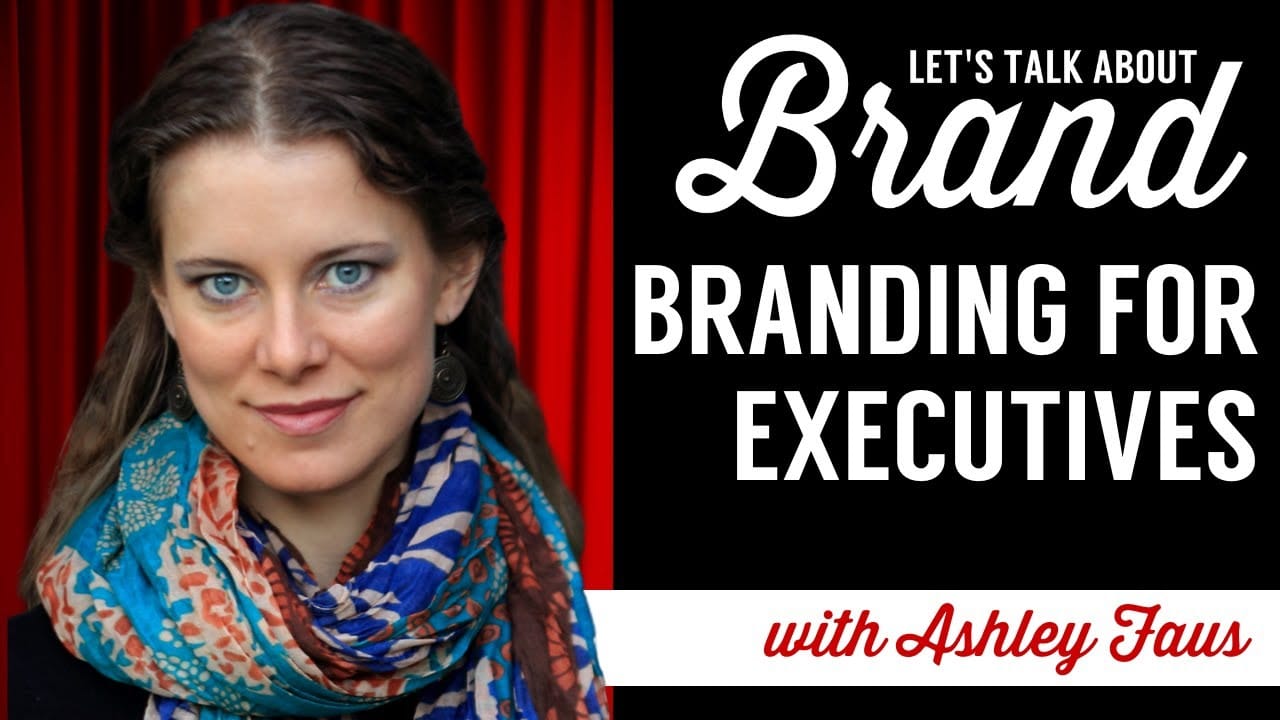
Ashley Faus, who oversees thought leadership at Atlassian, evaluates potential internal spokespeople across four dimensions: credibility, profile, prolificacy, and depth of ideas. Rather than relying on self-assessment, she uses Atlassian's internal blogging culture as a live testing ground — long comment threads where colleagues dissect or build on each other's ideas serve as organic peer validation before any idea reaches a public audience. Willingness to invest time in podcasts, conference talks, and social media content is treated as a separate, equally weighted criterion from raw expertise.
The framework reflects a broader tension companies face when building thought leadership programs: subject-matter brilliance and communication commitment rarely arrive in the same person, and neither can substitute for the other.
"It's not just about are you smart for yourself and for the problems that you're solving — are you committed and able to grow in that skill set of actually doing the sharing."
Fear of Poaching Is the Wrong Reason to Keep Employees Out of the Spotlight, Atlassian Executive Argues
The instinct to hide talented employees from public view to prevent poaching gets the causality backwards, according to Ashley Faus. Citing the Edelman Trust Barometer — a longitudinal study spanning more than a decade — she notes that trust in formal institutional authority has steadily eroded, while trust in peers and personal connections has grown. The 2022 edition drew a specific distinction between trusting any CEO and trusting my CEO, underscoring why distributed employee voices matter more than polished executive messaging. On poaching, Faus argues that a visible employee leaves because the company has failed to support their growth or align with their values — not because a competitor saw them on a podcast.
The argument reframes employee advocacy not as a risk to be managed but as a retention diagnostic: if your people are poachable, the problem is internal.
"If someone is poachable, it is not just because someone else saw that they were smart — it's because the company is not helping them continue to grow their career or is not aligned with their values in some way."
Atlassian's Thought Leadership Program Starts by Asking Where the Audience Actually Spends Its Time
Before pitching a single outlet, Ashley Faus asks aspiring thought leaders to name 25 influencers or accounts they follow — with mainstream names like the Wall Street Journal or Harvard Business Review explicitly excluded. The exercise surfaces the actual peer networks within a given field. She then maps relevant conferences by community: developer audiences gravitate toward AWS re:Invent, Microsoft Ignite, Black Hat, and RSA, while marketing professionals recognize Inbound and MarketingProfs — two worlds with almost no overlap. From there, she calibrates expectations ruthlessly, noting that someone with no followers, no frameworks, and no prior speaking experience is not a realistic candidate for a keynote slot at a major industry conference.
The practical insight is that thought leadership placement fails less often because of weak ideas than because of a mismatch between ambition and current standing.
"You have no followers, you have no frameworks, you've never given a conference talk, you've never been on a podcast — why do you think you're going to be the keynote at one of the biggest marketing conferences of the year?"
A Narratives Worksheet and 12-to-18-Month Editorial Calendar Form the Foundation of Atlassian's Speaker Pipeline
Aspiring thought leaders most often fail to land conference slots not because their ideas are weak but because their pitch materials are assembled on the fly, unfocused, and untailored, according to Faus. Her fix is systematic: a narratives worksheet that maps any given topic across three layers — conceptual (the what and why), strategic (the tools and processes), and tactical (the specific implementation steps) — and then tests whether the topic carries enough substance to sustain 12 to 18 months of content. Only topics that pass that threshold get built into a formal editorial calendar with defined posting frequencies and outlet targets.
The framework turns thought leadership from an ad hoc activity into a repeatable program, which matters because occasional LinkedIn posts or one conference appearance per year are insufficient to build meaningful industry standing.
"If you only have half a LinkedIn post to say about this, it's probably not something you want to use as a core topic."
Also mentioned in this video
- Internal thought leadership involves employees sharing their perspective on… (3:03)
- Her journey into developing internal thought leadership at Atlassian,… (9:39)
- Complex problems and solutions to the industry, driving both buy intent and… (12:21)
- Working with subject matter experts to create content, involving in-depth… (23:10)
- Ashley Faus clarifies that Atlassian had existing smart teams working on… (25:06)
- Ashley Faus advises smaller companies to start by empowering employees on… (27:47)
Summarised from Christine Gritmon · 33:22. All credit belongs to the original creators. Streamed.News summarises publicly available video content.
Streamed.News
This publication is generated automatically from YouTube.
Convert your full video library into a digital newspaper.
Get this for your newsroom →