Original source: Adem Manderovic | Closed Circuit Selling™ (CCS)
This article is an editorial summary and interpretation of that content. The ideas belong to the original authors; the selection and writing are by Streamed.News.
This video from Adem Manderovic | Closed Circuit Selling™ (CCS) covered a lot of ground. 6 segments stood out as worth your time. Everything below links directly to the timestamp in the original video.
If the way most B2B companies hire and structure their sales teams was broken by design, not by execution, the fix looks nothing like what most leaders are trying.
SDR/AE Split Model Called Structurally Broken From the Start
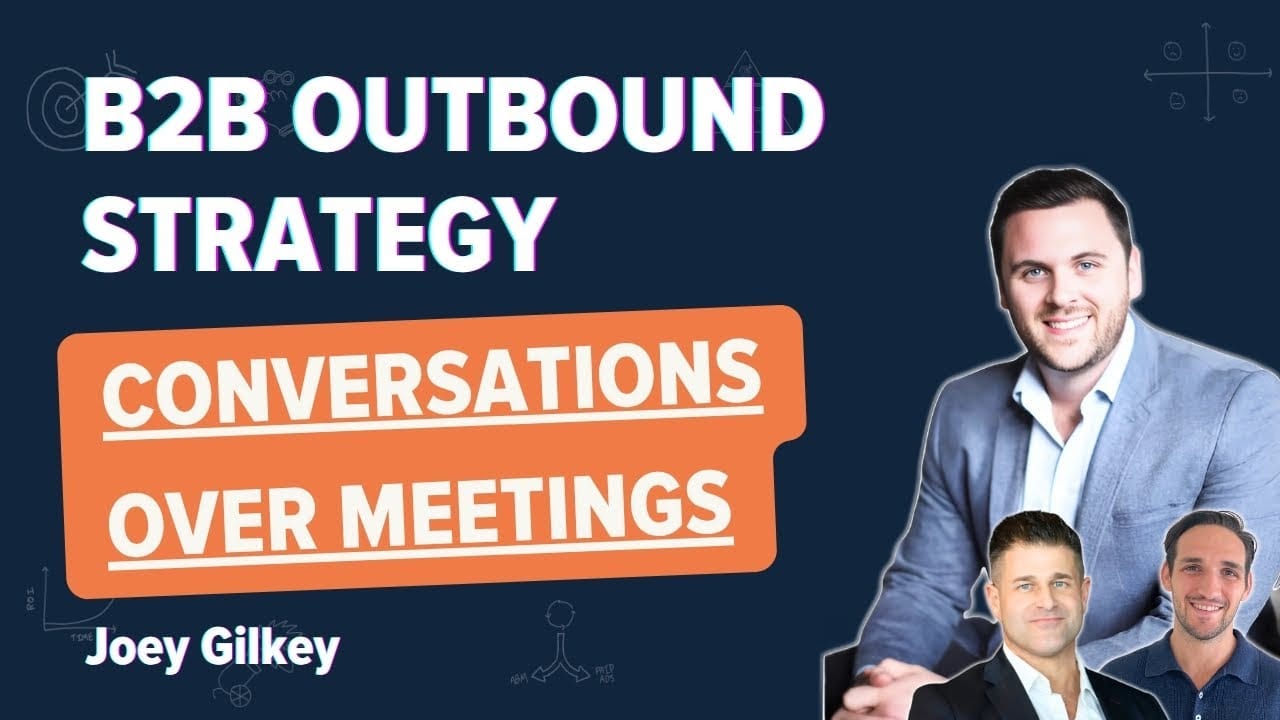
The practice of separating sales development from closing — popularised after Aaron Ross's book Predictable Revenue — fractured what was designed to be a single role, argues sales strategist Joey Gilkey. Placing inexperienced 22-year-olds in front of C-suite buyers who lack the business acumen to uncover real pain points leaves reps with one move: push a meeting, whether warranted or not, running up the cost of two salaries for output worse than one full-cycle rep ever produced.
"You fractionalized what was meant to be one role, and then you've also introduced a ton of friction and immaturity in the sales process."
Venture Capital, Not One Book, Broke B2B Sales
Before the SDR model took hold, senior salespeople earned their way to the front line only after years inside customer success — they understood contracts, legal approval chains, and service delivery before ever touching a prospect. That career path is now largely extinct. Adam Manderovic argues venture capital, not Aaron Ross himself, is the real culprit: investors poured money into replicating a Salesforce-specific playbook across companies a fraction of that scale, flooding markets with low-quality MQLs that marketing teams were forced to generate just to keep the machine fed.
"Venture capital is the reason we're here. You can't blame Aaron Ross — you can blame the money guys who thought you could replicate a Salesforce model."
Sales Firm Replaces Meetings-Booked Metric With Six-Bucket Conversation System
Joey Gilkey measures his SDRs on two things: completed conversations and disposition discipline. A completed conversation means reaching the intended contact, confirming they are the right person, delivering a pitch, and sorting the outcome into one of six buckets — meeting, activated, not now, not me, referred, or not interested. The system's real value is the intelligence it generates: when an account executive follows up, they are calling someone already mapped, categorised, and annotated, not a cold name on a list.
"When you don't focus on meetings and you focus on that, you get a lot more meetings. It just happens naturally."
SDR Firm Tests Video Sales Letters, Reports Double the Activation Rate
Joey Gilkey's team is running what he calls audience activation: SDRs call a tightly defined prospect list — CROs at companies of a specific size and industry — with a single ask: permission to send a link to a short, persona-specific video. On a standard campaign, roughly 20–28% of completed conversations convert to activations; this approach is currently hitting 36%. Account executives then follow up armed with tracking data on who clicked, who opted in, and who watched, while retargeting ads run simultaneously against the same pool.
"That's your ask — 'Would you mind if I shot you a text with that link?' That's it."
Top U.S. Private Equity Firm Weighs Eliminating Over 1,000 SDR Roles
A top-three private equity firm in U.S. tech — currently managing more than a thousand SDRs across its portfolio — is actively discussing cutting that number to zero, according to Gilkey, who is in those board-level conversations. He is pushing back in favour of reducing to around 200 rather than eliminating the function entirely. His deeper concern is that the industry will abandon one failed model only to chase another: signal-based automated outbound, which he believes will prove equally ineffective.
"I'm afraid of what we're going to run to — I really think they're going to start running more towards the go-to-market engineer, signal-based automated outbound, which is not going to work. It hasn't worked. It won't work."
Reforming Sales Teams Is Easy — Reforming Sales Leaders Is Not
Retraining an SDR to pursue conversations instead of meetings takes almost no time, Gilkey argues. The real obstacle is leadership: managers locked into 90-day sprint cycles, quarterly kickoffs, and short-term targets cannot sustain the 12-to-18-month horizon the model requires. Gilkey says he is now pitching private equity firms directly — preferring them over venture capital because their three-to-eight-year return windows make them more receptive — arguing that running the conversation-first playbook across a portfolio of 36, 47, or 65 companies would lift valuations across the board.
"Training the SDR is actually going to be the easiest part. Training the leaders is exceptionally hard — because of how they're incentivized and measured."
Also mentioned in this video
- The current B2B sales model is inefficient, relying on junior reps to push… (0:00)
- The B2B Playbook believes great go-to-market strategies prioritize people over… (0:30)
- Titan X as a phone intent platform designed to solve the inefficiency of the… (1:36)
- The importance of channel validation is emphasized, as it allows for the… (3:02)
- The sales industrial complex and the push for predictable revenue have led to a… (4:04)
- He initially bought into the SDR/AE model for about a year but soon realized… (13:12)
- Joey Gilkey details his past mistakes of implementing the SDR/AE model, which… (14:15)
- The current sales and marketing landscape is influenced by LinkedIn gurus and… (15:50)
- Joey Gilkey expresses concern that the easily marketable SDR/AE model leads to… (19:37)
- Australia's smaller market size necessitated a multi-channel outbound approach,… (20:37)
- His company, Titan X, initially used full-cycle AEs but transitioned to SDRs to… (26:00)
- Adam Manderovic shares his past experience with permission-based creative in… (30:02)
- Obtaining permission to text prospects through channel validation, combined… (33:07)
- Marketers need to shift their focus from merely collecting contact details to… (34:15)
- Joey Gilkey suggests using progressive forms to capture partial answers and… (35:50)
- The pipeline coverage obsession as an infantile approach to revenue… (36:38)
- Focusing on first-party intent signals and market validation enables engagement… (37:50)
- A successful case where intel from phone conversations fed LinkedIn retargeting… (38:45)
- Market conversations provide crucial information for marketers to allocate… (39:49)
- Adam Manderovic expresses frustration that the obvious benefits of right… (41:03)
- Adam Manderovic shares examples from his past experiences in high-end suiting… (42:58)
- To redirect the market away from the "fugazi" of GTM engineers towards… (48:01)
- The discussion concludes that the changes in sales measurements led to a… (56:35)
Summarised from Adem Manderovic | Closed Circuit Selling™ (CCS) · 57:32. All credit belongs to the original creators. Streamed.News summarises publicly available video content.
Streamed.News
This publication is generated automatically from YouTube.
Convert your full video library into a digital newspaper.
Get this for your newsroom →