🌐 This article is also available in Spanish.
Original source: Salesman․com
This article is an editorial summary and interpretation of that content. The ideas belong to the original authors; the selection and writing are by Streamed.News.
This video from Salesman․com covered a lot of ground. 6 segments stood out as worth your time. Everything below links directly to the timestamp in the original video.
If your sales manager's primary communication is a threatening email about pipeline updates, Weinberg's case is that neither of you is getting what you need from that relationship.
Sales Consultant Mike Weinberg: Managers Who Lead by Email Are Leading Nobody Anywhere
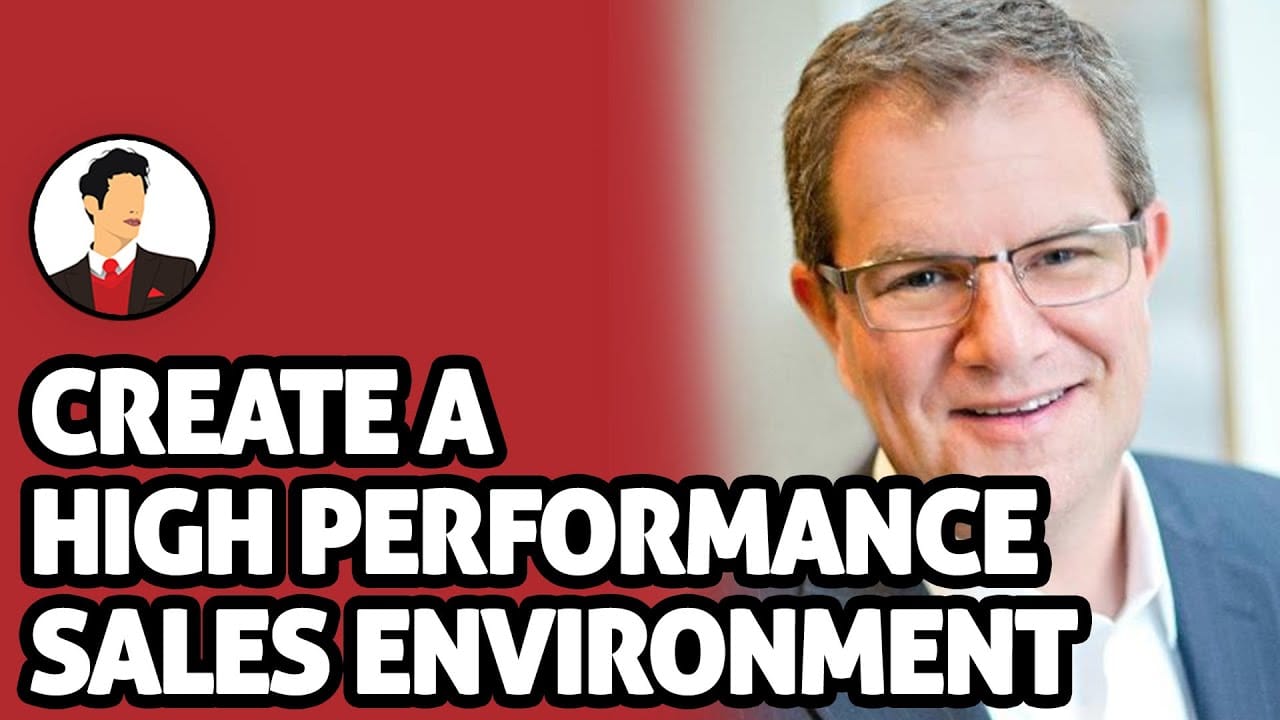
Three activities should consume the majority of a sales manager's working week, according to Mike Weinberg: one-on-one meetings with individual salespeople — split between pipeline accountability and coaching — field work spent alongside reps on actual sales calls, and structured team meetings designed to inspire and align rather than punish. Weinberg argues that spending 60 to 80 percent of management time on those three things would transform both results and the experience of being in sales. The alternative — managing by email, chasing CRM updates at 3 a.m., and sitting in meetings unrelated to the sales team — is, in his telling, not leadership at all.
The argument touches a structural tension that affects almost every mid-sized company: as organisations get leaner, sales managers get loaded with cross-functional responsibilities that pull them away from the one job only they can do. Weinberg's framework is less a productivity tip than a reminder of what gets quietly sacrificed when businesses conflate busyness with management.
"Leading you by email and living as a desk jockey with your head buried in a CRM screen — that's not leading anybody anywhere."
The Traits That Make a Great Salesperson Often Make a Terrible Manager, Weinberg Argues
The skills that drive elite salespeople — selfishness with time, intense self-focus, ego, competitive hunger — are almost the precise opposite of what makes a good sales manager, according to Mike Weinberg, who lived the transition himself. A top producer thrives by protecting their own calendar, commission, and customers. A manager wins only through other people, which requires being accessible, subordinating personal glory, and becoming what Weinberg calls "the hero maker" rather than the hero. When high-ego sellers get promoted and keep chasing personal glory, they end up competing with the very reps they are supposed to develop.
The pattern Weinberg describes — promoting the best salesperson into management as the default career progression — is one of the most persistent and costly errors in sales organisations. It misreads what the job actually requires, and it tends to produce exactly the outcome the host witnessed firsthand: a great salesperson becomes an average, stressed manager, with no clear path back.
"You're not the hero — you're the hero maker. When the high-ego salesperson gets promoted and they're still trying to be the hero, they're actually deflating their own salespeople."
Flat Commission Structures Reward Mediocrity and Punish Top Performers, Weinberg Says
Compensation plans that pay nearly the same commission to a star performer and a struggling one are, in Mike Weinberg's view, achieving the opposite of their intent. Top producers should be so well compensated that leaving never crosses their minds; underperformers should feel financially uncomfortable enough to either raise their game or leave. He also points out the absurdity of paying the same commission rate for managing a long-standing customer relationship as for landing a brand-new one. Weinberg traces the tendency of managers to go either too soft or too hard on their teams not to personality failures but to structural pressures: managers buried in strategy sessions and quality-control fires lack the time to lead, while those under private equity ownership absorb brutal pressure from above and simply pass it downward.
The tension Weinberg identifies between the manager who abandons the sales team to fight factory fires and the one who terrorises reps to satisfy a quarterly deadline reflects a broader failure of organisational design. When the sales manager's primary job — developing people — becomes optional, the costs show up quietly in attrition, missed targets, and cultures where neither high nor low performers are properly managed.
"Compensation and complacency start with the same four letters. We have plans where the commission is the same for babysitting a customer we sold years ago as for doing the hard work of bringing in a new one — that doesn't make sense."
Only 10 to 15 Percent of Salespeople Are Genuinely Elite, Weinberg Estimates — and a Boom Economy Hid That for Years
A long economic expansion masked the real distribution of sales talent, according to Mike Weinberg. Many salespeople who appeared to thrive through the 1990s and 2000s were simply relational or technically competent people carried along by hot industries, compelling products, or rising demand — not genuine hunters. When markets tightened, it became clear who could actually sell. Weinberg puts the share of truly elite salespeople — those who deliver results year after year through their own drive and skill — at between 10 and 15 percent of the entire sales population, and says that figure holds remarkably steady across industries, from old-economy manufacturing to technology.
The implication is uncomfortable for anyone who built a sales team during a period of easy growth: the numbers that looked like performance may have been circumstance. For companies now facing harder conditions, that distinction is no longer theoretical — it determines which salespeople can generate new business when demand stops coming to them.
"Until the tide went out, no one realised they were standing there naked and they couldn't sell."
Hire the Sales Athlete Over the Industry Expert, Weinberg's Consultant Advises — Because Passion Cannot Be Taught
When a hiring decision came down to an industry expert versus a natural-born sales hunter, a recruiter Weinberg trusts gave unambiguous advice: take the athlete every time. Industry knowledge can be learned; the drive to sell cannot. Weinberg endorses the view, arguing that genuine A-players carry their competitive instinct and closing ability across industries — what they need is to learn a new market, not to acquire an entirely new disposition. Passion, he adds, does not need to be product-specific; what it must be is real. A salesperson who does not genuinely believe they are improving their client's situation will not sustain the effort that selling demands, in a way that someone in almost any other profession might.
The distinction matters most at the point of hiring, where the safer-seeming choice — the candidate who already knows the sector — often underperforms against someone who simply wants the win more. Weinberg's consultant puts the regret rate for choosing the industry expert at 90 percent, a figure that, if even approximately right, should reshape how most sales teams approach their candidate shortlists.
"You can't teach passion. Always hire the sales athlete — hire the natural talent. They learn the business."
Forcing All Salespeople Into One Job Description Is 'Stupid,' Weinberg Says — Specialised Roles Produce Better Results
A hunter who closes new business brilliantly but struggles to manage ongoing relationships is being set up to fail the moment a company pulls them back to the office to "cook and clean up after dinner" — Weinberg's metaphor for account management and customer service work that follows a sale. He endorses the engineering approach to sales role design advanced by Mark Roberge in "The Sales Acceleration Formula," which argues that job descriptions should be built around the specific talent profile the role actually demands, rather than expecting one person to excel at everything. The one-size-fits-all model, in Weinberg's view, wastes the talents of specialists at both ends: the relationship-driven account manager and the aggressive new-business hunter.
Weinberg is sceptical of trend-driven solutions — he notes that claims about buyers completing two-thirds of a purchasing journey before speaking to a salesperson were only ever true when lazy salespeople waited for leads instead of proactively creating opportunities. But he supports the broader conversation around sales development representatives and specialised structures, provided the goal is better performance rather than simply following an industry fashion.
"When they kill something, instead of freeing them up to go kill the next thing, like idiots we bring them back to the office and make them cook it and then clean up after dinner."
Also mentioned in this video
- Mike Weinberg explica que para tener éxito en ventas, se necesita al menos un… (1:22)
- Mike Weinberg comparte una anécdota personal sobre su pasión por Porsche, que… (11:50)
- A los vendedores talentosos como aquellos que conectan con los compradores,… (25:50)
- Mike Weinberg aconseja a su "yo más joven" y a los jóvenes profesionales de… (32:08)
Summarised from Salesman․com · 37:04. All credit belongs to the original creators. Streamed.News summarises publicly available video content.
Streamed.News
This publication is generated automatically from YouTube.
Convert your full video library into a digital newspaper.
Get this for your newsroom →