🌐 This article is also available in Spanish.
Original source: Belkins
This article is an editorial summary and interpretation of that content. The ideas belong to the original authors; the selection and writing are by Streamed.News.
This video from Belkins covered a lot of ground. 6 segments stood out as worth your time. Everything below links directly to the timestamp in the original video.
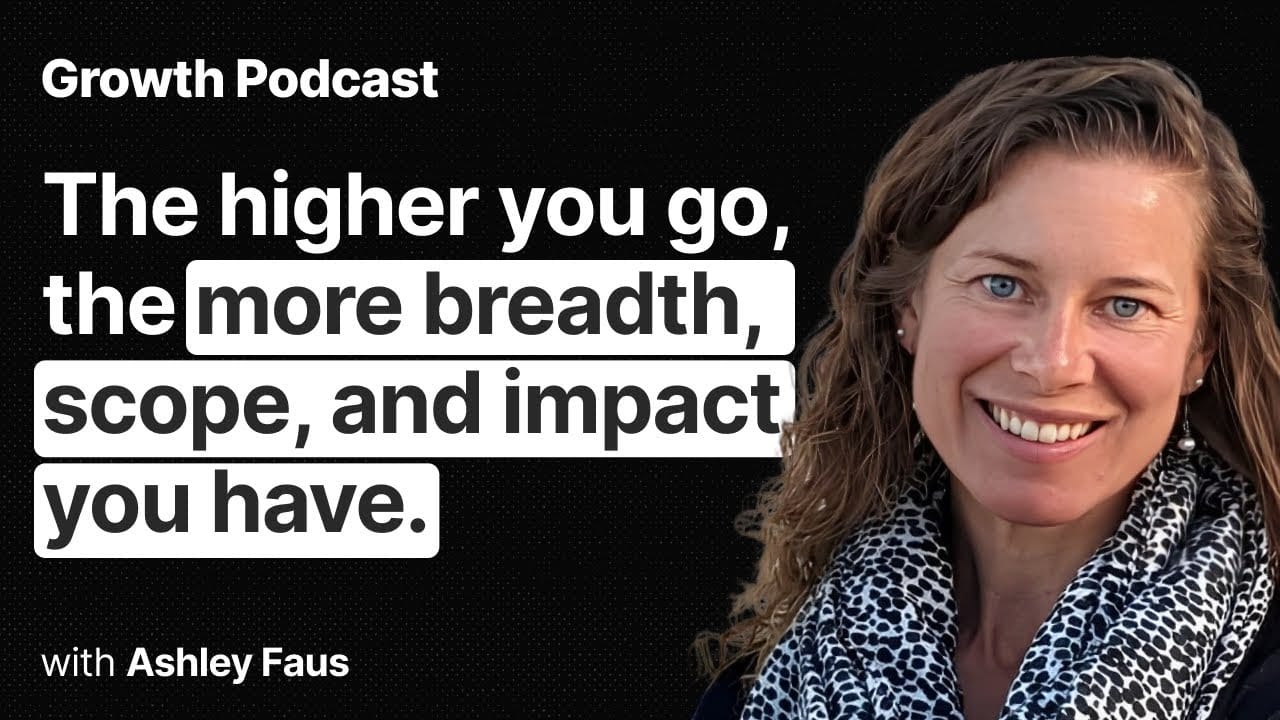
The best marketing advice Ashley Faus ever got came from someone whose job is to break into buildings. That tension reveals something useful about where real creative insight actually comes from.
Security Penetration Tester's Tricks Become a Marketing Lesson in Cross-Domain Thinking
Ashley Faus draws her sharpest marketing insights not from marketing itself but from fields like theater, physical security testing, and baking. She describes following a penetration tester named Jack Hyde, who exploits social programming — notably, that virtually everyone will hold a door open for a visibly pregnant woman — to bypass security on even the most protected campuses. The lesson Faus took back to her own work: a first-day LinkedIn post showing an employee badge inadvertently hands a blueprint to anyone who wants to walk through the front door.
For Faus, curiosity without obligation is the operating principle — understanding what fascinates someone else, she argues, doesn't require adopting it yourself. You just need to stay open enough to catch the connection when it arrives.
"The technology is not the hard part — it's getting into the building that's the hard part."
Why a French Cooking Technique Explains What Most Content Strategy Gets Wrong
The reason a 47-step content strategy checklist fails, according to Ashley Faus, is the same reason people panic mid-recipe when they realize they're missing an ingredient: the advice skips the emotional texture of the experience. Faus uses mise en place — the chef's discipline of measuring and arranging every ingredient before cooking begins — as an analogy for campaign planning, arguing that a bounded, familiar frame makes abstract professional advice feel immediately actionable in a way that numbered lists never do.
The deeper point is about trust: when Faus posts a picture of a cake in a professional LinkedIn feed, her audience has learned to expect a payoff. The unexpected image interrupts the scroll precisely because it promises a connection the reader hasn't seen before.
"If there's 47 steps, I'm just not going to do any of the steps."
A College Textbook Assigned in a Product Development Class Still Shapes How This Marketer Solves Problems
Frans Johansson's book The Medici Effect, assigned to Faus during a new product development course in college, introduced her to the idea that the most original solutions emerge at the intersection of unrelated fields. The example that stuck: architects in a desert climate, unable to afford electrical heating and cooling, cracked their temperature-regulation problem only after consulting an entomologist and studying how termite colonies passively manage airflow through extreme daily temperature swings.
Faus now applies the same logic personally — when a problem resists her usual approaches, she treats that resistance as a signal to look outside her own expertise, either by crowdsourcing solutions on LinkedIn or by forcing two unrelated objects together on a walk to break out of narrow thinking.
"Wait — how do the animals do this? And so they started to combine that knowledge to construct the building so that the airflow could take advantage of the cooler temperatures at night."
A Weighted Decision Matrix for Career Satisfaction — and a Warning About Moving the Goalposts
Faus evaluates her own career contentment through what she calls a career satisfaction matrix: five weighted categories — title, actual work deliverables, compensation, work-life integration, and professional growth — each scored and multiplied to produce a single number. The exercise forces honesty about which factor is actually driving dissatisfaction, rather than letting vague unhappiness diffuse across everything.
The sharper warning she offers is about goalpost drift: telling yourself that happiness is contingent on the next promotion or the next salary bracket, then adjusting the target the moment it's reached. The matrix, she argues, only works if you also stop to register when you've actually won.
"If I say that I have everything I want and I'm still dissatisfied — okay, maybe I need to want different things."
Auditions Are Scarier Than Performances — and the Reason Applies Far Beyond the Stage
The most anxiety-inducing moment for Faus as a performer isn't standing in front of a large audience — it's the audition, because that is the only context where the room is explicitly there to judge whether she is good enough. Once she is actually performing, she notes, the dynamic reverses: audiences have chosen to attend, they want the show to succeed, and that fundamentally changes the psychological stakes. The same logic, she argues, applies to public speaking, panels, and podcasts.
Technical failures, by contrast, she welcomes — slides going blank mid-punchline or a virtual presentation running without animations forced her off autopilot and into genuine improvisation, which she found consistently landed better with audiences than the rehearsed version.
"The audience wants you to succeed. They have come to hear something interesting or see a good show — they want you to succeed."
How a Luxury Real Estate Agent's Lifestyle Became His Most Effective Sales Tool
Faus illustrates how personal identity can become business strategy through the example of a luxury real estate agent in her network who has built his entire practice around inhabiting the same social world as his clients. By attending charity golf tournaments and art galas, wearing well-tailored clothes, and curating an unmistakably aspirational life online, he generates pre-market access for sellers and warm introductions for buyers — without ever making a cold pitch. The trust is already banked by the time a transaction becomes possible.
The principle scales beyond real estate: people buy from people they trust, and trust accumulates through sustained, authentic proximity — not through targeted outreach timed to the moment someone is ready to spend.
"It's not forcing this facade — it's actually living your life in this way."
Also mentioned in this video
- Ashley Faus as a marketer, writer, and speaker by day, and a singer, actor, and… (0:00)
- The challenges of writing a personal and professional bio. (1:34)
- People are interested in her personal life because it offers a glimpse outside… (3:05)
- Reels rather than their messy middles. (5:14)
- Ashley Faus details her role as Director of Integrated Product Marketing at… (6:05)
- Her decision to pursue a career at Atlassian, citing the company's alignment… (7:27)
- The constant challenge of balancing ambition and contentment, striving for… (12:35)
- Ashley Faus shares her life philosophies, including evaluating whether… (15:01)
- Ashley Faus advises on sharing personal life on LinkedIn, emphasizing… (27:26)
- Ashley Faus defines the intersection of personal and professional as bringing… (28:51)
- Software companies and lead generation agencies can integrate personal elements… (36:19)
- Ashley Faus reflects on her lifelong confidence, describing herself as… (57:45)
- Her ability to pursue multiple hobbies by not doing everything all at once,… (1:05:22)
- Getting tired but emphasizes choosing activities that energize her, accepting… (1:09:40)
Summarised from Belkins · 1:12:03. All credit belongs to the original creators. Streamed.News summarises publicly available video content.
Streamed.News
This publication is generated automatically from YouTube.
Convert your full video library into a digital newspaper.
Get this for your newsroom →