🌐 This article is also available in Spanish.
Original source: MobileAppDaily
This article is an editorial summary and interpretation of that content. The ideas belong to the original authors; the selection and writing are by Streamed.News.
This video from MobileAppDaily covered a lot of ground. 4 segments stood out as worth your time. Everything below links directly to the timestamp in the original video.
If your company's product launches feel like fire drills, the problem may have started months earlier — in who was and wasn't in the room.
Product Marketers Warned Against Assumption-Driven Strategy and 'Throw It Over the Wall' Launches
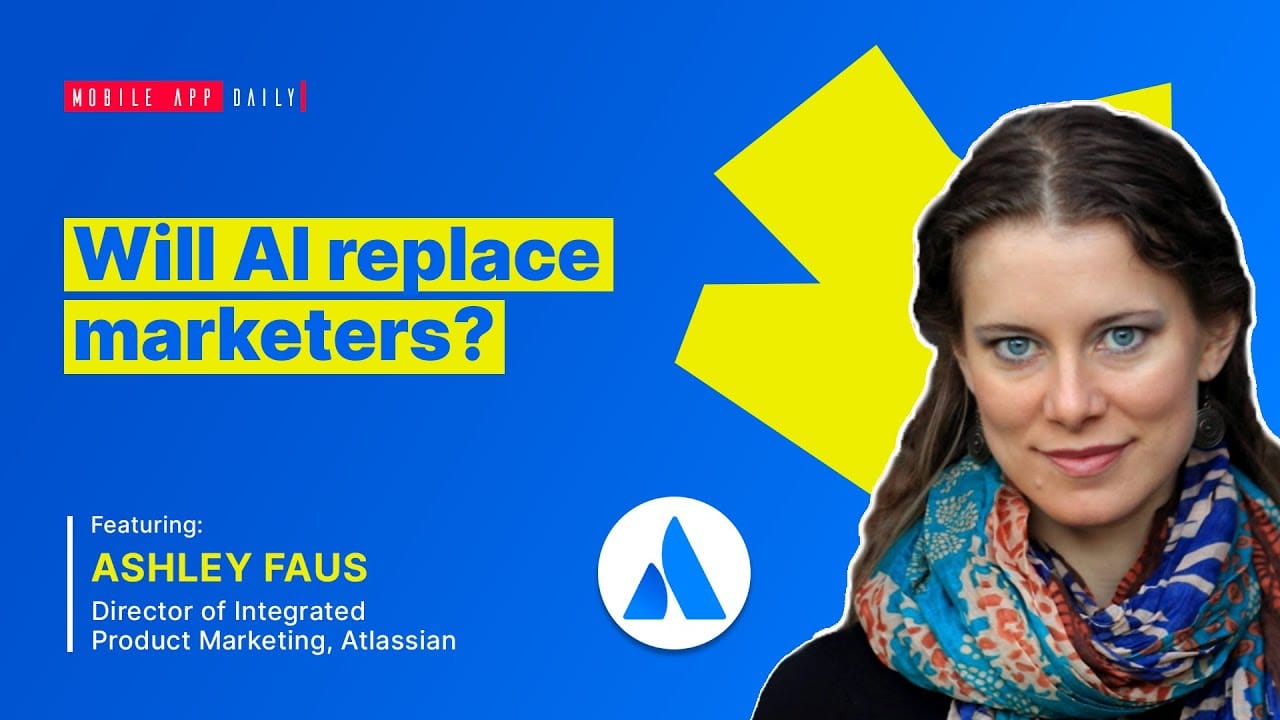
Ashley Faus, a product marketing leader, identifies three recurring failures that undermine go-to-market efforts. The most common is assuming what problems an audience faces rather than asking them directly — a shortcut that produces positioning stuffed with meaningless words like "seamless" and "visibility" that tell no one anything specific. The second is over-reliance on tactics that worked before, without leaving room to test new approaches. The third is product marketers becoming so detached from engineering and product management that they only hear about a launch the day it goes live.
The third failure in particular points to a structural problem inside many technology companies, where marketing is treated as a downstream function rather than a strategic input. When product marketers are embedded early, they bring competitive and customer intelligence that can actually shape what gets built.
"The assumption that the product team is going to build this over there and then throw it over the wall to product marketing — and be like 'hey, we launched, tell people' — it's like, what, no."
B2B Brands Urged to Put Real Humans — Not Brand Handles — at the Center of Social Media Strategy
The most effective B2B social media engagement, according to Ashley Faus, happens when a product manager or engineer responds personally to a technical question on social — not when a brand account fires off a generic acknowledgment. Faus argues that empowering subject matter experts to find their own voice on each platform, rather than handing them copy-paste assets, produces the kind of human interaction that actually builds trust with technical buyers.
The broader implication is that chasing brand consistency across every platform can backfire, producing content that is uniform enough to be forgettable. Audiences on LinkedIn, for instance, expect something different from those on other networks, and forcing a single brand book across all of them flattens the personality that makes an audience want to return.
"Having an actual human engage with them and say 'hey, I'm the product manager on this product, I would love to book time to talk about this' is a lot more powerful than that generic hello-thank-you-for-asking response."
AI Should Draft the Mundane, Not the Original, Says Marketing Leader Ashley Faus
Ashley Faus draws a clear line between what AI tools like ChatGPT are good at — generating 25 landing page headers so a human can pick the best three, or pulling LinkedIn posts from a long-form article — and what they cannot replace: the original interview, the genuine thought, the authentic voice. She became alert to the limits of AI engagement after noticing a stream of identical AI-generated LinkedIn comments, each carrying the same text with only a name swapped in, like a broken email personalization token.
The episode illustrates a real risk for brands chasing efficiency: automation that is visible enough to feel cynical actively erodes the credibility it was meant to build.
"You can tell when it's not genuine — and if you really do want to build trust, if you want to position yourself as a thought leader, you have to be doing original stuff."
Being 'Data-Informed' Rather Than 'Data-Driven' Leads to Smarter Marketing Decisions, Faus Argues
Ashley Faus distinguishes between being data-driven — reacting mechanically to every dip in a metric — and being data-informed, which means investigating the context behind the numbers before acting. A drop in organic traffic every November and December, for example, is normal seasonal behavior; the real signal is whether the drop is larger than the prior year, or whether January's recovery is weaker than expected. The metrics she focuses on span the full customer lifecycle: monthly and weekly active users, free-to-premium conversion rates, and whether accounts are expanding or contracting.
The practical point is that mountains of data only have value when each metric is paired with a specific action. Watching sign-up numbers fall without asking what changed upstream — a CTA button, an onboarding flow, search rankings — produces reports that explain nothing.
"Sometimes we see things where it's like it drops month over month, everything's on fire — and it's like, was it December? Is the whole world taking the holiday?"
Also mentioned in this video
- The biggest shift in marketing is the lower barrier to entry for individuals… (0:00)
- Her diverse interests, including singing, acting, and baking as hobbies, and… (1:21)
- Her career journey starting in 2008 during a recession, where she learned to… (2:22)
- The technological transition in marketing, emphasizing that the biggest shift… (4:37)
- Ashley Faus details the marketing tools her team uses at Atlassian, including… (6:31)
- Atlassian's integrated marketing approach within a SaaS organization, which… (8:02)
- Promising external tools like Lately.AI for social media, Jasper.AI, and… (14:15)
- Ashley Faus provides three quick tips for social media marketers (22:10)
- Ashley Faus believes Instagram can be a transformative tool for B2B marketers,… (23:54)
- The changing landscape of Twitter and the emergence of Threads, noting that… (25:34)
- Ashley Faus identifies curiosity as the most essential principle for success in… (30:22)
Summarised from MobileAppDaily · 32:08. All credit belongs to the original creators. Streamed.News summarises publicly available video content.
Streamed.News
This publication is generated automatically from YouTube.
Convert your full video library into a digital newspaper.
Get this for your newsroom →