🌐 Also available in: 🇪🇸 Español
Original source: The Tennis Congress
This video from The Tennis Congress covered a lot of ground. Streamed.News selected 8 key moments and summarises them here. Everything below links directly to the timestamp in the original video.
Understanding the difference between fear and anxiety can reframe how you approach challenges. One is a necessary sign of growth, while the other is a self-imposed barrier to opportunity.
Consistency Is More Important Than Perfection, Says Speaker Citing Lessons From Tennis
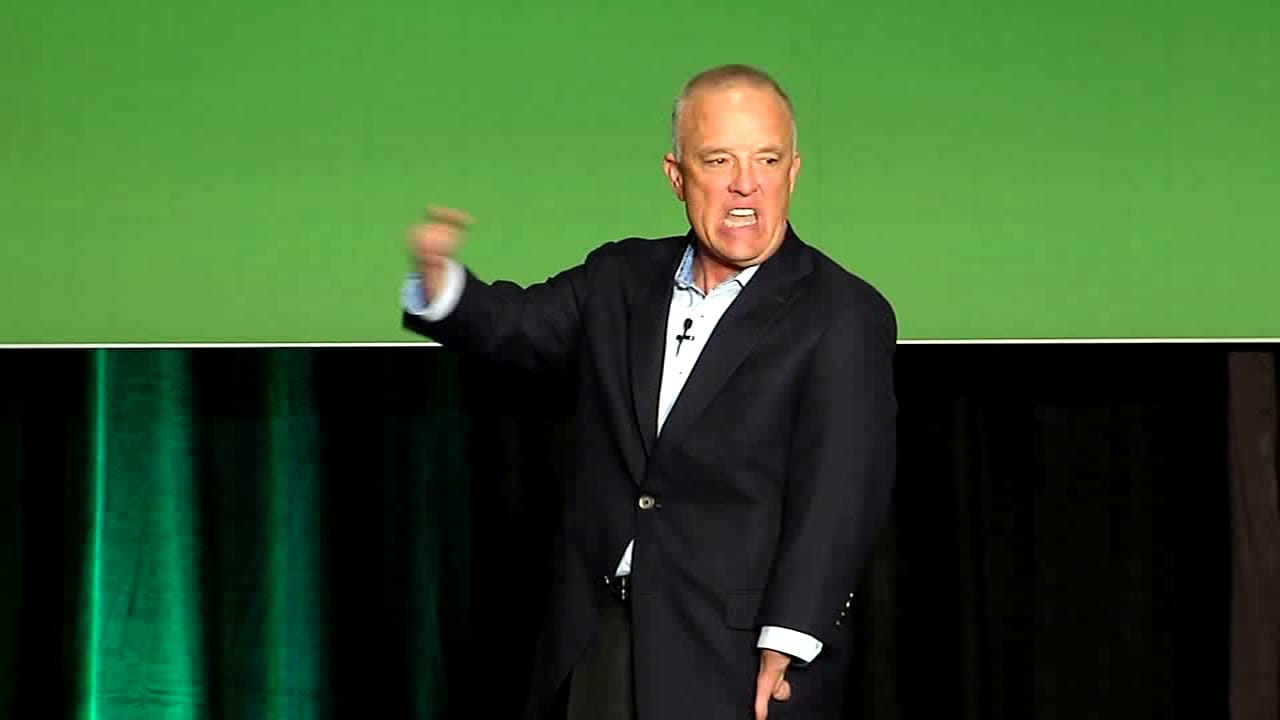
In life, as in tennis, consistency is far more important than perfection, according to speaker Roger Crawford. Drawing from his experience as a college tennis player, he noted that winning often comes down to simply hitting the ball over the net one more time than your opponent. This principle, he argued, applies to all areas of life, where persistent effort regularly outperforms sporadic, perfect attempts.
Crawford also distinguished between two critical emotional states: fear and anxiety. He defined fear as a reasonable response to uncertainty and a natural part of growth, as taking risks is necessary to seize opportunities. Anxiety, in contrast, is a self-imposed limitation—a “negative use of mental rehearsal” that anticipates failure. By embracing fear as a signal of progress and rejecting anxiety, one can view change as something new rather than something wrong.
"Consistency is much more important than perfection. It's hitting that ball over the net."
Speaker Urges Adopting 'Lagniappe' by Giving a 'Little Extra' to Self and Others
Roger Crawford encouraged his audience to embrace the Cajun principle of “lagniappe,” meaning “a little extra,” in two key ways. The first is to be “all-in” with one’s own efforts, giving everything you have and then a little more. The second, and more profound, is to be a source of lagniappe for others by offering an extra pat on the back or a word of encouragement.
To illustrate the power of this concept, Crawford shared a moving story from the Special Olympics. During a race, one athlete fell, and instead of continuing, all the other competitors stopped, ran back to help the fallen runner to their feet, and then finished the race together. This act of collective support, Crawford explained, is the embodiment of lagniappe, demonstrating that the greatest value often lies not in individual victory but in lifting up those around you.
"Be that lagniappe for other people. Be that one that gives that little extra, the extra pat on the back, the extra encouragement."
Speaker Reveals He Was Child Born With Severe Physical Challenges in Talk on Resilience
In a powerful conclusion to his presentation, speaker Roger Crawford revealed that an earlier story he told about a baby born with significant physical challenges was, in fact, his own. He was born with one underdeveloped leg and another that was bent and folded underneath him, presenting his parents with immense uncertainty. This personal revelation served to anchor his central theme: to always “reach higher” regardless of one’s circumstances.
To drive the point home, Crawford presented an Olympic torch he once had the honor of carrying, pointing to the three words engraved on its rim: “Altius, Citius, Fortius.” The Latin motto, meaning “higher, faster, and stronger,” served as a final, tangible symbol of his message. The torch, he concluded, is a reminder that with a mindset focused on overcoming obstacles, dreams can and do come true.
"That little baby that I'm talking about was me. ... I look at this torch and it reminds me dreams really do come true."
World Champion Skeet Shooter’s Secret to Excellence: ‘Practice When You Don’t Want To’
Roger Crawford shared the key to elite performance as explained by his mother-in-law, Judy Allen, a world champion skeet shooter in the sport's Hall of Fame. When Crawford asked how she became the best in the world, her advice was to “practice when you want to, and practice when you don’t want to.” This disciplined approach, she explained, ensures one is always ready, even when motivation is low or conditions are not ideal.
This philosophy was physically etched onto one of her competition rifles, which is now on display in the International Skeet Shooting Hall of Fame in San Antonio, Texas. Carved on the end of the gun are the words “one more shot.” Allen used this as a personal mantra to push through moments of fatigue or frustration, serving as a constant reminder that greatness is built on consistency and the will to persevere when it is hardest.
"Practice when you want to. Then she said this: practice when you don't want to. She said practice when you don't feel like it, practice when the circumstances are not perfect."
‘Challenges Are Inevitable, But Defeat Is Optional,’ Speaker Says on Power of Mindset
Speaker Roger Crawford attributes his ability to walk to his parents' adoption of “possibility thinking.” Born with physical conditions that affected his legs, his parents sought solutions rather than dwelling on obstacles, a search that led to an amputation and a prosthesis. This experience cemented his core belief that while “challenges are inevitable, defeat is optional.”
The greatest resource any person has, Crawford argued, is their mindset, because beliefs directly drive behaviors, which in turn determine results. He asserted that people very rarely perform better than they believe they can. If a person’s belief system holds that something is impossible, they will unconsciously seek evidence to support that view. Conversely, a mindset focused on what is attainable will find evidence to support an optimistic path forward.
"You very rarely if ever perform better than you believe you can. That's how powerful our beliefs are, because our beliefs drive our behaviors and our behaviors determine our results."
Speaker Advocates ‘Regifting’ Unique Talents to ‘Pay It Forward’
Roger Crawford shared advice from his 94-year-old friend, Art Host, who credited his vitality to being a “regifter.” This concept, he explained, has nothing to do with passing on unwanted presents. Instead, it means recognizing the unique gifts and talents one has been given and actively sharing them with others to encourage and uplift them, effectively “paying it forward.”
This idea stands in contrast to the pursuit of prominence, which Crawford described as being focused on personal accomplishments and the self-centered glare of the spotlight. He argued that true fulfillment is found not in individual achievement but in using one's abilities to help others “reach higher.” This generous spirit of sharing talent creates a positive, supportive community and leads to a more meaningful form of success.
"We've all been given unique and special gifts and we don't want to hang on to them. We want to give them to other people. Be a regifter."
Imaginary Handicaps Are More Disabling Than Real Ones, Speaker Argues
Real, physical handicaps can be overcome, but it is the “imaginary ones” that truly disable people, according to speaker Roger Crawford. He recounted a period in his own life where he was so gripped by anxiety and self-consciousness about his hands that he constantly hid them in his pockets. This self-imposed mental barrier, he explained, was a far greater limitation than any of his actual physical challenges.
His perspective shifted after a coach offered a simple but profound piece of advice: “You will never reach higher with your hands in your pockets.” Those words inspired him to stop letting his circumstances define him and to try out for track and field. The experience taught him that transcending one’s situation begins with a change in belief, proving that the most significant obstacles are often internal, not external.
"Real handicaps like mine, they can be overcome, but it's the imaginary ones that really disable us."
Speaker Introduces ‘Lagniappe,’ the Cajun Principle of Giving ‘A Little Extra’
Speaker Roger Crawford explained the French Cajun concept of “lagniappe,” defined as giving “a little extra” or going “beyond full measure.” He described its traditional meaning through the example of a merchant who, after selling a customer two pounds of grain, would add an extra scoop into the bag as a gesture of goodwill, calling it “a little lagniappe.”
Crawford also provided a modern example from his own experience with a clothing salesman in Louisiana. When Crawford expressed hesitation about buying a suit due to the necessary alterations for his shorter limbs, the salesman reframed the issue entirely. He remarked that most “athletic men” have that problem. This small, extra boost of confidence—a form of lagniappe—not only secured the sale but demonstrated how a little something extra can transform an interaction and create unexpected value.
"Here is a little lagniappe. The definition: beyond full measure. It means a little extra."
Also mentioned in this video
- Roger Crawford begins his speech by sharing a humorous anecdote about his… (0:12)
- His physical challenges, affecting all four limbs from the elbows and knees… (1:02)
- His early childhood struggles with being unable to talk until age five, being… (2:48)
- Roger Crawford reflects on how tennis transformed his perceived disability into… (13:59)
- His profound realization that his own challenges have brought positives like… (21:07)
Summarised from The Tennis Congress · 36:36. All credit belongs to the original creators. Streamed.News summarises publicly available video content.