Original source: Fault Tolerant Tennis
This video from Fault Tolerant Tennis covered a lot of ground. Streamed.News selected 5 key moments and summarises them here. Everything below links directly to the timestamp in the original video.
Elite tennis players like Roger Federer perform a crucial, nearly invisible action before every forehand. Understanding this 'grip seating' technique can unlock a new level of connection and control with your racket.
Analysis of Roger Federer's Forehand Reveals High-Speed Grip Seating Technique
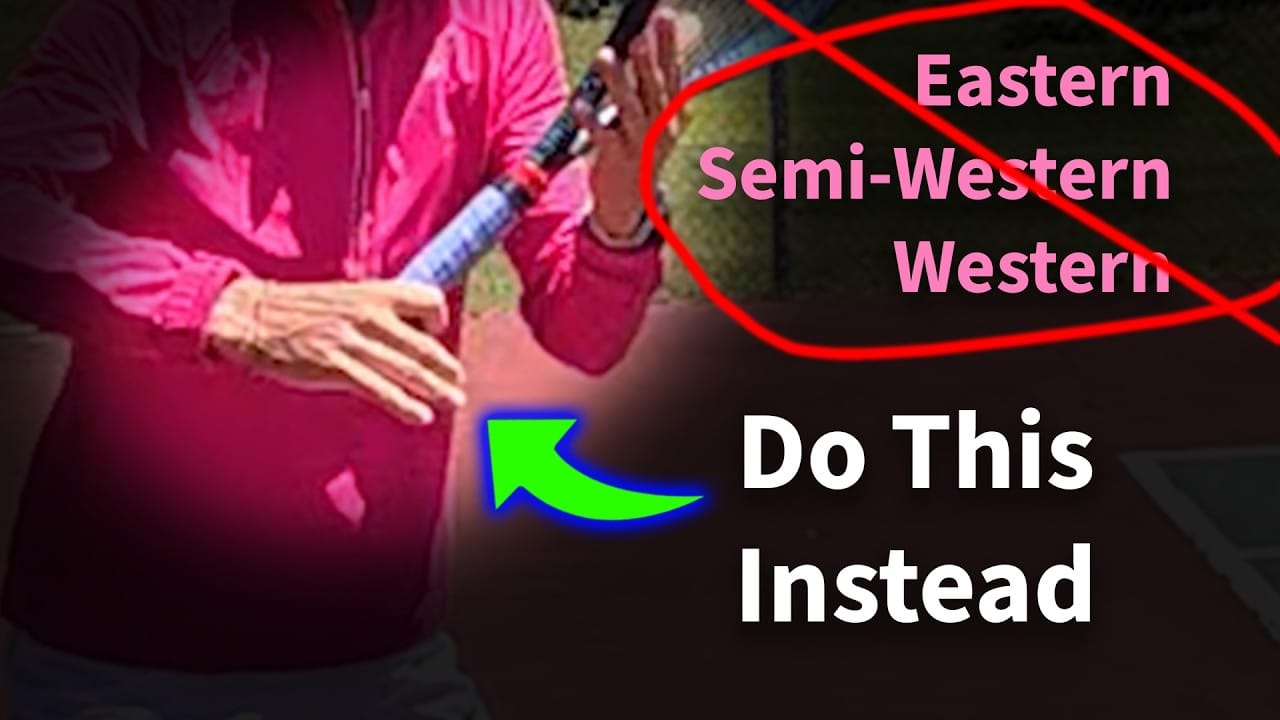
High-speed footage of Roger Federer reveals a critical, yet nearly imperceptible, technical detail: the 'seating' of the forehand grip. Before initiating the swing, he uses his non-hitting hand to press the racket handle firmly into his palm, momentarily opening his fingers before re-wrapping them. This action, also employed by players like Carlos Alcaraz, is the first mechanical step of the forehand, establishing a complete connection between hand and racket.
The thesis here is that this preparatory motion is not a stylistic tic but a functional necessity for creating a stable haptic interface. What this means is that for players to perceive and control the racket face during a high-velocity swing, the handle must be perfectly coupled to the palm before acceleration begins.
"The first step of the forehand is seating the grip."
Optimal Racket Control Balances 'One-to-One Coupling' With Wrist Mobility
The objective of an advanced control system in tennis is to achieve 'one-to-one coupling,' a state where the hand and handle are in full contact and move as a single unit. This is accomplished by pressing the racket into the V-shaped area between the thumb and index finger, then wrapping the fingers around. However, this full connection must be balanced with a grip loose enough to permit the wrist to act as a free hinge, a fundamental requirement for generating racket speed.
This balance is the core challenge of the grip; it requires threading a needle between total connection for haptic feedback and sufficient relaxation for mechanical freedom. Mastering this allows a player to become highly aware of the racket face and make precise adjustments between shots.
"We need to thread that needle of a grip with full connection that still can be held loose enough to allow the wrist to hinge."
A Specific Method for Seating the One-Handed Backhand to Enhance Acceleration Rhythm
The correct seating of the one-handed backhand grip is a prerequisite for high-level performance. The method involves using the non-hitting hand to actively pull the racket into the hitting hand's palm. The bottom two fingers serve as a mechanical stop, preventing over-rotation and inducing a slight wrist extension, before the fingers wrap around to secure the handle.
What this means is that the procedure fully utilizes all available space, creating a direct haptic interface through the palm and fingers. This enhanced perception is critical for coordinating the millisecond-order timing required to manage the racket's lag and acceleration rhythm through the hitting zone.
"The only way you can get those kind of millisecond order high-velocity timings through the ball every time is if your hand is connected to the handle in a way where you can perceive them."
Elite Tennis Grips Employ Dual Haptic References for Superior Racket Awareness
Professional tennis players establish a superior haptic connection to the racket by creating two distinct reference points on the handle. A 'top haptic reference' is maintained by the index finger, thumb, and upper palm, providing constant orientation information. The grip is then completed dynamically with a 'three-finger wrap-around' at the bottom of the handle, often pushed into place by the non-hitting hand.
The thesis here is that this bifurcated system is more neurologically efficient. It separates the task of orienting the racket face from the task of securing it for acceleration, giving the player continuous and unambiguous feedback about the racket’s state throughout the entire motion.
"You need references on the top of the handle and the bottom of the handle that tell you what the top and bottom of the racket are doing as you swing."
Why Elite Players Must 'Reseat' Their Grip Before Every Shot
The principle of 'one-to-one coupling' dictates that the hand and racket must move as a single, unified system for a player to have control. During a shot's follow-through, a player’s grip naturally relaxes, causing the handle to shift and this coupling to be lost. Therefore, a conscious 'reseating' of the grip is required before every subsequent swing to re-establish the haptic connection.
Failing to perform this reset makes precise control impossible, as the racket will move independently within the hand during acceleration, obscuring sensory feedback. Another way to say this is that the control system for each shot must be deliberately re-established, as it is invariably compromised by the mechanics of the previous swing.
"It should almost feel like the racket is dragging your hand around. When you have true coupling, this is a great example."
Also mentioned in this video
- A haptic feedback crisis in modern tennis, where the racket fails to send… (0:00)
- Missing the haptic connection prevents swings from self-organizing and… (1:49)
- 99% of grips are ineffective (5:56)
Summarised from Fault Tolerant Tennis · 10:17. All credit belongs to the original creators. Streamed.News summarises publicly available video content.