🌐 Also available in: 🇫🇷 Français
Original source: Your Online Tennis Coach
This video from Your Online Tennis Coach covered a lot of ground. Streamed.News selected 7 key moments and summarises them here. Everything below links directly to the timestamp in the original video.
Use this two-shot combination to move beyond hitting single balls and start thinking like a strategist, setting up your winning shot with a deliberate first strike.
Tennis Drill Combines Deep Center Shots with Angled Attacks to Build Finesse
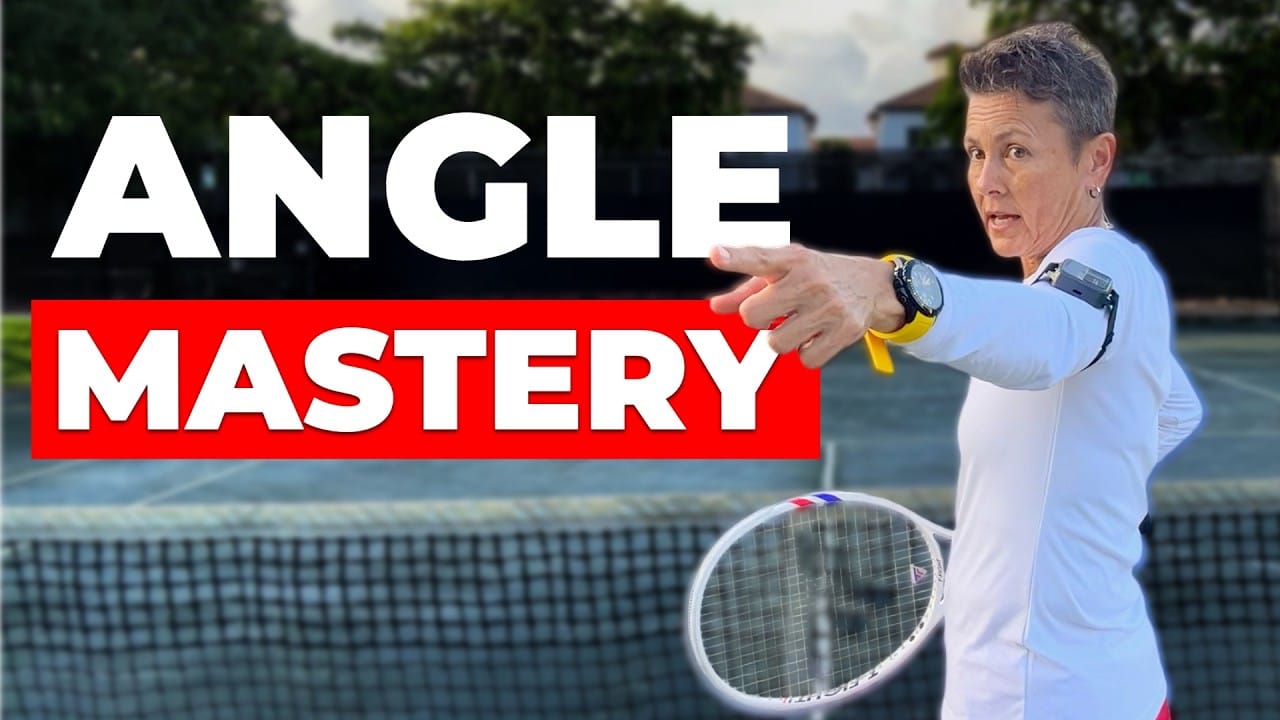
A practical drill for developing point construction involves a two-shot sequence. The first shot is directed deep to the center of the court to neutralize the opponent, while the second is an angled shot aimed at one of four specified targets. Players should alternate between forehand and backhand, focusing on slow, deliberate body rotation rather than power.
The goal is not merely to hit winners, but to become acquainted with the feel of creating angles and moving an opponent strategically. This practice reveals how much body rotation is required and builds the patience needed to construct points effectively.
"You're going to realize how much rotation your body needs and how tight we get when we're trying to create angles because all of a sudden the court changes. We're looking in a different direction."
Four-Target Drill Sharpens Accuracy for Both Short and Long Angle Shots
To improve angled shots, a drill utilizes four targets placed to represent short and long angles on both sides of the court. Players should practice hitting each target sequentially with both forehands and backhands. Your goal is not to hit the target directly; your goal is to land the ball within a one-meter diameter circle around it, promoting consistency over perfection.
It is super important that the ball crosses the singles sideline before bouncing twice to maximize the opponent's displacement. This methodical practice builds the racket speed and control necessary for effective angle creation.
"You're not really trying to go for the target. You're trying to go about a meter close to the target... if you get inside a diameter of a meter, then you should feel like you've been successful."
'Feed Ball' Drill Isolates Topspin and Finesse for Angled Shots
The 'feed ball' drill is a foundational exercise for developing topspin on angled shots. By hitting a slow ball out of the air, players can focus exclusively on the mechanics of creating rotation. The drill uses two targets—one short in the service box and one deep in 'no man's land'—to practice both types of angles.
This is a key strategy for developing feel, as the focus is entirely on finesse, not power. The objective is to loosen up the hands and understand how to make the ball cross the singles sideline to create a sharper, more effective angle.
"This is not a stroke. This is not a strategy about power. This is a strategy about finesse."
Master the Geometry of Angled Shots by Differentiating Deep and Short Approaches
The effectiveness of an angled shot depends on its trajectory relative to the court lines. A superior deep angle is one where the ball crosses the singles sideline before leaving the court, forcing the opponent further out. Short angles, conversely, require significant topspin and are easier to execute from a higher contact point.
It is super important to remain patient if an opponent recovers well. Your goal is not to force a winner on the first attempt, but to hit back to the middle, reset the point, and try the angle again to maintain control.
"A better angle is always going to be a ball that crosses the singles sideline before it leaves the court."
Key to Effective Long Angles Is Forcing the Ball Across the Singles Sideline
When executing a long angled shot, the primary tactical goal is to have the ball cross the singles sideline before it exits the court. This trajectory forces the opponent far outside the doubles alley to retrieve the ball. In contrast, if the ball crosses the baseline first, the opponent can recover much more easily from within the court.
This geometric distinction is the key to creating genuine pressure. Even if the opponent makes a good recovery, maintaining the strategy and repeating the pattern will eventually open up the court for a finishing shot.
"If your ball crosses the singles sideline, that means your opponent is going to be outside of the court... If your ball crosses the baseline, that person is going to still be inside the court."
Improve Put-Away Consistency by Reducing Power and Aiming for a Larger Target
When an opportunity for a put-away shot arises, the goal is not to hit with 100% power. Often, 70% of maximum power is sufficient to win the point, especially when the opponent is already out of position. This reduction in pace significantly increases control and reduces the chance of an unforced error.
Furthermore, it is super important to aim for a large target, at least a meter inside the line, rather than trying to hit the line itself. This provides a crucial margin for error while still ensuring the shot is unreturnable.
"Your target doesn't have to be this small. You want to aim for a big target so that if you miss, you're still hitting that ball pretty close to where you're going."
Use Topspin on Angled Shots to 'Hook' Opponents and Create Openings
Topspin is essential for hitting effective angles in tennis, providing the control and "insurance" needed to bring the ball down inside the court. The heavy rotation acts like a hook, pulling the opponent wide and opening up the court for a subsequent shot. A flat angle, by contrast, must be hit softer, giving the opponent more time to recover.
This is the key to strategic point construction. If the opponent recovers well from the first angle, a player must be patient and repeat the tactic until a clear opening for a put-away shot presents itself.
"Remember that what you're trying to do is to hook that person as if you're fishing... get out of the court, and then you open up the court."
Also mentioned in this video
- The concept of using forehand to create short and long angles in tennis to… (0:00)
- The key intention for creating angles in tennis is to make the opponent run out… (0:24)
- To successfully create angles, players need to master body positioning and… (1:09)
- The concept of 'finesse' is introduced as going slow and feeling the shot to… (4:12)
- The presenter concludes by emphasizing the importance of relaxing fingers,… (16:44)
Summarised from Your Online Tennis Coach · 18:00. All credit belongs to the original creators. Streamed.News summarises publicly available video content.