🌐 Also available in: 🇫🇷 Français
Original source: Your Online Tennis Coach
This video from Your Online Tennis Coach covered a lot of ground. Streamed.News selected 8 key moments and summarises them here. Everything below links directly to the timestamp in the original video.
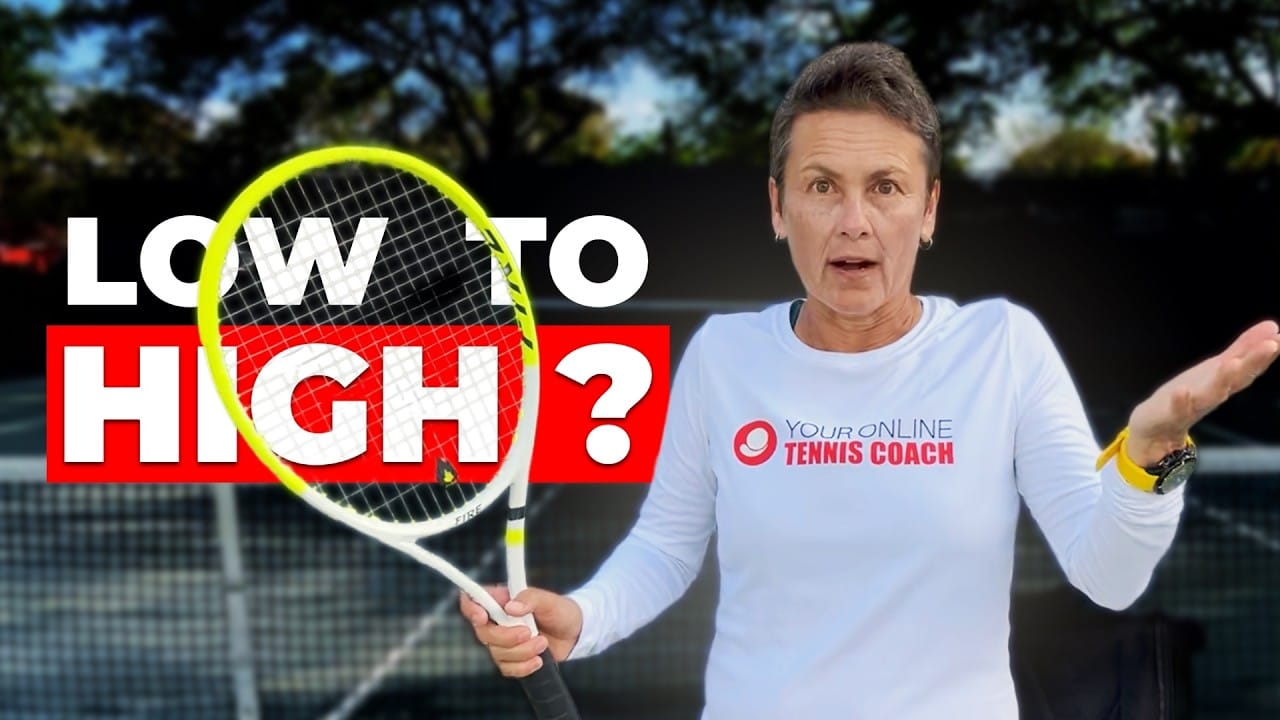
Many tennis players misunderstand the 'windshield wiper' motion for topspin. Here's how to execute it correctly for better control by focusing on the base of your racket as a pivot point.
Mastering Topspin: The 'Windshield Wiper' Motion Pivots on Racket Base, Not Whole Arm
The 'windshield wiper' motion essential for topspin involves rotating the racket head around its base, not swinging the entire racket. The butt of the racket should maintain an imaginary line to the target for as long as possible, serving as a stable pivot point. The outer part of the racket is what moves around this controlled base.
This technique is the key to greater control and consistency. A common error is to perform the windshield wiper with the whole arm, which sacrifices accuracy. By focusing on the base as the center of rotation, players can execute a more precise and effective topspin stroke.
"The longer that you can control the motion of the windshield wiper to be around the base, the more you're going to control the stroke."
'Windshield Wiper' Technique Adapted for Volleys with High-to-Low Swing
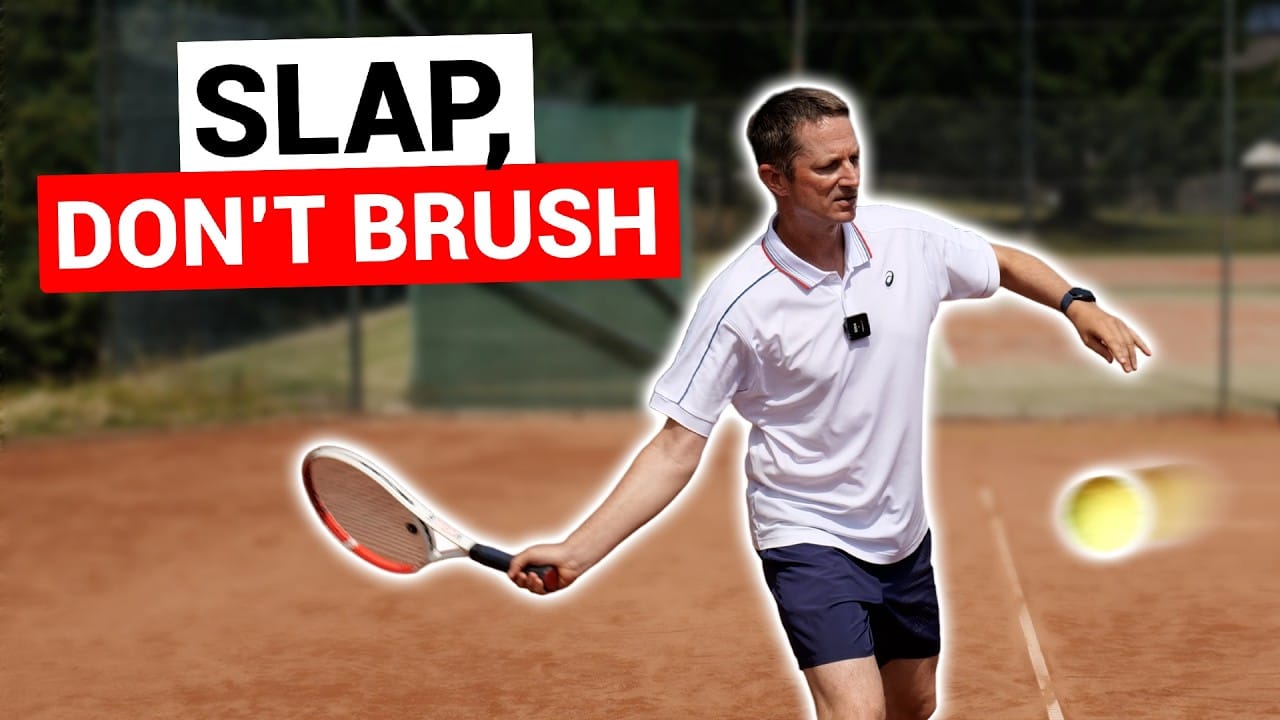
The 'windshield wiper' principle extends beyond groundstrokes to volleys, but with a high-to-low swing path. As with a groundstroke, the outside of the racket rotates around the base. It is super important that the stroke includes a full follow-through to guide the ball accurately.
Applying this concept prevents a common error where players stop their forward momentum upon impact. A complete follow-through ensures the body's energy is transferred efficiently into the shot, maintaining both control and pace at the net.
"Unfortunately, what a lot of people do on volleys is they stop going forward at the moment when they cut and then the racket comes right down."
Serve Accuracy and Spin Improved by 'Windshield Wiper' Racket Rotation
The serve also benefits from the 'windshield wiper' principle of rotating around the racket's base. For slice or kick serves, the tip of the racket should arc around the base to impart spin. For a flat serve, the tip snaps down around the base rather than the entire arm pulling downward.
This rotational motion is the key to controlling depth. A common mistake is bringing the entire racket down, which adds too much depth and sends the ball long. Since the service box is a short target, this technique is essential for precision.
"You want the tip of the racket to be going around the base of the racket. The moment that the whole racket comes down... you're going to end up getting way too much depth."
Tennis Racket's Two Halves Have Distinct Functions for Control and Power
A powerful mental model for improving stroke mechanics is to view the tennis racket as two separate tools. The bottom half, including the handle and throat, is responsible for control, accuracy, and depth. The top half of the racket head is used to generate power and spin, whether topspin or slice.
By mentally separating these functions, a player can execute shots with greater intention. This framework clarifies whether the goal is precise placement or aggressive power, leading to more effective and conscious stroke production on the court.
"Think of the racket as two different parts, the bottom and the top... This part is going to give you control, accuracy, and depth. And this part is going to give you power and... topspin or slice."
Tennis Efficiency Tip: Separate Upper and Lower Body Functions for Better Strokes
For a more efficient stroke, players should assign distinct roles to their upper and lower body. The upper body’s main function is to support the arm and facilitate rotation through the shot, allowing for a smooth and continuous swing. It should not be used to generate forward movement.
In contrast, the lower body's job is solely to maintain balance and manage positioning. Its purpose is to move the player to the ideal distance from the ball, creating a stable platform from which the upper body can properly execute the stroke.
"The main function of your upper body is to support your arm... The function of your lower body is to keep you in balance and to take you to the right place."
Poor Technique and Rushing New Skills are Primary Causes of Tennis Injuries, Coach Warns
Many tennis injuries stem directly from improper technique, particularly from attempting to hit the ball too hard before a new motion is mastered. This premature application of power puts unnecessary strain on the body's joints and muscles, creating a high risk of injury.
To prevent this, it is super important that players slow down when learning or modifying a stroke. By relaxing the hand and wrist and moving deliberately, the arm has time to internalise the correct, safer motor pattern before adding speed and power.
"Injuries, unfortunately, most of them come from bad technique... from trying to hit the ball really hard when your technique is not sound yet."
Tennis Strokes Use a Chain of Pivots Through the Wrist, Elbow, and Shoulder
An efficient tennis stroke relies on a kinetic chain where each joint in the arm acts as a successive pivot. The wrist initiates the 'windshield wiper' motion, serving as the first pivot. The elbow then functions as the second pivot for the next phase of the swing's rotation.
Finally, the shoulder acts as the main pivot for the entire arm's rotation, enabling a full, fluid motion. Understanding this sequence is the key to coordinating the arm for a powerful and technically sound swing, rather than moving the arm as a single, stiff lever.
"Your wrist is going to be a pivot for the first windshield wiper. Your elbow is going to be a pivot for the next... and your shoulder is going to be a pivot for the entire stroke."
To Improve Topspin, Tennis Players Advised to Avoid 'Handling Wild Horses' with Tense Hips
Players often limit their topspin by tensing their hips at the end of a stroke, a sensation described as feeling like you are 'handling wild horses.' This tension inhibits the body's rotation and acts as a brake on the racket head speed required for heavy spin.
Instead, the goal is to keep the hips loose, which permits the arm and racket to accelerate freely. This high-speed movement through contact is what creates the deceleration effect on the ball that generates topspin, so your goal is not to stop your hips.
"Make sure that you don't feel like you're handling wild horses while you're finishing the stroke."
Also mentioned in this video
- The low-to-high forehand stroke for topspin is discussed, emphasizing that the… (0:00)
- The importance of the follow-through in a topspin stroke is highlighted,… (0:55)
- Avoid reaching for the ball with the upper body and instead use the legs to… (5:33)
- Paying attention to hip movement is crucial; tight hips lead to poor separation… (9:01)
- Finesse, control, power, and accuracy result from combining the entire body and… (11:49)
Summarised from Your Online Tennis Coach · 12:09. All credit belongs to the original creators. Streamed.News summarises publicly available video content.