✦ Advanced Writer
Original source: Ride-Along Sessions with Cookie!
This video from Ride-Along Sessions with Cookie! covered a lot of ground. 3 segments stood out as worth your time. Everything below links directly to the timestamp in the original video.
For experienced windsurfers who have outgrown freeride boards but aren't ready to wrestle with slalom equipment, the Futura makes a case for a third way.
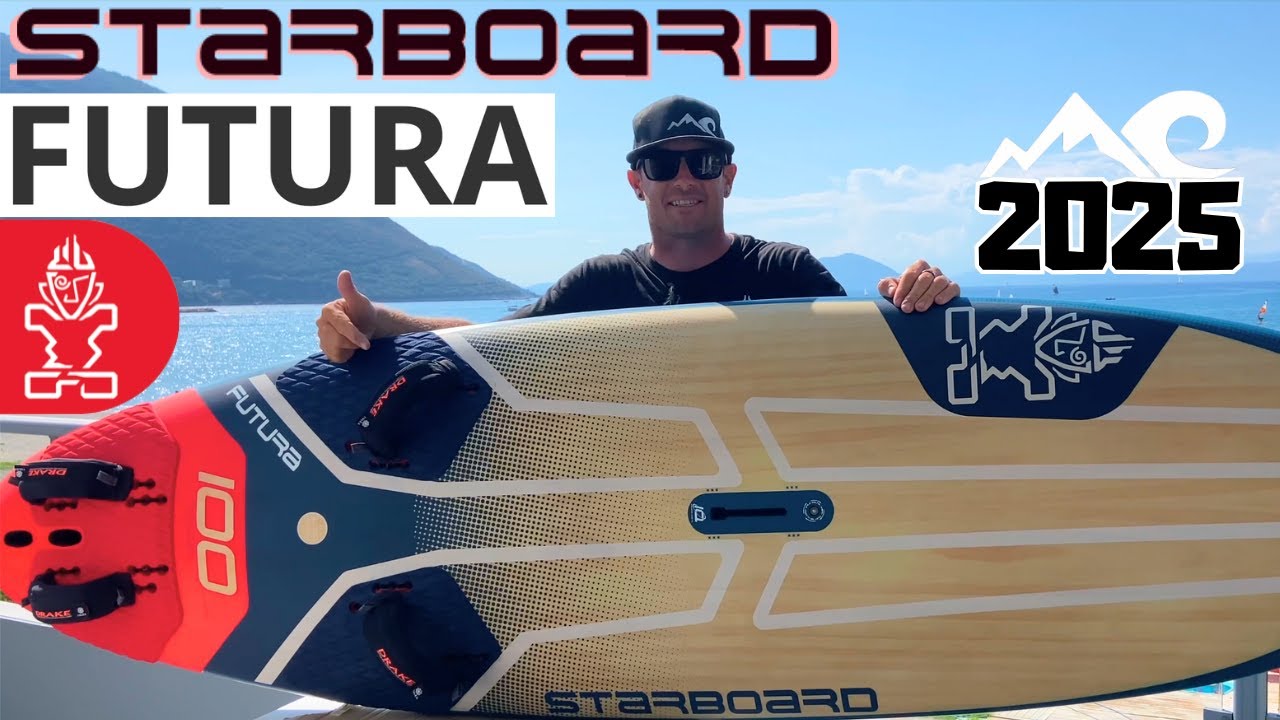
Starboard's Futura 100L Targets Advanced Windsurfers Seeking Speed Without Punishment
Starboard's 2025 Futura slots into the free race category — a deliberate middle ground between the unforgiving precision of pure slalom boards and the easygoing stability of freeride designs. An 80kg reviewer chose the 100-litre model for choppy conditions in Vasiliki, finding it compatible with sails ranging from 5 square metres up to 7.6 square metres, a wind range wide enough to cover most on-water scenarios without swapping equipment.
The reality is that the free race segment exists because most capable windsurfers are not competing in slalom events — they are chasing speed for the pleasure of it, across conditions that are rarely textbook. A board that refuses to punish minor technique errors while still rewarding aggression fills a gap that pure race designs leave open, and the Futura's positioning speaks directly to that tension between performance and practicality.
"It has such a wide wind range — that's the cool thing about this board."
Futura Reviewed Against iSonic and Carve: A Few Knots of Top Speed Traded for Lasting Comfort
Tested against Starboard's iSonic slalom board and the more accessible Carve freeride model, the Futura surrenders only a few knots of top-end speed in exchange for meaningfully greater comfort and forgiveness. The difference comes down to rail geometry: the Futura's slightly more rounded rails ease cornering and reduce the physical demand of holding a line at speed, making longer sessions viable where the iSonic would, in the reviewer's words, require 'holding on for dear life.' The analogy offered is a Formula 1 car retrofitted with heated seats, power steering, and an automatic gearbox — the performance architecture remains, but the barriers to accessing it are lowered.
What this amounts to is a design philosophy that prioritises usable speed over theoretical maximum velocity. The Carve, framed as a well-specified family hatchback, does everything competently; the iSonic is a racing instrument demanding near-perfect inputs. The Futura positions itself as the board that most competent windsurfers will actually be faster on, because they can sustain effort rather than fight the equipment.
"It's more comfortable and it can last longer on the water without needing to hold on for dear life like I might need to on the iSonic."
On-Water Test Confirms Futura's Dual Character: Wave-Board Agility Meets Slalom-Style Acceleration
On the water in choppy conditions, the Futura's on-paper claims translated directly into felt performance. Getting onto the plane required minimal wind, with a technique note that proves instructive: jumping into the footstraps early, rather than standing forward as one might on a larger freeride board, triggers an immediate burst of acceleration. Once planing, the board offered a choice of two modes — tight, responsive handling close to a wave board, or a locked-in, straight-line blast that absorbed chop rather than deflecting it. When gusts arrived, the board continued accelerating rather than topping out.
This is not simply about one board's on-water feel — it is about where the ceiling of recreational windsurfing performance sits. The Futura's ability to remain composed and keep accelerating in disordered, real-world chop is what separates it from equipment that performs only in ideal conditions. For advanced riders who want to log hours rather than manage their board, that distinction is the one that actually determines how much time they spend on the water.
"I can almost ride it like a wave board in terms of maneuverability and agility — or I just stabilize, settle in, and lock it into a nice straight-line blast."
Summarised from Ride-Along Sessions with Cookie! · 17:10. All credit belongs to the original creators. Cookie Windsurf summarises publicly available video content.