🌐 Also available in: 🇫🇷 Français
Original source: Iron Will Tennis
This video from Iron Will Tennis covered a lot of ground. Streamed.News selected 4 key moments and summarises them here. Everything below links directly to the timestamp in the original video.
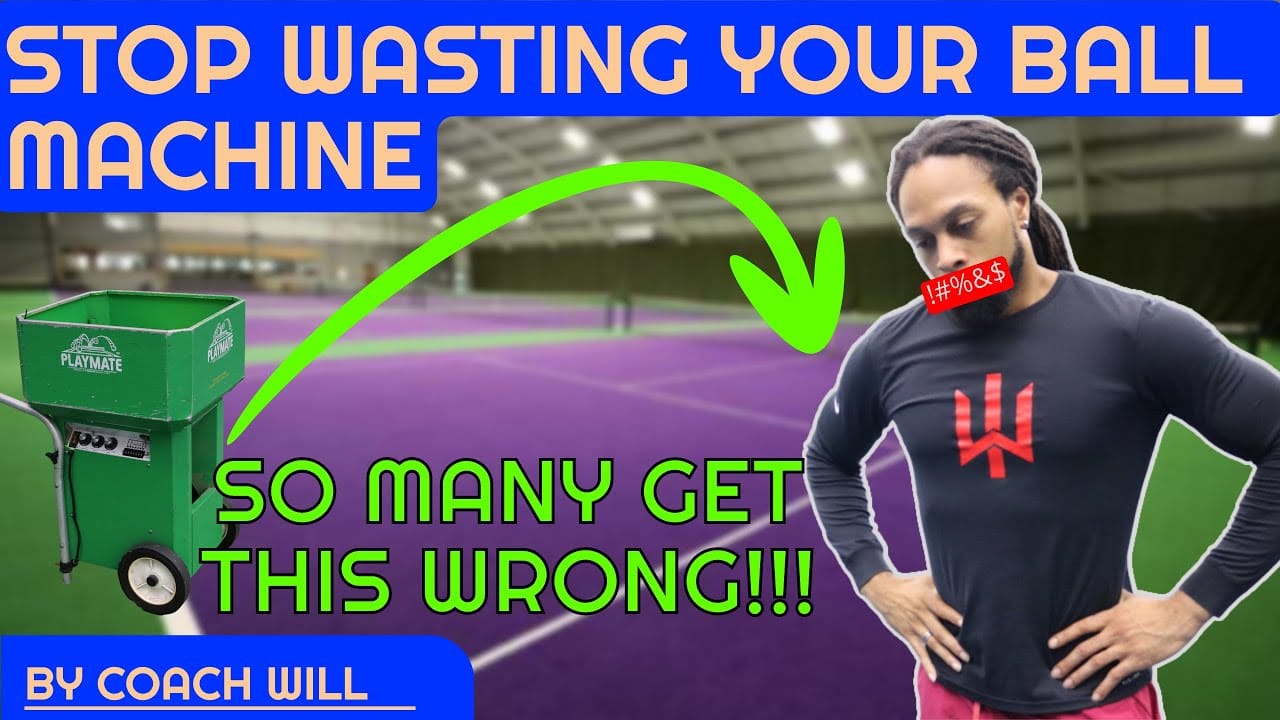
Your ball machine practice may be hurting your match-day timing. Here's how to set the interval to accurately simulate the rhythm of a real rally.
Ball Machine Interval Must Replicate Rally Rhythm for Effective Practice
To achieve match-realistic timing, the interval on a ball machine must be calibrated to simulate the natural rhythm of a rally. The correct setting is achieved when the machine feeds the next ball at the precise moment the player's previously hit shot passes the machine's location. This method ensures the player's recovery, split-step, and preparation for the next shot are synchronized with the timing of an actual opponent's return.
Failing to adjust this setting leads to practicing strokes in isolation, creating a disconnect between training and match performance. By matching the ball feed to the shot's travel time, a player trains the entire shot cycle, including the crucial movement and preparation phases, rather than just the technical execution of the stroke itself.
"The goal is actually to have the ball come out of the ball machine at the same time that the ball that you hit is passing it."
Integrate Realistic Movement Cycles into All Ball Machine Drills
Effective ball machine practice requires integrating a complete movement cycle, even when the machine is not oscillating. Instead of hitting from a static position, players should execute a shot, perform a recovery movement to a neutral court position, and then move again to address the next ball. This approach simulates the dynamic nature of a real point and ensures that strokes are practiced in a realistic context.
The reason many shots break down in matches is the inability to execute them under the pressure of movement. By building in this recovery and approach sequence, practice shifts from grooving a stroke in isolation to mastering it within a movement-based framework, making improvements more transferable to competition.
"Tennis whenever we're hitting against an opponent... there's a movement cycle plus a shot and if you're out there just going through the shot portion of it you're shooting yourself in the foot."
Strategic Ball Machine Placement Is Crucial for Realistic Practice
The first critical adjustment for realistic ball machine practice is strategically varying its physical position on the court, rather than leaving it fixed in the center. The machine's placement should directly correspond to the shot pattern being practiced, such as positioning it in a corner to simulate a crosscourt rally or a down-the-line feed. This simple change introduces the varied trajectories encountered in a real match.
This approach is essential because the ball's origin point dictates the player's timing, movement, and directional control. Practicing with varied machine placements ensures that players develop the ability to adapt to the different angles and timings they will face against a live opponent.
"Practicing your backhand crosscourt versus practicing your backhand with a ball that's coming down the line to go crosscourt are two completely different timings."
Structure Ball Machine Drills in Match-Length Intervals for Better Learning
To maximize learning and simulate match conditions, ball machine practice should be structured into proper intervals. Drills should run for a duration slightly longer than an average point—for example, eight or nine shots if a typical point lasts six—followed by a short break for assessment before starting the next set. This method mirrors the stop-and-start nature of competition.
This structure prevents the monotony of continuous hitting and allows the brain to process feedback, creating a crucial cognitive loop. It builds not just technical skill but also the mental habit of assessing and adjusting between points, which is a hallmark of competitive play.
"If you go in smaller intervals you're also going to take time to think about what do I need to adjust with the next round."
Also mentioned in this video
- Common mistakes people make when using a tennis ball machine that can lead to… (0:00)
- The video concludes by summarizing that adjusting ball machine position,… (8:23)
Summarised from Iron Will Tennis · 9:39. All credit belongs to the original creators. Streamed.News summarises publicly available video content.