🌐 Also available in: 🇫🇷 Français
Original source: Iron Will Tennis
This video from Iron Will Tennis covered a lot of ground. Streamed.News selected 4 key moments and summarises them here. Everything below links directly to the timestamp in the original video.
Implement this simple two-minute drill in your next warmup. Calling out the ball's trajectory and adjusting your swing path accordingly can immediately improve your rally consistency.
Drill to Improve Consistency by Adjusting Swing Path to Ball Trajectory
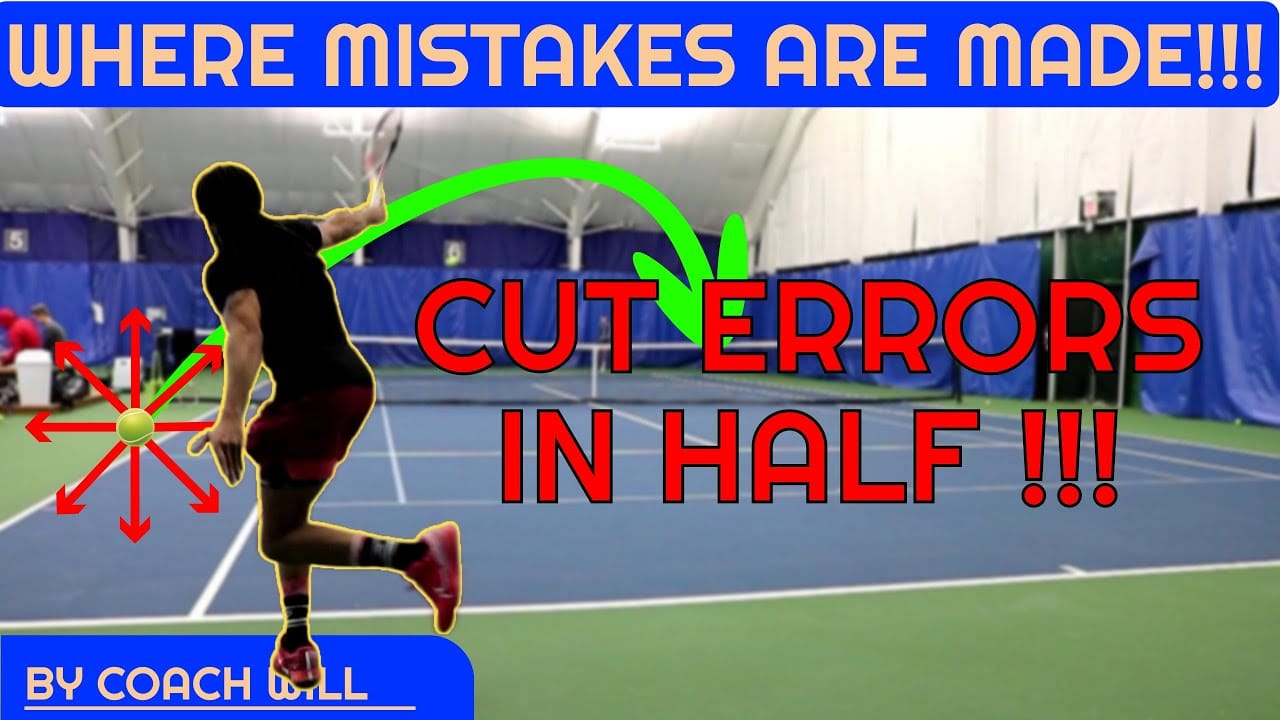
A practical drill is prescribed to train players to instinctively adjust for an incoming ball's trajectory. During a rally or with a ball machine, the player should call out whether the ball is rising or falling as early as possible. The crucial step is to then execute a swing path that is opposite to the ball's movement: lifting more on a falling ball and hitting through more on a rising ball.
The objective is to achieve a consistent ball height over the net, regardless of the incoming shot's arc. By consciously adjusting for what the ball is doing, rather than simply executing a pre-planned stroke, players can significantly reduce unforced errors related to depth and net clearance.
"What you should notice is that your ball starts to clear the net about the same height consistently because you're adjusting for what the ball is doing to you rather than what you want to do to the ball."
Adjusting Swing Path to Ball Trajectory Is Key to Reducing Unforced Errors
The primary solution for many unforced errors is to adapt the swing path in direct opposition to the ball's vertical movement at contact. When a ball is falling, players must consciously generate more lift. Conversely, when taking a ball on the rise, a flatter, more direct swing path is required to maintain control and prevent the shot from sailing long.
This principle explains why a player's reliable, practiced stroke can suddenly fail. Unforced errors often stem from applying the exact same technique at the wrong time—for instance, hitting a heavy topspin shot on a rising ball increases the chance of hitting long, while a flat drive on a falling ball is more likely to find the net.
"Those unforced errors will come from you hitting the exact same technique that you always use at the wrong time."
Ball's Vertical Trajectory at Impact Identified as Overlooked Cause of Errors
A critical but frequently overlooked factor in unforced errors is whether the ball is rising or falling at the moment of impact. This detail drastically affects the ball's launch angle off the racquet face. A rising ball struck with an upward swing path will naturally launch higher than anticipated, often causing the shot to go long.
Conversely, a falling ball met with a linear or flat swing path will travel on a lower trajectory, increasing the likelihood of it going into the net. The reason that is, is that the incoming angle combines with the swing path, a phenomenon independent of a player's chosen technique which explains why even well-executed strokes can result in errors.
"Way too many people get focused on how they're going to hit the ball but they don't actually pay attention to how the ball is hitting them."
Diagnosing Unforced Errors Beyond Conventional Early or Late Timing
Many common unforced errors in tennis—specifically hitting the ball long or into the net—are often misdiagnosed by players and coaches. The cause is distinct from conventional timing issues, such as being early or late to the ball. Those timing errors typically affect the shot's lateral direction by altering the racquet face angle at contact, sending the ball wide.
This analysis instead isolates the problem of vertical control, addressing why a technically sound and well-practiced stroke can suddenly fail in terms of depth and height. The focus shifts away from directional timing to another fundamental, yet often ignored, aspect of the ball strike.
"I'm referring to hitting the ball long or in the net and just really not understanding why the forehand that you practiced a thousand times all of a sudden just lets you down."
Also mentioned in this video
Summarised from Iron Will Tennis · 9:24. All credit belongs to the original creators. Streamed.News summarises publicly available video content.