🌐 Also available in: 🇪🇸 Español
Original source: Essential Tennis - Lessons and Instruction for Passionate Players
This video from Essential Tennis - Lessons and Instruction for Passionate Players covered a lot of ground. Streamed.News selected 8 key moments and summarises them here. Everything below links directly to the timestamp in the original video.
The "racket drop" is the key moment that separates an amateur pushing motion from a professional pulling motion. Here's how to practice it correctly to unlock effortless power.
How to Transition to a 'Pull' Serve Using the Racket Drop Position
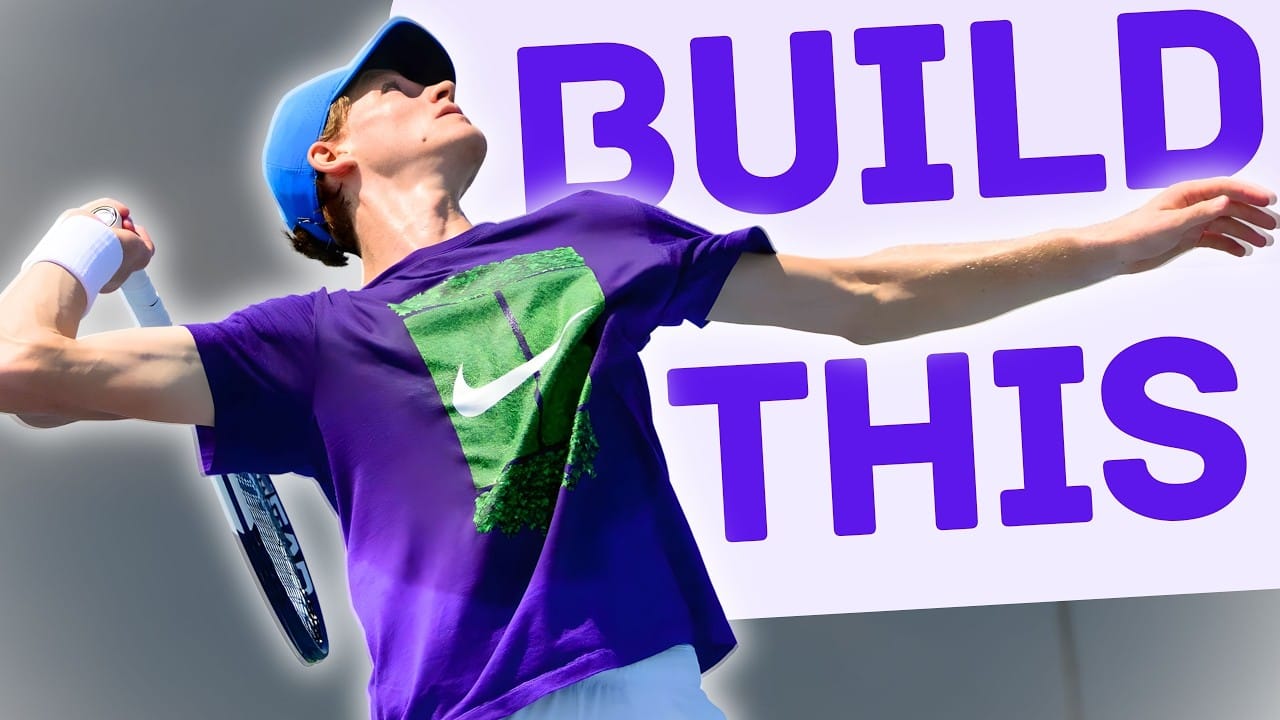
To build a modern serve, the third step introduces the racket into the "pull" position, also known as the "back scratch" or racket drop. This phase focuses on the critical transition from the bottom of the swing upwards toward contact. It directly counters the rigid hinging motion of an inefficient "push" serve by establishing a natural, upward pulling path.
Practicing this movement allows the player to feel how the shoulder stretches to store energy. This stored energy is then naturally unwound and released through the hitting zone, creating effortless racket head speed and transforming the serve from a stiff push into a fluid, powerful motion.
"This transition right here, from the bottom or the pull position to releasing and contact position, that's the magic. That's the whole thing that we're after here."
The Key to a Powerful Serve: Building a Continuous, Flowing Motion
The fourth step in developing a "pull" serve is to blend all previous movements into a single, continuous, and smooth motion with the racket. Any hitches, pauses, or jagged edges in the swing will kill momentum and defeat the purpose of the technique. The goal is to create one long, circular, and flowing path from start to finish.
This unbroken flow is designed to build and compound energy, resulting in maximum acceleration and racket head speed through the contact zone. Such fluidity is essential for generating not only power but also the angular momentum required for effective spin.
"If there's any jagged edges, if there's any starts or stops, if there's any hitches, that kills the momentum of the racket and defeats the purpose of this whole big long circular flowing motion."
Three Common Mistakes That Prevent Players From Developing a 'Pull' Serve
Players transitioning to a "pull" serve often make three critical errors that sabotage their progress. These include tossing the ball too low for the longer, more complex motion, pausing at the top or bottom of the swing which kills momentum, and gripping the racket too tightly, which creates inhibitive physical tension throughout the arm and shoulder.
Each of these mistakes fundamentally works against the core goal of a fluid, relaxed, and energetic swing. They often cause players to revert to a simpler but far less effective "push" motion, as the body fights against the lack of time, rhythm, and freedom.
"If your body is physically tight and tense, we can't move through the motion with the smoothness and the fluidity that we're supposed to. And if you're not smooth and fluid, the racket won't be moving freely."
How to Build a 'Pull' Serve From the Ground Up, Starting Without a Racket
The foundation of an effective "pull" serve begins with a simple drill without a racket. The player starts sideways with the hitting arm at a 90-degree angle, then turns the body so the hand moves from facing right to facing left toward the ear. This initial movement establishes the critical loading phase of a professional-level serve.
This motion is the key to stretching the shoulder to store elastic energy. It creates the beginning of the circular racket path that is essential for generating power by unwinding the body and arm in sequence, rather than simply pushing at the ball.
"If you can go from here to here, you've just transitioned completely away from a push and towards a pull motion."
Mastering the Arm Path for a Fluid 'Pull' Serve
The second step in developing a "pull" serve focuses on creating a smooth, continuous arm motion without the racket. The hand should transition seamlessly from facing right, to facing left by the ear, then up towards the target, and finally across the body. The primary emphasis is on eliminating any pauses between these distinct positions to promote fluidity.
For beginners, the final pronation or "twist" of the hand after contact is less critical than mastering the fluid transition up to the ball. This initial sequence establishes the core circular pathway that is the engine of the serve.
"My hand is transitioning continuously between facing to the right, facing to the left, facing towards my target, and then coming across my body."
How to Correctly Integrate the Ball When Learning a New Service Motion
The final step in the training progression is to introduce the ball, but it must be done methodically to prevent reverting to old habits. Players should "sandwich" their actual attempts between several shadow swings. This process refamiliarises the body and brain with the new "pull" motion before each hit, reinforcing the desired pattern.
Simply hitting hundreds of balls in a row will almost guarantee a return to the ingrained "push" serve. Under the pressure of execution, the brain defaults to what is familiar, undoing the careful work of the previous steps.
"If you just hit 100 balls in a row, you will slowly but surely just go back to your old push serve. I promise you."
A Step-by-Step Weekly Plan to Transform Your Serve From a 'Push' to a 'Pull'
A practical training plan to transition from a "push" to a "pull" serve involves a deliberate, step-by-step progression. Players should start without a racket or ball to feel the correct body and hand positions. The initial focus is on creating a smooth, continuous motion and sensing the difference between pushing and the feeling of loading and releasing energy.
Only after mastering the body movement should a player add the racket for shadow swings. The final step is to introduce the ball, ensuring that each new element is built upon a solid, well-rehearsed foundation.
"Feel the difference between lining everything up and pushing it forward versus loading, storing, and releasing energy through this long circular motion that we're practicing."
A Great Tennis Serve Is a 'Pull,' Not a 'Push': The Key Difference Explained
An effective, modern serve is fundamentally a "pull" motion, not a "push." A "push" serve keeps the strings facing the target in a simple, straight-back-and-forward movement, which offers basic consistency but has a very low ceiling for power. In contrast, a "pull" motion, used by elite players like Roger Federer and Novak Djokovic, involves a dynamic, circular swing that stores energy.
This "pull" action stretches the shoulder and torso to store elastic energy, which is then released in a powerful, whip-like sequence. This generates significant racket head speed, creating the foundation for both effortless power and heavy spin.
"A great serve is not a push, it's a pull. The push gives you the strings lined up with the target the whole time, but it gives you no stretch from the shoulder, no dynamic storage of energy, and as a result, no snap of the racket head."
Also mentioned in this video
- This video will teach beginners and experienced tennis players how to serve… (0:00)
- Many tennis players use a natural, intuitive serving method, dubbed the 'push,'… (0:29)
- The serve is the most important shot in tennis, offering control over the start… (1:47)
- The solution to the 'push' serve problem is to build a correct foundation, as… (2:46)
- Understanding the counterintuitive nature of the serve is critical, as a… (3:37)
- Now that the difference between a push and pull serve is understood, the video… (6:49)
Summarised from Essential Tennis - Lessons and Instruction for Passionate Players · 19:21. All credit belongs to the original creators. Streamed.News summarises publicly available video content.