🌐 Also available in: 🇪🇸 Español
Original source: Essential Tennis - Lessons and Instruction for Passionate Players
This video from Essential Tennis - Lessons and Instruction for Passionate Players covered a lot of ground. Streamed.News selected 7 key moments and summarises them here. Everything below links directly to the timestamp in the original video.
The difference between an effective poach and a missed opportunity comes down to a split-second decision. Here’s how to identify the precise moment to make your move at the net.
Successful Tennis Poaching Depends on the 'Magic Window' of Timing
The key to a successful poach in doubles lies in precise timing, within what is described as a 'magic window'. A net player must initiate their move across the court not after the ball is hit, but at the exact moment the opponent's racket begins its forward swing toward the ball. This timing is critical because it occurs after the opponent has already committed to the shot's direction and timing.
By moving before contact, the player intercepts the ball while the opponent is unable to change course. Waiting for contact is always too late, as it concedes too much time. This proactive, albeit risky, move is the foundation of effective net play and intercepting cross-court shots.
"The magic window to poach is as the racket begins moving towards the ball, but before the ball actually gets hit. If you wait for the ball to be hit and then go towards the middle, you will never ever be involved."
How to Execute 'The Fake' to Bait and Intercept Opponents at the Net
The 'fake' is a counter-tactic used once an opponent starts trying to hit down the alley to beat a poaching net player. The strategy involves a two-part movement: first, an exaggerated and early move toward the center to deliberately bait the opponent into aiming for the now-open alley. This initial move must be made well before the opponent begins their swing.
The second part is the intercept. As the opponent's racket starts its forward motion—the 'magic window'—the net player quickly pushes back to their original position in the alley. This timed return allows them to be perfectly positioned to intercept the shot they baited the opponent into hitting.
"Don't try to fake until your opponent is actively trying to beat you down the alley. Then you can throw in the fake and be standing there smiling to intercept the ball that they were trying to beat you down the line."
Mastering the 'Fake Fake': An Advanced Layer of Net Deception
The 'fake fake' is the third move in a strategic sequence designed to make a net player completely unpredictable. It is deployed after establishing both the poach and the fake, which conditions the opponent to expect movement. To execute it, the net player makes a large, early move toward the center, exactly as they would when initiating a fake.
However, instead of returning to the alley, the player simply stops and holds their position in the middle. The opponent, anticipating the fake and trying to hit cross-court away from the player's expected return to the alley, ends up hitting the ball directly to them. This rotation of poach, fake, and fake fake keeps opponents perpetually off-balance.
"You can go real early so it looks like a fake and then just stand there and smile and they'll hit the ball right to you. That's the fake fake."
Three Common Mistakes That Undermine Net Play in Doubles
Players often undermine their own net play by making three fundamental mistakes. The first and most common is timing the move too late, waiting until after the ball has been struck before moving. This passivity ensures they are never in a position to intercept the ball. The second error is being predictable, either by having only one type of move or by never actually committing to a full poach.
The third mistake is a failure to mix up tactics. Players may use the exact same movements for both a poach and a fake, making them easy to read. Effective net presence requires not only correct timing but also strategic variety and the courage to move before the outcome of the shot is certain.
"Eventually, you're going to have to be brave, read the pattern, anticipate the pattern, and go before you know for sure."
Why Net Players Get Caught Poaching and How to Avoid It
Net players often get caught poaching because they reveal their intentions too early. Any subtle movement—a small hop, a foot twitch, or a slight lean—before the opponent has started their forward swing acts as a tell. This premature movement gives the opponent just enough time to see the intended poach, change their mind, and hit the ball down the line for a winner.
The key is to remain perfectly still until the 'magic window' opens, which is when the opponent’s racket begins moving forward. Once the swing is initiated, the opponent is committed to their target and timing. Moving at this precise moment allows the poach to be effective, as the opponent no longer has time to adjust.
"Any little signs, cues, body language can tip off your intention. If any of that happens before the racket starts swinging towards the ball, your opponent has the opportunity to see it and they can catch you."
The Poach Is a Mindset, Not Just a Shot, Transforming Doubles Play
Effective poaching is more than a tactic; it is a proactive mindset that transforms a player's role in a doubles match. It represents a fundamental shift from being a reactive observer to an active influencer of the point. This approach is about deciding to make something happen rather than waiting for the point to unfold.
This mindset's influence extends beyond the points where an interception occurs. Once opponents know a player is capable of poaching, they think about that threat on every single shot. This forces them to aim for smaller targets under constant pressure, which in turn leads to more unforced errors and shifts the match's entire dynamic.
"The moment your opponents know you're capable of going... they're thinking about it on every single shot. They're aiming further away from you. They're hitting the smaller targets."
Active Net Play Harvests Points by Forcing Opponent Errors
The true value of active net play in doubles is not just in hitting winners, but in systematically forcing opponents into errors. By poaching and faking, a net player creates pressure that compels the baseline opponent to aim for smaller, lower-percentage targets. This disruptive presence is often enough to win the point without ever touching the ball.
This pressure manufactures a range of unforced errors, including shots that go long, wide, or into the net. By simply being an active and unpredictable force, the net player can "harvest" points from these mistakes, creating the small statistical edge needed to win matches.
"You can harvest points from your opponents by deploying the right timing on your poach and your fake, forcing them into smaller targets and getting more points because they're making more mistakes."
Also mentioned in this video
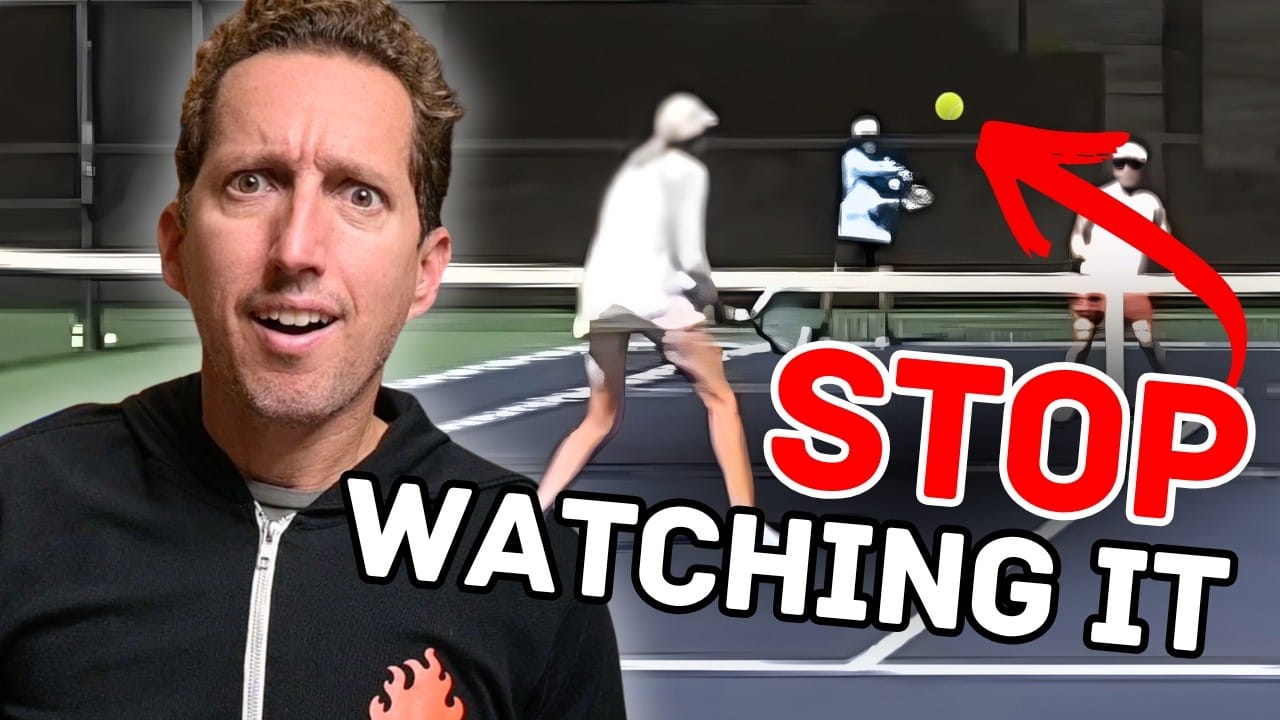
- The common mistake of net players in doubles tennis passively watching… (0:00)
- The basic transitions between defensive and offensive net positions in doubles,… (0:42)
- To be the best doubles player, one must proactively cut towards the middle to… (1:42)
- High-level players understand that poaching isn't about never getting caught,… (2:26)
- Feeling shame when getting beat down the alley is a common but detrimental… (14:17)
Summarised from Essential Tennis - Lessons and Instruction for Passionate Players · 16:49. All credit belongs to the original creators. Streamed.News summarises publicly available video content.