🌐 This article is also available in Spanish.
Original source: Finn Thormeier
This article is an editorial summary and interpretation of that content. The ideas belong to the original authors; the selection and writing are by Streamed.News.
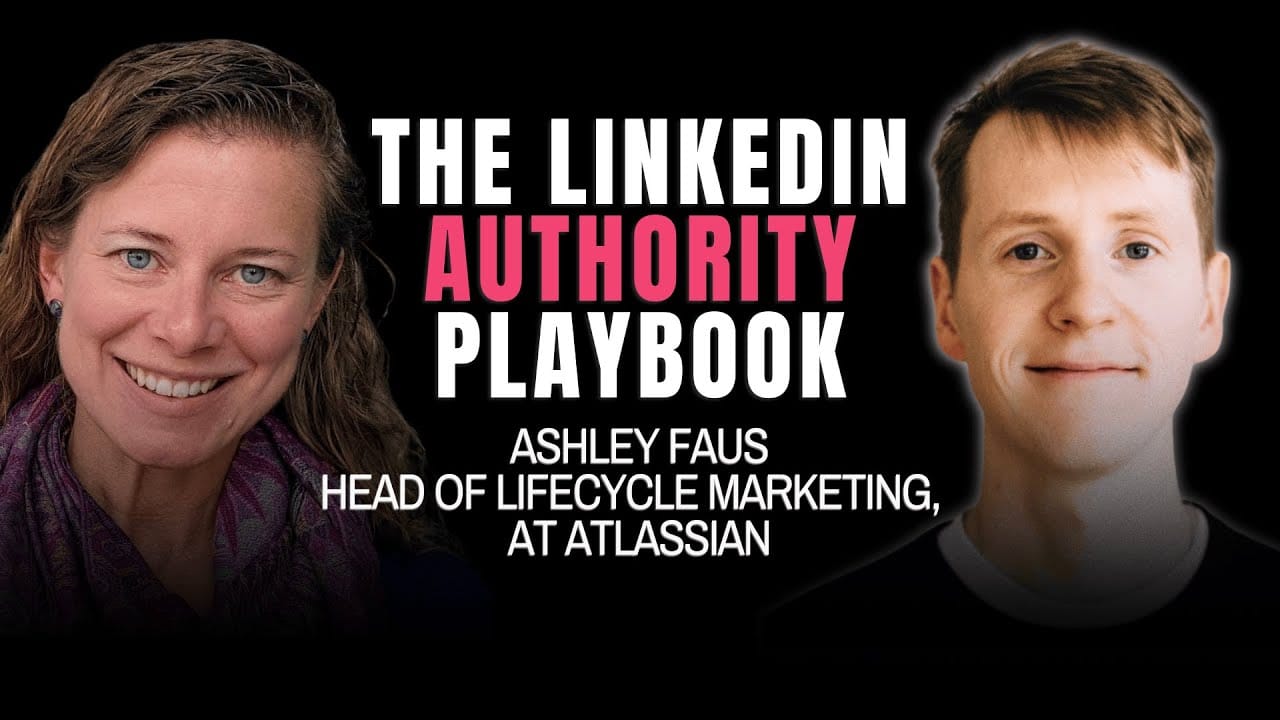
This video from Finn Thormeier covered a lot of ground. 6 segments stood out as worth your time. Everything below links directly to the timestamp in the original video.
If your company's boldest ideas are coming from the CEO, that may actually be a problem — here's why the most powerful voice in the room is often someone further down the org chart.
Why Your Best Company Spokespeople May Not Be Your Founders
Ashley Faus argues that founders and CEOs are often the wrong choice for thought leadership roles because their job demands projecting stability — and genuine thought leadership, by nature, is disruptive. Using Sam Altman as an example, she notes that markets hang on his words while the people who must actually operate in the world he describes grow anxious. Instead, Faus points to Laura Erdam at Dreamdata as the ideal model: an employee who built 50,000 LinkedIn followers by talking authentically about how she uses her own company's product, earned a Times Square billboard placement, and now coaches colleagues on social presence — all without being fused to the founder identity.
"You can't outsource the thinking."
Measuring Thought Leadership With Revenue Is the Wrong Metric, Faus Says
Ashley Faus makes a structural argument against tying thought leadership programs to revenue: the two operate on fundamentally different timelines and serve different psychological purposes. Revenue belongs to 'buy intent' content — things that solve an immediate problem — while thought leadership builds 'trust and affinity intent,' which influences how audiences perceive a brand over years, not quarters. She uses the Edelman Trust Barometer as a concrete example of a lagging credibility indicator worth tracking, alongside shares, follower growth, and unsolicited citations — like being tagged into a LinkedIn thread she hadn't started that same morning.
"When you try to force thought leadership to drive short-term revenue, you necessarily remove the thought and the leadership piece of it."
Two Questions That Can Unlock Executive LinkedIn Presence
Rather than waiting for a polished content strategy, Ashley Faus recommends executives begin with two daily prompts: 'a question I asked today' and 'a question I answered today.' Both anchor posts in real experience, avoiding the generic advice that reads as preachy. She also advises using LinkedIn's full 1,250-character comment limit to leave substantive responses on existing posts — then screenshot the original post, paste the comment into a new post, and expand from there. Comments, she notes, are currently generating higher organic reach on LinkedIn than standalone posts in many cases.
"Comments right now on LinkedIn are popping off — people are getting significantly higher reach on their comments than they're getting in some cases on their original posts."
The Language of Marketing Betrays Its Dehumanizing Defaults, Faus Contends
Ashley Faus argues that most companies claiming to practice 'human-centered marketing' reveal the gap between aspiration and reality the moment they start talking about their results: capturing leads, locking down deals, chasing prospects. Nobody, she points out, wants to be chased, captured, and locked down. The real test, she says, is whether marketers spend more time speaking to actual customers than staring at dashboards — and whether decisions get made because they're right for the person behind the screen, or because they're easy to show in a spreadsheet.
"Nobody wants to be chased, captured, and locked down."
Build Thought Leadership Programs Around the Willing, Not the Reluctant
Ashley Faus recommends against the standard playbook of buying an advocacy platform and pushing everyone to post. Instead, she targets employees who are willing but lack the skill to create and distribute content — particularly technical leaders like CTOs and engineers who have sharp ideas but are not fluent in LinkedIn or podcast formats. Her preferred structure pairs one generalist marketer with no more than five executives, focusing the executives on generating source material and ideas while the marketer handles repurposing across formats and channels.
"If you hate it and you're terrible at it, why would I waste my time fighting with you?"
Faus Outlines Four-Pillar Framework for Distinguishing Real Thought Leaders
Ashley Faus breaks thought leadership into four interdependent pillars: credibility, profile, being prolific, and depth of ideas. The sharpest distinction she draws is around credibility — measured not by how often someone cites sources, but by how often others cite them. Only prolificness is fully within a person's control; the other three depend on how an audience responds. She also pushes back on the assumption that thought leadership is automatically the most valuable archetype, arguing that subject matter experts and influencers serve distinct and equally legitimate functions in a company's marketing mix.
"Are you saying new and interesting things? Are you innovating? Are you driving the conversation forward?"
Also mentioned in this video
- Her personal motivation for being active on LinkedIn, highlighting her… (1:54)
- Ashley Faus reveals that her initial trigger for becoming more active on… (4:11)
- The relationship between her personal brand on LinkedIn and her employer,… (5:58)
- Her LinkedIn routine, which involves priming the algorithm by commenting in the… (15:20)
- Her approach to content pillars, stating she mostly writes on the fly based on… (18:18)
- The perceived risk of investing in employees who build strong personal brands… (32:03)
- Prioritizing investment in executive thought leadership, warning against solely… (43:17)
Summarised from Finn Thormeier · 59:14. All credit belongs to the original creators. Streamed.News summarises publicly available video content.
Streamed.News
This publication is generated automatically from YouTube.
Convert your full video library into a digital newspaper.
Get this for your newsroom →