🌐 This article is also available in Spanish.
Original source: RevOps FM
This article is an editorial summary and interpretation of that content. The ideas belong to the original authors; the selection and writing are by Streamed.News.
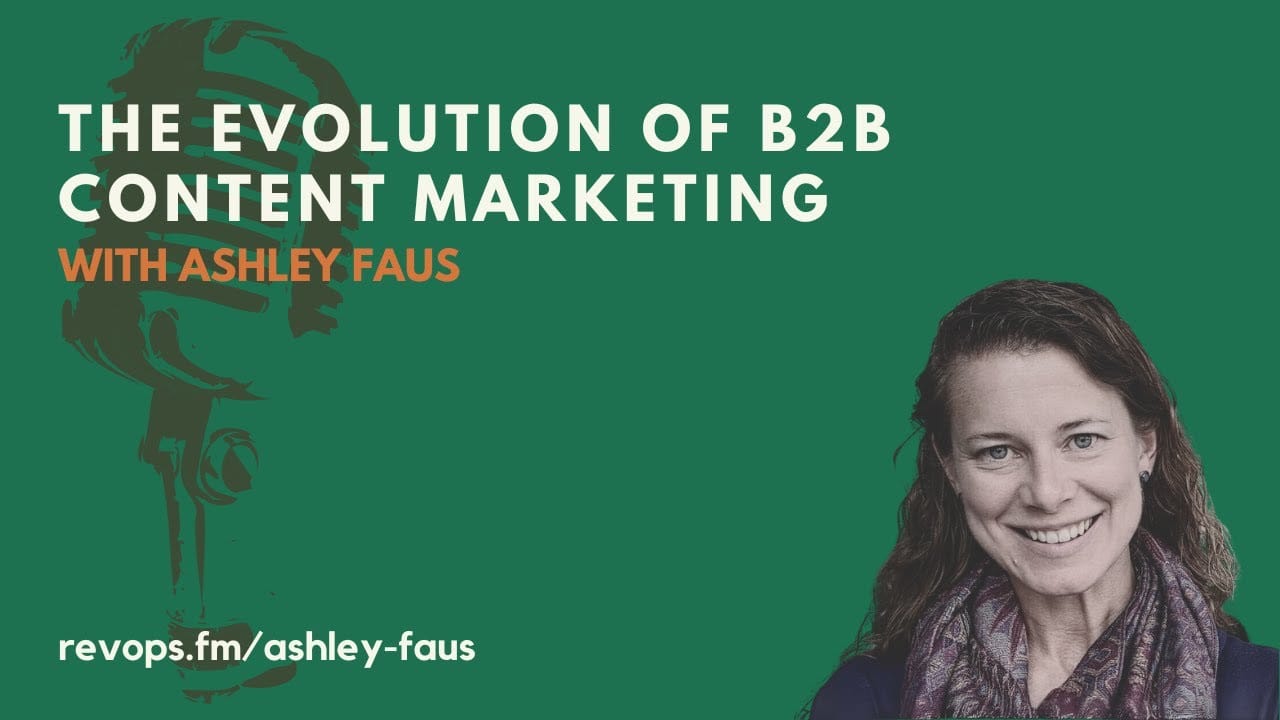
This video from RevOps FM covered a lot of ground. 6 segments stood out as worth your time. Everything below links directly to the timestamp in the original video.
If you've ever sat through a sales call explaining a problem you already understood, you've lived the failure this argument describes.
Marketing's Sacred Funnel Is a Measurement Tool Misused as a Strategy, Atlassian Marketer Argues
Ashley Faus, a marketing leader at Atlassian, argues that the traditional sales funnel is only useful in hindsight — it describes what happened after deals close, not how buyers actually behave. She illustrates the point with a personal story: when she approached vendors to get rough pricing so she could secure internal budget approval, every one except one redirected her to white papers and demo bookings, treating her as an early-stage prospect when she was already ready to spend.
The anecdote captures a structural flaw that costs companies real deals. By forcing buyers into a predetermined linear sequence, funnel-driven marketing ignores where a person actually is in their own decision process — and can actively repel buyers who have already done the work.
"Nobody wakes up and thinks 'today I shall be in the consideration phase.' That's not how humans work."
Atlassian's Ashley Faus Proposes a Five-Intent Framework to Replace Revenue-Only Content Thinking
Rather than treating all content as a vehicle for pipeline, Faus breaks it into five categories defined by what the audience intends to do next: buy, trust, use, get help, or learn. Each calls for a different success measure — buy-intent content should prompt a demo booking; trust-intent content succeeds when someone shares it with a colleague feeling the company genuinely understands them; learn-intent content, the most misunderstood category, succeeds when it changes how someone thinks, with no direct commercial action required.
The framework matters because collapsing all content into revenue attribution distorts both what gets made and how its impact is measured, ultimately producing content that serves the company's pipeline before serving the audience.
"When you ask me what content is for, my answer is: what is the next action the audience is going to take?"
Brands Have Trained Audiences to Distrust Them, Making Employee Voices the More Credible Channel
Years of pressure to tie every asset to revenue has made brand content feel reflexively promotional, Faus argues — so much so that audiences now assume anything published under a company logo is a sales pitch, regardless of its actual content. Individuals who work at those companies carry no such automatic suspicion, and their occasional product endorsements land harder precisely because they spend most of their time talking about ideas rather than products.
Faus uses her own Atlassian presence as the example: she rarely mentions Jira or Confluence, which is exactly why it registers when she does.
"It's almost more beneficial to have your employees not always talking about the brand so that when they do, it stands out as authentic and unbiased."
Faus's 'Content Playground' Framework Lets Buyers Navigate Depth and Intent on Their Own Terms
Using fitness publishing as an analogy, Faus demonstrates how the same topic — building muscle — can be addressed at a conceptual level (why protein matters), a strategic level (fast- versus slow-digesting protein sources), or a tactical level (five chicken recipes to hit your macros), with entirely different commercial calls to action layered onto each. The same structure maps onto Atlassian's Jira content: agile methodology at the conceptual level links down to a backlog-grooming tutorial, which links into the product itself.
The model replaces the funnel's one-way escalator with something closer to a choose-your-own-path — audiences enter at whatever depth matches their current knowledge and follow links toward more or less detail as needed.
"If I'm already convinced that protein is very important, I can just keep going down the row of chicken dinner recipes."
B2B Marketers Should Stop Chasing Viral Reach and Focus on the Right Ten Views
The wave of TikTok-style creator content entering B2B marketing imports the wrong success metric along with the format, Faus argues. A video with a million views earns ad revenue; a video shown in a single enterprise sales call can influence a several-hundred-thousand-dollar deal. She cites a real example at Atlassian where a low-view video was credited as a factor in a deal approaching that size — proof that audience quality outweighs audience volume in business-to-business contexts.
The creator mindset's genuine contribution, she says, is its discipline around audience study and format optimization — not its obsession with reach.
"B2B marketers don't actually need the biggest audience. We need the right audience with deep pockets."
Email Should Deliver Value Inside the Inbox, Not Just Drive Clicks Elsewhere, Faus Says
Faus argues that email has been misused as a traffic-delivery mechanism — a teaser designed to generate clickthroughs to a website — when the most-read newsletters, including those on Substack, prove that audiences will engage deeply with content delivered directly in their inbox. Citing what she calls zero-click content, a term she attributes to marketer Amanda Natividad, she advocates measuring email success by whether subscribers keep opening it, not by how many leave it.
The argument extends to a broader point: companies that reduce their audiences to buyers or users, and measure every interaction by what the company extracts, erode the trust that makes people open the email in the first place.
"Don't treat email as a distribution channel for another channel. It's its own channel, and people want to consume that content where they are."
Also mentioned in this video
- The episode on the evolution of B2B content marketing, noting its history since… (0:02)
- The evolution of content marketing over the past 15-20 years, noting the… (1:15)
- The ability to measure everything in content marketing led to an overemphasis… (5:21)
- Ashley Faus observes a significant shift in trust and help intent content due… (14:14)
- Incorporating personal interests like fitness and acting into her professional… (26:18)
- Structuring content ecosystems, emphasizing understanding audience behavior and… (44:10)
- The evolution of content formats, noting that lower barriers to entry,… (52:27)
- Ashley Faus expresses skepticism about AI fully replacing content marketing… (55:32)
Summarised from RevOps FM · 1:00:27. All credit belongs to the original creators. Streamed.News summarises publicly available video content.
Streamed.News
This publication is generated automatically from YouTube.
Convert your full video library into a digital newspaper.
Get this for your newsroom →