🌐 Also available in: 🇫🇷 Français
Original source: 2MinuteTennis
This video from 2MinuteTennis covered a lot of ground. Streamed.News selected 6 key moments and summarises them here. Everything below links directly to the timestamp in the original video.
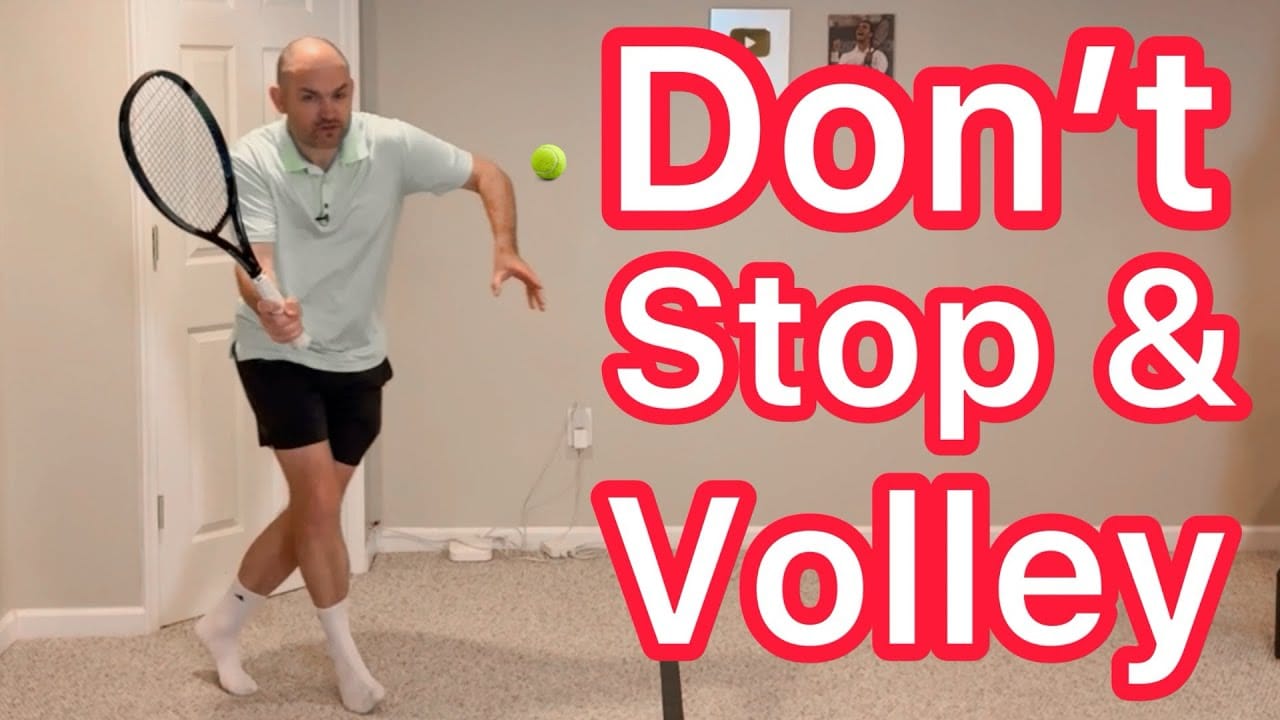
To improve your volleys, focus on a single piece of footwork: ensure your last step before making contact is with the foot on the same side you're hitting from. This adjustment helps you move through the shot, not just at it.
The Key to a Powerful Volley: Step Last with the Hitting-Side Foot
To execute a volley with continuous forward momentum, the final step prior to contact must be with the foot on the same side as the shot. Analysis of a Stanford University player demonstrates this principle in action: stepping last with the left foot for a left-side backhand volley and with the right foot for a right-side forehand. This specific footwork is critical for moving through the ball instead of halting at impact.
The technique's effectiveness is rooted in the physics of human locomotion, mirroring the natural contralateral movement of arms and legs during running. Coordinating the final step this way allows a player to seamlessly transition into their next step while hitting, channeling body weight into the shot for a demonstrable boost in control and power.
"The reason this works is because of physics. We all know that when we run, our arms and legs move opposite one another. When he stepped last with the right foot, he hit the volley and he timed it so that the left leg was going forward with the right arm. That's what allows you to move through the volley."
The Key to a Powerful Volley: Step Last with the Hitting-Side Foot
To execute a volley with continuous forward momentum, the final step prior to contact must be with the foot on the same side as the shot. Analysis of a Stanford University player demonstrates this principle in action: stepping last with the left foot for a left-side backhand volley and with the right foot for a right-side forehand. This specific footwork is critical for moving through the ball instead of halting at impact.
The technique's effectiveness is rooted in the physics of human locomotion, mirroring the natural contralateral movement of arms and legs during running. Coordinating the final step this way allows a player to seamlessly transition into their next step while hitting, channeling body weight into the shot for a demonstrable boost in control and power.
"The reason this works is because of physics. We all know that when we run, our arms and legs move opposite one another. When he stepped last with the right foot, he hit the volley and he timed it so that the left leg was going forward with the right arm. That's what allows you to move through the volley."
The Key to a Powerful Volley: Step Last with the Hitting-Side Foot
To execute a volley with continuous forward momentum, the final step prior to contact must be with the foot on the same side as the shot. Analysis of a Stanford University player demonstrates this principle in action: stepping last with the left foot for a left-side backhand volley and with the right foot for a right-side forehand. This specific footwork is critical for moving through the ball instead of halting at impact.
The technique's effectiveness is rooted in the physics of human locomotion, mirroring the natural contralateral movement of arms and legs during running. Coordinating the final step this way allows a player to seamlessly transition into their next step while hitting, channeling body weight into the shot for a demonstrable boost in control and power.
"The reason this works is because of physics. We all know that when we run, our arms and legs move opposite one another. When he stepped last with the right foot, he hit the volley and he timed it so that the left leg was going forward with the right arm. That's what allows you to move through the volley."
The Key to a Powerful Volley: Step Last with the Hitting-Side Foot
To execute a volley with continuous forward momentum, the final step prior to contact must be with the foot on the same side as the shot. Analysis of a Stanford University player demonstrates this principle in action: stepping last with the left foot for a left-side backhand volley and with the right foot for a right-side forehand. This specific footwork is critical for moving through the ball instead of halting at impact.
The technique's effectiveness is rooted in the physics of human locomotion, mirroring the natural contralateral movement of arms and legs during running. Coordinating the final step this way allows a player to seamlessly transition into their next step while hitting, channeling body weight into the shot for a demonstrable boost in control and power.
"The reason this works is because of physics. We all know that when we run, our arms and legs move opposite one another. When he stepped last with the right foot, he hit the volley and he timed it so that the left leg was going forward with the right arm. That's what allows you to move through the volley."
The Key to a Powerful Volley: Step Last with the Hitting-Side Foot
To execute a volley with continuous forward momentum, the final step prior to contact must be with the foot on the same side as the shot. Analysis of a Stanford University player demonstrates this principle in action: stepping last with the left foot for a left-side backhand volley and with the right foot for a right-side forehand. This specific footwork is critical for moving through the ball instead of halting at impact.
The technique's effectiveness is rooted in the physics of human locomotion, mirroring the natural contralateral movement of arms and legs during running. Coordinating the final step this way allows a player to seamlessly transition into their next step while hitting, channeling body weight into the shot for a demonstrable boost in control and power.
"The reason this works is because of physics. We all know that when we run, our arms and legs move opposite one another. When he stepped last with the right foot, he hit the volley and he timed it so that the left leg was going forward with the right arm. That's what allows you to move through the volley."
The Key to a Powerful Volley: Step Last with the Hitting-Side Foot
To execute a volley with continuous forward momentum, the final step prior to contact must be with the foot on the same side as the shot. Analysis of a Stanford University player demonstrates this principle in action: stepping last with the left foot for a left-side backhand volley and with the right foot for a right-side forehand. This specific footwork is critical for moving through the ball instead of halting at impact.
The technique's effectiveness is rooted in the physics of human locomotion, mirroring the natural contralateral movement of arms and legs during running. Coordinating the final step this way allows a player to seamlessly transition into their next step while hitting, channeling body weight into the shot for a demonstrable boost in control and power.
"The reason this works is because of physics. We all know that when we run, our arms and legs move opposite one another. When he stepped last with the right foot, he hit the volley and he timed it so that the left leg was going forward with the right arm. That's what allows you to move through the volley."
Also mentioned in this video
- To improve volley control and power, players should move through the volley… (0:00)
- An analysis of an extremely high-level college player's footwork and technique… (1:07)
- Many players make the mistake of stepping with their front foot prior to… (4:13)
- An easy way to conceptualize this is to think of hitting an open stance volley,… (4:58)
Summarised from 2MinuteTennis · 6:43. All credit belongs to the original creators. Streamed.News summarises publicly available video content.